Last week, we looked at four ingredients that cluster around a synchronistic event:
An activated archetype.
A mental effect.
Heightened emotion.
A physical event.
We then explored ways to adjust the dials in an attempt to trigger a synchronistic event on purpose: We can influence emotion, we can focus attention, we can work with archetypal imagery, and we can act.
But up to now, we’ve focused mainly on the first three. Today I want to zoom in on the physical event. You might assume this would be the easiest lever to shift—and in many cases, it is.
If you want a job, you apply.
If you want a conversation, you initiate it.
If you want water, you turn on the tap.
The physical world is relatively easy to nudge when it is within your immediate reach. Magic becomes relevant precisely when it isn’t, when the outcome you desire depends on variables beyond your direct control. To borrow last week’s language of fields and activated nodes, taking action alters local conditions—maybe you light up one or two adjacent nodes. Magic attempts to activate nodes that aren’t in direct contact.
So how, historically, have humans attempted to mess with the field?
Enter sympathetic magic.
Across continents and millennia, magical practitioners have relied on a simple axiom: things that resemble one another are linked. Things that have once been in contact remain linked.
This is Marie-Louise von Franz’s “thinking synchronistically,” in action. Instead of asking, What caused this? we ask, What tends to cluster together?
In Magic: A History, archaeologist Chris Gosden surveys examples stretching back to the Ice Age. Among the most famous are the breathtaking paintings in Lascaux Cave and Chauvet Cave.
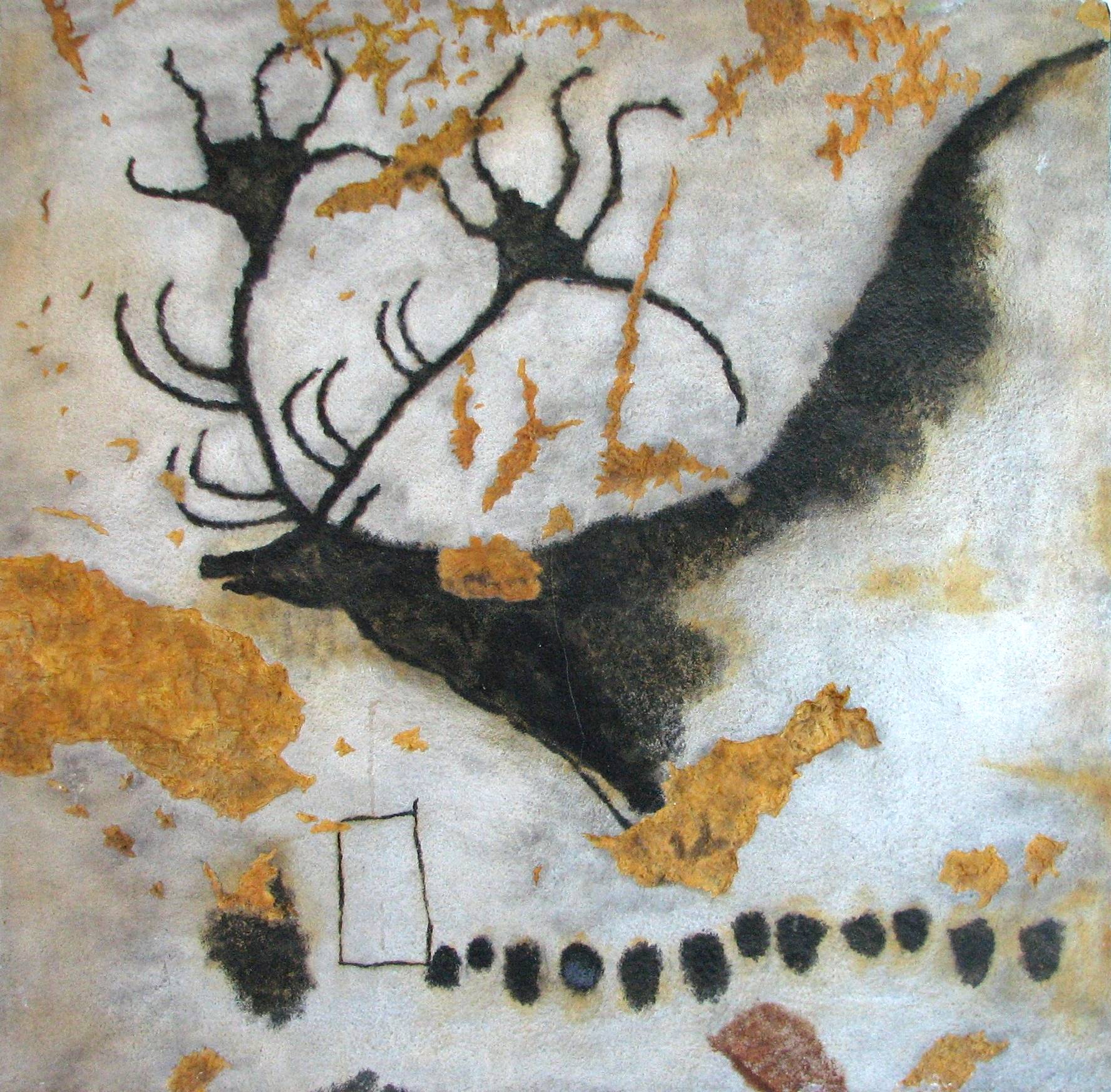
Scholars have debated whether these images constitute “hunting magic”—ritual attempts to ensure success in the chase. We’ll likely never know what those early artists intended, but what matters for us is the underlying logic, even if it was never consciously articulated: representation was not wholly separate from reality.
The painted bison wasn’t merely an image. It was entangled with the flesh-and-blood animal roaming the landscape, with the migration of herds, with hunger, with survival, with the nourishment of the human community. The cave wall functioned—consciously or otherwise—as a node in a field linking hunters, animals, seasons, and sustenance.
The image was, we might say, an address in the field.
In Middle Kingdom Egypt, enemies’ names were inscribed on clay vessels or figurines and ritually shattered. Breaking the object enacted a hoped-for shift elsewhere in the field. The pottery’s destruction didn’t cause defeat through linear mechanics; it adjusted the relational web in which political and cosmic order were understood to unfold.
Across cultures, locks of hair, fragments of clothing, and personal objects have been used in ritual contexts with the understanding that once two things share relation, that relation persists. Modern physics uses the term entanglement to describe correlations between particles that have interacted, even across distance. The mechanisms and scales differ, but the intuition—that contact establishes relationship—is not alien to contemporary science.
To modern ears, all this can sound like confused causality. Pure superstition. But recall our shift last week from linear chains to field/synchronistic thinking.
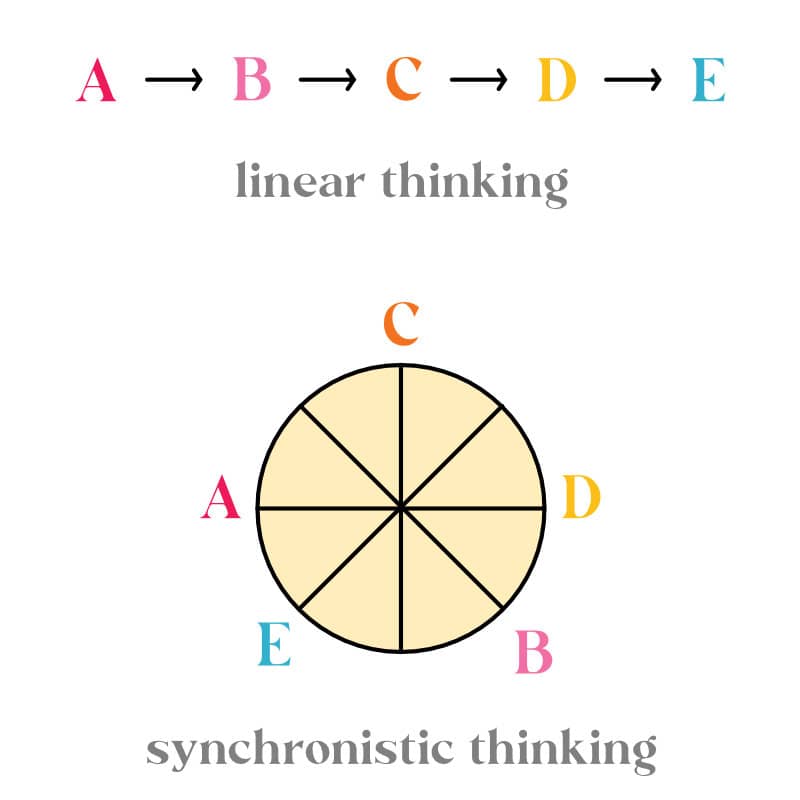
If psyche and matter participate in a shared field, then material objects aren’t dead props. They’re condensations of relationship. They occupy positions within that field—positions that encode time, physical coordinates, meaning, and other data.
When a Mesopotamian figurine was buried at the threshold of homes and temples, it didn’t symbolize protection in a decorative, abstract sense. It stabilized a desired configuration in the relational field of the household. It was a physical anchor for an activated archetypal hub (the mental intention of protection) and heightened emotions (desiring protection).
When Paleolithic artists painted bison deep within caves like Lascaux, that image became a stable address within the field linking herd, hunter, hunger, season, and survival.
This is sympathetic magic’s claim: an object isn’t powerful because it resembles something. It’s powerful because it occupies a meaningful position within a web of relations. It is a findable address in the field.
To work sympathetically is not to override physical law. The aim is to activate a specific coordinate by giving heightened emotion, focused attention, and archetypal energy a place to stabilize—the physical “address” encoded in the object.
Another gobsmacking implication of this theory?
*rubs hands together with witchy delight*
An address in the field only makes sense if the field has a recognizable structure. GPS would be useless if the Earth were a blurry schmear—no roads, no intersections, no geography, every coordinate indistinguishable from every other. An address works because the map has architecture.
Roads connect. Neighborhoods exist relative to one another.
The field, like a map, isn’t random, which means the relationships between archetypes are not arbitrary.
A quick refresh: in our field model, archetypes are highly energized nodes in the psychic field, just as particles are excited points in an electrodynamic field. (And further, we’ve been building the argument that these fields—psyche and matter—are one and the same.)
If that field has architecture, then themes cluster. Certain archetypal events tend to unfold in recognizable sequences. As we move through life, with a broad enough view we’ll pick up on recognizable patterns, much like landmarks appearing in a predictable sequence on the drive home from work.
This order is precisely what divination systems aim to decipher.
From the I Ching to the tarot, from runes to cracked turtle shells, divination systems assume that the field is structured and this structure can help us predict what’s likely to occur next. Not in a deterministic fashion—after all, a map doesn’t tell you where you must go. It simply says, if you are here, and you continue heading in this direction, you will end up there. Or, if you are here, and you want to end up there instead, you’ll need to change course.
So far, we’ve been talking about the archetypal field as something we infer, a pattern we learn to read using tools like tarot cards and the I Ching. But what if you could literally see this field, perhaps like a web of light overlaying ordinary reality?
That’s precisely what happens to Margot Takada, a scholar of magic in my upcoming novel The Magician & the Labyrinth of Yesterdays.
Next week, Margot will share how experimenting with the mind-bending exercises of Charles Howard Hinton—a real-life mathematician obsessed with higher dimensions—turned a tarot reading into a startling glimpse of the hidden lattice of reality.
See you then.