Category: Magical Musings

  • How does tarot (really) work?

    How does tarot (really) work?

    Last week, we climbed the Tree of Life, viewing the same situation—Thursday night book club—from different vantage points. The Tree of Life is a precise arrangement of archetypes, and our ascent was a psychic one, not literal travel.

    Today, I want to explore how archetypes are more than mental constructs. They can affect the physical world, and learning how is a powerful tool in our practical magic bag.

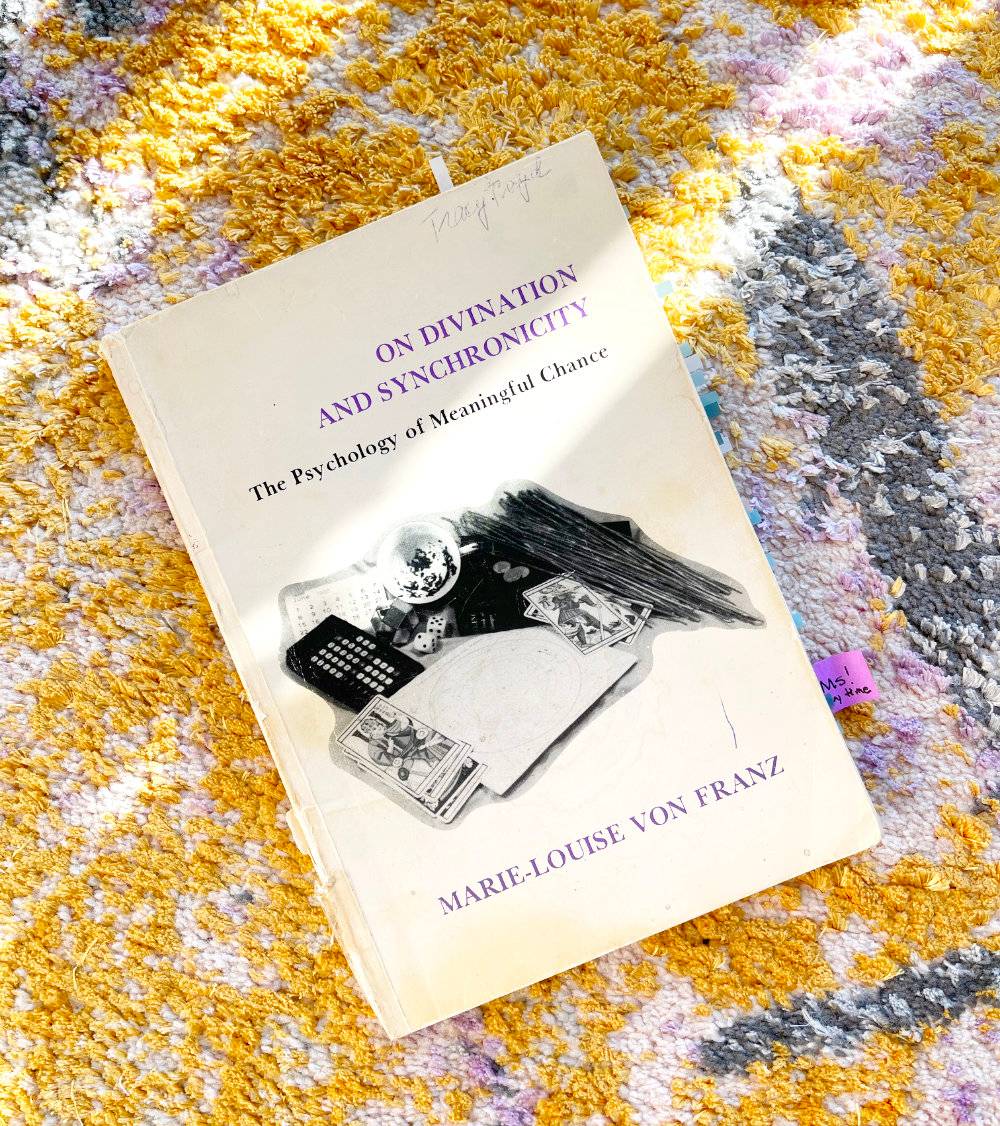
    Let’s start with a strange little book by Jung’s colleague, Marie-Louise von Franz, called On Divination and Synchronicity.

    Von Franz writes:

    “The relationships and the facts of the [I Ching] could be compared with the network of an electric circuit, which penetrates all things. It has the possibility of being lit up but it does not light up unless the person who puts a question has established contact with a definite question. One should therefore not throw an I Ching without first asking, ‘What question do I really have in mind? What do I really want to ask?’ By that one makes contact with one’s unconscious, and asks it to suggest the [solution to] the question.” (p. 58-59)

    This mirrors my stance on the tarot: by posing a question before drawing a card, you “light up” the relevant answers in the energetic field that connects your individual psyche, the collective unconscious, and the cards.

    Last week, when we used the Tree of Life to reinterpret book club, we were doing something similar. We posed the scenario as a “question” and watched different sephiroth light up. Netzach illuminated raw emotion at the scene level, Tiphareth illuminated larger patterns at the level of character arc, and Binah illuminated archetypal themes.

    Back to von Franz:

    “I want to now introduce a new idea, which Jung has not used…the idea or the concept of a field to explore what Jung calls the collective unconscious, a field in which the archetype would be the single activated point. [Theoretical physicist, John Archibald] Wheeler, for instance, defines matter as an electro-dynamic field in which the particles are the excited points. Now I propose…that the collective unconscious is a field of psychic energy, the excited points of which are archetypes.” (p. 61)

    This is fascinating. Here, archetypes are described as excited points of energy in a field—in this case, the field of the collective unconscious—just as matter is described as excited points in an electrodynamic field.

    But what if those fields were actually the same?

    This is what Jung’s theory of synchronicity claims.

    Synchronicity describes a meaningful coincidence—an inner psychic event and an outer physical event aligning in a way that feels charged with significance, yet cannot be explained through ordinary cause and effect. The famous example involves one of Jung’s patients recounting a dream of a scarab beetle, only to be interrupted by a scarab-like beetle tapping at the window pane.

    Jung wasn’t suggesting that the patient’s mind summoned or created the beetle. Instead, he proposed that both the mental effect (the dream) and the outer event (the window-tapping beetle) arise from a shared underlying pattern—an activated archetype strong enough to organize energy on both sides of the mind/matter divide.

    More precisely, he posited the existence of a unified field—an unus mundus—in which psyche and matter aren’t nearly as separate as they seem.

    If we combine this with von Franz’s suggestion that archetypes are excited points in the psychic field, we arrive at a compelling possibility: archetypes are excited points in a field that is both psychic and physical—the field in which synchronicity occurs.

    Now, here’s where my thinking departs from Jung. He would certainly accuse me of magical thinking—and he’d be right. I just happen to believe that magic is real. 😉

    Remember, for Jung, the mind does not create synchronistic events. The underlying archetype generates both the mental effect and the outer world event. But as a magical practitioner, this begs the question: what if the mind could participate in this process more intentionally?

    Jung gives us another juicy clue.

    He observed, time and time again, that whenever a synchronicity occurs, heightened emotions are present. A magical point of view might say that heightened emotions cause the synchronicity. In fact, Jung quotes a 13th-century magical text by pseudo-Albertus Magnus, De mirabilibus mundi, that makes precisely this claim—though Jung presents the passage in order to dispute it.

    In my witchy estimation, however, pseudo-Albertus offers a compelling argument:

    “When therefore the soul of man falls into a great excess of any passion, it can be proved by experiment that [the excess] binds things [magically] and alters them in the way it wants, and for a long time I did not believe it, but…I found that the emotionality of the human soul is the chief cause of these things…Thus it is the soul who desires a thing more intensely, who makes things more effective…Everything [the soul] does with that aim in view possesses motive power and efficacy for what the soul desires.” (CW 8, para. 859)

    So we know that during a synchronistic event, four things tend to cluster together:

    • An activated archetype

    • A mental effect

    • A physical event

    • Heightened emotions

    The question is: do they need to occur in a particular order?

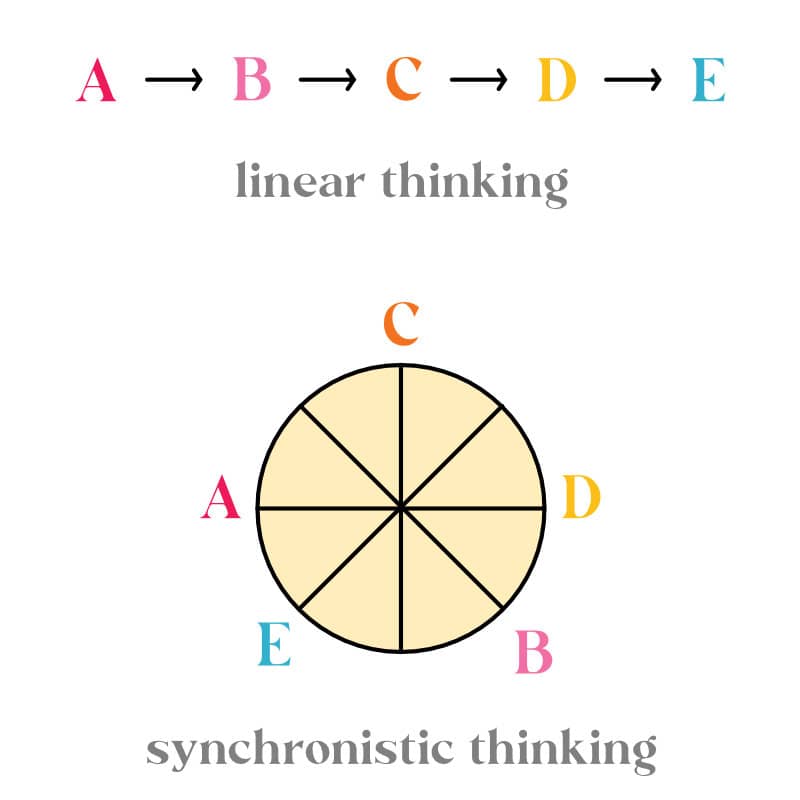
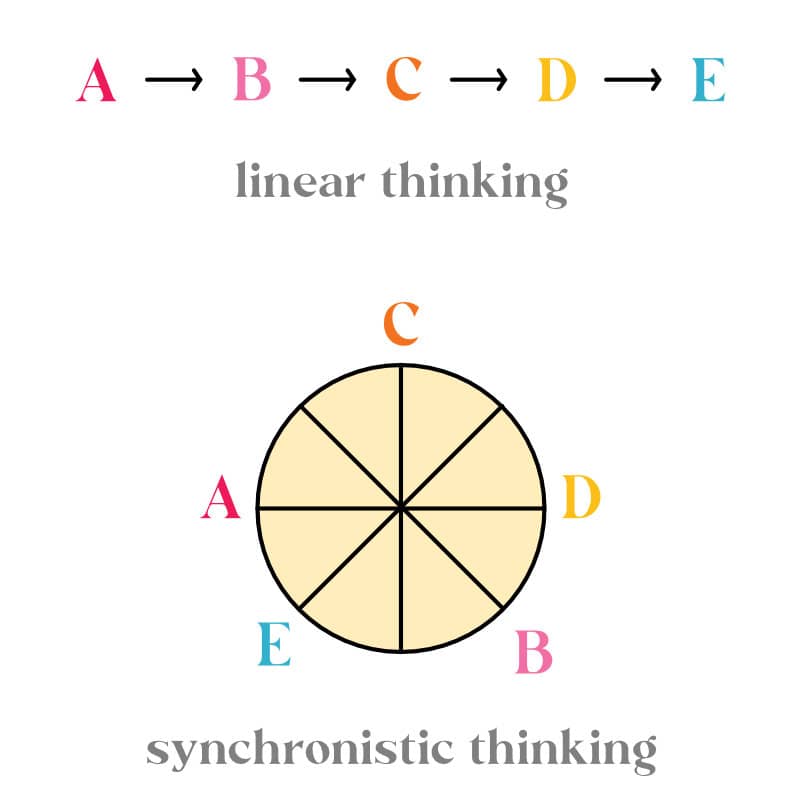
    Activated archetype → mental effect → physical event → heightened emotions

    Or could we swap things around?

    Heightened emotions → mental effect → activated archetype → physical event

    Or perhaps:

    Heightened emotions → activated archetype → mental effect → physical event

    If we think synchronistically, as von Franz suggests, the order may matter less than the clustering together. She writes:

    “Synchronistic thinking…is thinking in fields, so to speak…The question is not why has this come about, or what factor caused this effect, but what likes to happen together in a meaningful way in the same moment…What tends to happen together in time?” (p. 8; emphasis mine)

    So if the order is less important, and we’re thinking in fields rather than tumbling dominos, then we’re no longer asking what causes what. We’re asking which variables we have the power to influence.

    Of course, magic already makes a claim here:

    That you can change your internal state and affect the outer world. But I’m perennially interested in the how. Instead of a theoretical physicist, you might call me a theoretical witchicist. I want to understand how magic works, and this field-based model feels like one plausible explanation.

    We can raise emotional energy. We can generate a focused mental effect. We can attempt to activate archetypal imagery.

    We might not be able to orchestrate a synchronistic dream on command, but we can consciously amplify intention (the mental effect). This is precisely what we do when drafting a spellcasting intention: we focus awareness and raise energy to empower a thought.

    That’s two factors successfully dialed up—what about the archetypal activation?

    This is tricky, because, by definition, archetypes are unconscious. The archetypes discussed in pop psychology and much magical discourse (things like the Great Mother or the Magician) are actually archetypal images; they’re not the archetypes themselves.

    This isn’t just semantics.

    Going back to our field model in which archetypes are activated nodes in the field, an archetypal image is like a flickering candle compared to the solar flare of the underlying archetype. We can ignite archetypal images fairly easily—perhaps by placing the Magician tarot card or a sculpture of the Great Mother on our altar and meditating on those images—but this is a far cry from firing up the deeper archetype.

    For that, we need ritual technology.

    Techniques like chanting, drumming, and meditating, or tools like sigils and other efficacious symbols that bypass the limitations of the conscious mind, have a better shot at penetrating those deeper layers.

    There’s no guarantee that fiddling with any of these dials will result in the outer world change/physical event we’re aiming for, but this is a viable framework for creating optimal magical conditions.

    Magic + Complexes

    Throughout this Creative Season, we’ve described psychological complexes as hubs within the psyche, and you might have noticed the parallels with our four synchronistic-magical ingredients.

    At the core of every complex is an archetype, which lights up when the complex is activated, thus coloring our perception of ourselves and the world around us.

    Mental effects and heightened emotions are two hallmarks of an activated complex, as we’ve seen in the book club scenario. You’re more likely to think your fellow book clubbers are excluding you when the complex is lit up (mental effect), and you’ll feel anxious, competitive, and self-conscious as a result (heightened emotions). These changes precipitate in the outer world, too, because the complex alters how you behave (physical event).

    Magically, by tweaking the levels of heightened emotions and mental effects, and using ritual tech to activate an archetype, we’re essentially building a complex. Only this time, we’re choosing which ingredients go in the cauldron.

    Add a Pinch of Black Hole Energy

    Remember, too, that if a complex gets powerful enough it behaves like a black hole. Every possible path leads to the complex’s foregone conclusion. Instead of adaptively choosing how to respond based on the situation at hand, the complex churns out habitual responses, often established in childhood.

    When we’re under the spell of an unwanted complex, this blows. But if we’re trying to set up our own magical “complex,” this very same mechanism becomes a superpower, making it more likely that events will lead to our desired outcome.

    This mirrors Theorem 18 in Aleister Crowley’s Magick in Theory and Practice:

    “[The magician] may attract to himself any force of the Universe by making himself a fit receptacle for it, establishing a connection with it, and arranging conditions so that its nature compels it to flow toward him.” (xviii; emphasis mine)

    Crowley’s example is digging a well. You choose a suitable location, prevent leakage, and work with physical laws governing water flow. You don’t dig at the peak of a desert mountain and demand that water appear. You optimize conditions. Magic, in this sense, is optimization within a structured field.

    You may have noticed that I’ve barely touched on the fourth ingredient in our archetypal activation soup: the physical event.

    Typically, that’s what we’re aiming for—a change in the external world. So we tinker with the other variables, like an algebra problem, hoping to influence the physical factor.

    But there’s another way to tweak the physical-event dial. It’s called sympathetic magic—and that’s where we’ll pick up next week.

  • Feeling stuck? Try this Qabalistic reframe.

    Feeling stuck? Try this Qabalistic reframe.

    Last week​, we ended with a question. If the psyche contains multiple organizing hubs—if the ego itself is but one complex among others—then perhaps the task is not the Sisyphean one of eliminating a complex, but switching which hub our psychic energy is gathering around.

    Let’s return to our Thursday night book club example. From inside the activated complex, the evening organized itself around one conclusion: “If I’m not exceptional, I’m not safe.”

    Seen through the complex’s goggles, every detail became “evidence.” Tia recounting a memorized passage like a veteran of the Shakespearean stage. Brent’s easy use of tongue-tangling terminology. Lana’s cryptic smile. All of it rolled downhill toward the same conclusion.

    Now, instead of trying to annihilate that conclusion in head-to-head combat (“just overwrite those limiting beliefs, bro!”), let’s walk off the battlefield.

    Let’s change vantage points using the Tree of Life.

    Think of each sephira not as mystical realms (though they might be that as well), but as distinct modes of organizing experience—just like complexes.

    We’ll try on Netzach first.

    Netzach corresponds to instinct, desire, and emotional immediacy…

    It’s too damn hot in here. The espresso machine shrieks, punctuating the conversation with a banshee’s wail. Your chai is volcanically hot, but you keep lifting it to your lips so you have something to do with your hands.

    Brent tilts back, elbow hooked over the chair. “Classic example of unreliable focalization,” he drawls, and everyone nods, your head bobbing right along, convinced everyone spots you for the phony you are.

    A bead of sweat slips down your ribs. And then there’s a pause, and in you dive, words spilling out faster than the speed of thought.

    You hear yourself drawing parallels to Madame Bovary, correcting someone’s reading of the cracked teacup symbolism. Is that really you, prattling on like a pompous ass?

    You’re no longer a reader among readers. You are a defendant making a case.

    This is one experience of Netzach: Immediate. Charged. You can feel the survival-level tension in the room—a tension that begins to shift when we view our fictional story from the perch of Tiphareth…

    Tiphareth’s bird’s-eye view lifts us from isolated scene to character arc.

    Here we see the pattern behind the pattern. Brent’s comment is no longer the whole story, but the trigger. A footnote in a bigger arc. From here, it’s easier to spot how quickly the main character—you—steps in with stories of worth and belonging.

    Maybe Brent is trying to flex his intellectual prowess. ¯\_(ツ)_/¯ The deeper arc isn’t really about Brent’s character, though, which you can’t control; it’s about yours. The question shifts from Why is he making me feel this way? to Why does this pattern feel so familiar?

    The espresso machine continue to wail, you still don’t understand everything Brent’s saying, but something inside you has more room to breathe. You can choose to release the pressure to be in the know and ask a question instead. Or you might sit back and chill until you have something to share.

    More importantly, you can choose not to build your identity on intelligence as belonging. The “antagonist” shrinks. The true protagonist comes into focus.

    And then, if we dare to climb higher still, the story shifts again.

    From the vantage of Binah, we’re no longer watching a character wrestle with an old wound. We’re watching a theme unfold.

    Now the question isn’t merely about your personal history with grades and praise, nor Brent’s tendency to flex in public. It’s about a pattern older than either of you: The desire to be recognized as competent. To earn your keep. The fear of being cast out of the tribe.

    This scene has unfolded in monasteries and marriages, Parisian salons and political rallies. The book club isn’t charged because of your personal failings—it’s archetypal. It reveals recurring themes in our collective human story.

    In fiction, theme is not that tidy thesis statement you bludgeoned essays with in elementary school, complete with three supporting points, double-spaced, Times New Roman. Theme is the author’s working hypothesis about how one is meant to live. It poses questions that the story then explores, things like:

    Can belonging be granted or is it an inside job?

    Who gets to take up space?

    Is belonging more important than authenticity?

    From the height of Binah, your humble Thursday night book club participates in this larger inquiry. From this altitude, the café is no longer a courtroom. It’s a chapter in an age-old story about belonging.

    When the archetypal center shifts, meaning shifts. And when meaning shifts, behavior becomes less automatic. The black hole’s gravitational pull weakens—not because the complex has vanished, but because it’s no longer the only center of gravity.

    Do Try This at Home

    If you’re struggling with a conflict or question—at work, in a relationship, in your creative life—try a simple experiment.

    Describe the situation from the level of emotion. Let it be reactive, immediate, personal. Don’t worry about sounding judgmental AF. Let ’er rip.

    Bring your awareness to the “you” that exists within the limits of your body—feel the beating of your heart, the movement of your breath, the thoughts swirling “in” your head. Then, subtly shift your awareness right between your shoulder blades. Can you feel it gathering there? Maybe you notice the texture of your shirt against your skin.

    Push that awareness further back, about a foot, like you’re stepping behind yourself. Notice the subtle detachment that arises. If you’re not feeling it, energetically step back another foot, “seeing” the back of your head.

    Now, describe the situation again, this time imagining yourself as a character in a novel, and this situation is simply one scene designed to illustrate a larger character arc. What might that arc be? What is it arcing toward? If this character were to learn a valuable lesson by the book’s end, what is that lesson?

    Finally, imagine your awareness lifting up, up, up to rest on the roof of your house, looking down at you sitting in your chair, writing about this situation. If you were to take that character’s lesson and extract an insight that others might use to live a full life, what would that be? How does this lesson relate to our shared human journey?

    By shifting your perspective, you’ve traveled the Tree of Life, activating different levels of consciousness. In other words, you’ve just performed a potent act of magic, my friend.

    Next week, we’ll look at how this process could be used to create changes, not only in the mind, but in the physical world.

    See you then.

  • A backstage pass to your psyche

    A backstage pass to your psyche

    Last week, we sat in on a Thursday night book club, ending with the question: If a complex can severely narrow your perception—if it can bend every path to the same conclusion—are you trapped inside it?

    Jung’s answer is more complicated than “just change how you think!”

    A complex isn’t a psychological glitch; it’s an organizational hub within the psyche. Without such hubs, the psyche would be an undifferentiated blob. Without structure, there’d be no way for psychic energy to gather and move, and those “movements” are what we experience as life itself: thoughts and feelings, inspiration and ideas, creative impulses, philosophical reflections, awe, dread, longing.

    Complexes make experience possible.

    Pop psychology misses this entirely when it reduces complexes to “daddy issues” or limiting beliefs. A complex isn’t merely a wound; it’s an organizational center.

    To unpack this, we need to understand how Jung viewed complexes, starting with one that we all have: the ego.

    Yep. In a Jungian framework, the ego itself is a complex. But the “I” you experience as continuous and coherent is not the whole of the psyche. It’s one organized cluster of memory, affect, and beliefs among others. It functions as a center of gravity for waking consciousness—but, as we saw in our book club example, it’s not the only one.

    When another gravitational center activates—for instance, one organized around “If I’m not exceptional, I’m disposable”—our psychic movements (thoughts, feelings, interpretations) organize around that center instead. Everything funnels through it, and neutral cues acquire a specific charge. Ambiguous smiles become assessments of our worth, innocuous comments morph into passive-aggressive threats.

    Jung adds another crucial piece, one especially important for magical practitioners.

    At the heart of every complex lies something deeper than personal history. Complexes constellate around archetypal patterns—fundamental elements that recur across human life.

    Let’s go back to Thrusday night book club for a minute.

    On a personal level, the activated complex sounds something like: “If I’m not exceptional, I’m not safe.” In therapy, you might trace it back to childhood. The athletic superstar sibling who left you to corner the market on intellect unless you wanted to fade into the wallpaper. The day you brought home a B+ and your dad’s proud smile flickered—just for a second.

    Huh. Come to think of it, his expression looked a lot like Lana’s at book club. 🤔

    That personal belief is simultaneously plugged into something older, something shared by humanity.

    Belonging and exile. Hierarchy and status. Recognition and invisibility.

    Your biography gives the archetypal pattern a particular flavor, but the pattern itself isn’t private property. It recurs across families, workplaces, mythologies, and cultures. A complex always knits the personal and the collective together.

    So far so good? Now, let’s widen the lens.

    If the ego is one complex among many—one center of gravity within a larger system—then the psyche is not organized around a single point. It’s polycentric. Multiple hubs coexist, each capable of gathering experience around itself.

    When the “If I’m not exceptional, I’m disposable” complex activated, Thursday night book club became a battleground. One node in the psychic field seized control.

    But what if the same evening could organize itself around another pattern?

    Not around hierarchy, but around connection.

    Not around status, but around curiosity.

    Not around safety, but around growth.

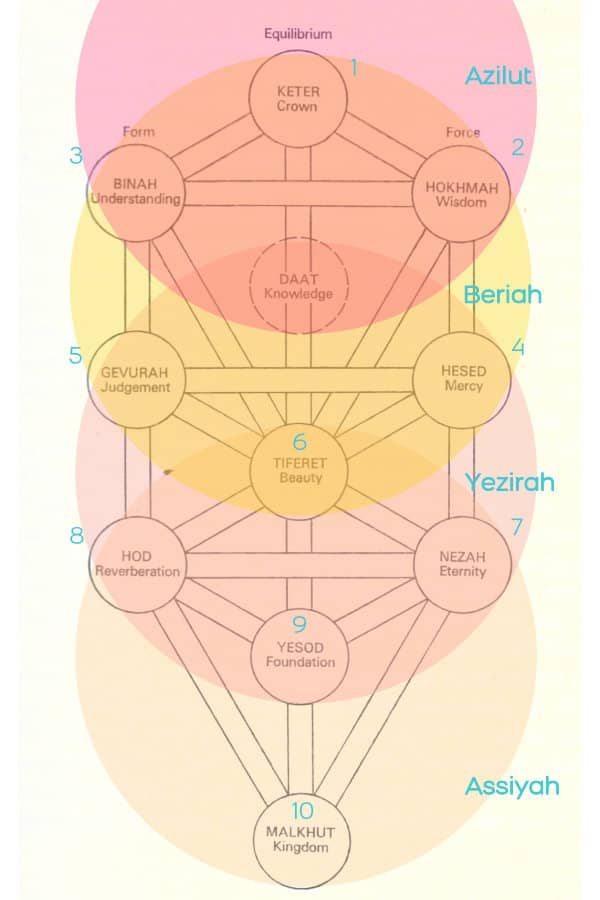
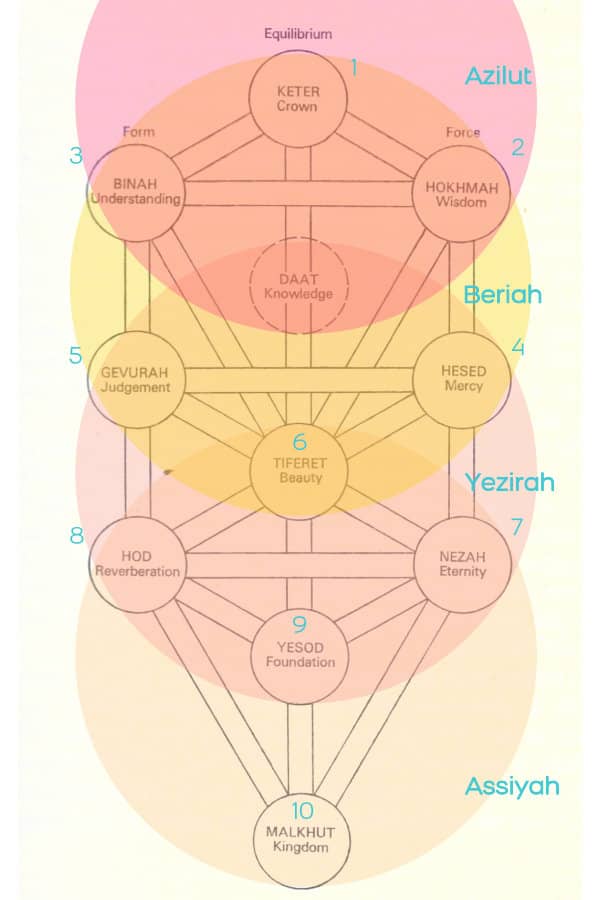
    For that, we would need a different archetype, one that could serve as a different organizational hub within the psyche. Handily enough, esoteric systems have been providing us with rich archetypal systems for millennia, and one of my personal favorites is the Qabalistic Tree of Life.

    Here we have a network of archetypal nodes, connected by archetypal paths. It’s an archetypal buffet! Instead of attempting the impossible task of eliminating a complex, the Tree suggests a different move: repositioning.

    Through which archetype am I currently viewing this experience? And what might it look like from another POV? Instead of seeing book club through the lens of “If I’m not exceptional, I’m disposable,” what might it look like from the vantage of Netzach? Or Tiphereth?

    That, my magical friend, is where we’ll pick up next week.

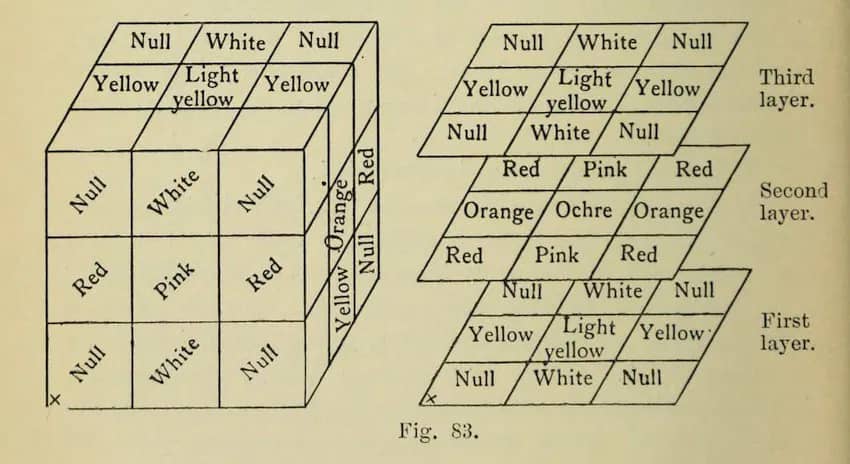
  • Tarot & Tesseracts

    Tarot & Tesseracts

    Welcome to a crisp new Creative Season, fresh off the Twin Flames press!

    Our theme? As per the usual, we’ll be getting weird, exploring hidden connections between tarot and tesseracts, sympathetic magic and black holes, and more.

    But first, we need to pay a visit to an unsuspecting book club…

    When you saw the flyer at the local café—Cappucinos and Contemporary Fiction, First Thursday of the Month—you told yourself 2026 was the year you’d stop lurking online. You’d sign up for face-to-face conversations with actual humans.

    So you buy the book, you dutifully complete the reading, and you show up, your copy bristling with sticky tabs.

    You can’t miss them—they’ve pushed a few tables together—and while you wait for your chai latté, you take inventory from the corner of your eye.

    Eight people. No one you know.

    Although you recognize one of them, a literature professor from the local university. What was her name? You attended her talk at that indie bookstore. She’s articulate, funny, and seems supernaturally at ease in front of a crowd.

    This is good—great, even! It’s exactly why you came. You’re hungry for rigorous discussion and reasons to change out of your sweatpants. You might even meet a new friend or two.

    After brief intros, the conversation kicks off casually enough. Someone mentions the novel’s treatment of memory, and the professor—Lana—offers a quick aside about narrative temporality, referencing an author you haven’t read.

    You take a sip of your latté, shifting in your chair, trying to release that subtle, familiar tightening. Your knees press; you try to relax. Maybe you should chime in. Are you being too quiet?

    Tia quotes an entire passage from memory without even glancing at her copy.

    “Classic example of unreliable focalization,” Brent adds, everyone nodding in unison.

    Lana taps her chin. “It’s interesting how the narrative withholds interiority here. We’re close to the protagonist, but never quite inside her,” she says, before referencing a novel by W.G. Sebald you’ve only ever meant to read.

    Sweat trickles down your ribcage. You need to contribute something meatier than your inane comment about how “the ending felt ambiguous.”

    There’s a brief lull, and now, suddenly, you’re talking.

    You reference a New Yorker interview with the author. You outline a structural parallel to Madame Bovary. You correct someone’s interpretation of the cracked teacup as a symbol of fragility, suggesting instead that it represents social constraint, heat crawling up your throat. Now that you’ve said it aloud, you’re not entirely sure that’s what they were arguing in the first place.

    You can feel yourself droning on, but to peter off now, before you’ve made your point—that’s way worse. What’s your point, again?

    On the walk to your car, the narrative is already calcifying. You sounded like a douchey blowhard. It was obvious you hadn’t really understood the author’s intent.

    You replay Lana’s expression during your embarrassing little diatribe. Was that a flickering smile of pity? Contempt?

    You remember nothing of the drive home, but as you’re brushing your teeth you pull out your phone and cancel your order for next month’s book club pick.

    Woah—hold the phone. What just happened here?

    No one excluded you, not really. No one challenged your intelligence or suggested you didn’t belong. And yet, somehow, that’s exactly how it felt.

    A breezy, confident tone, one too many unfamiliar references, an ambiguous smile—these elements activated something with the power to transform a Thursday night book club into a much older drama.

    Jung called these charged clusters of memory, emotion, and belief complexes.

    A complex isn’t merely a thought like “I’m not smart enough.” It’s an organized network of associations gathered around a fundamental—and often unconscious—expectation of how the world works. Once activated, it reorganizes perception, spotlighting certain details and filtering out others. It supplies a ready-made narrative that eclipses competing facts.

    From inside a complex, you might not notice the takeover—frequently we don’t. You could feel more alert, convinced that you’re seeing what’s really going on. But something fascinating is happening under the surface: your interpretive landscape is bending around a hyper-charged center.

    Approaching the (psychic) event horizon

    Physics provides us with a metaphor that’s uncanny in its parallels: a black hole. So let’s shrug into our lab coats and nerd out for a sec.

    A black hole forms when a ginormous amount of mass collapses into a very small region of space. In Einstein’s model of gravity, mass doesn’t “pull” objects the way a magnet gathers iron shavings.

    It bends the fabric of spacetime itself.

    The more mass you compress into one place, the more extreme that bending becomes.

    Imagine a hammock. If you place a bowling ball in the center, the fabric sags. The more weight you add to the hammock, the deeper the sag. If you set a marble on the hammock, you can probably guess where it’s heading, right? Straight into the sag.

    At the start of this little experiment, a marble might escape if you gave it enough speed to roll down into the sag and up the other side. But once the dip becomes steep enough, no matter how hard you roll, every path slopes back toward the saggy center.

    In a black hole, that point of no return is called the event horizon. Once something crosses it, there’s no way back. Every possible path leads inward.

    And unfortunately, there isn’t a neon sign at the boundary, in case you change your mind. From close up, nothing appears to change, but structurally, the landscape has radically altered. The range of possible futures has narrowed to one.

    Psychologically, a complex functions in a similar way.

    When a core belief like “If I’m not exceptional, I’m disposable” becomes charged enough, experience curves around its psychic mass.

    And when the complex is activated, a comment, a tone of voice, a glance—everything rolls downhill toward the same conclusion: “If I’m not exceptional, I’m disposable.”

    From inside the complex, no other thoughts, feelings, or actions seem available. Your interpretive space has narrowed. And just as a black hole grows by gathering more mass, a complex grows by gathering more confirmation. Each time energy is added to that story, the curve deepens.

    In Jung’s experience, we can’t eliminate complexes; they’re structural features of the psyche. So is it hopeless? Do we simply let all our marbles roll downhill?

    What if the goal isn’t to eliminate psychic gravity—but to harness it? And what if doing so supercharged our magic?

    That’s where we’ll pick up next week.

  • Romancing the Couch Gag

    Romancing the Couch Gag

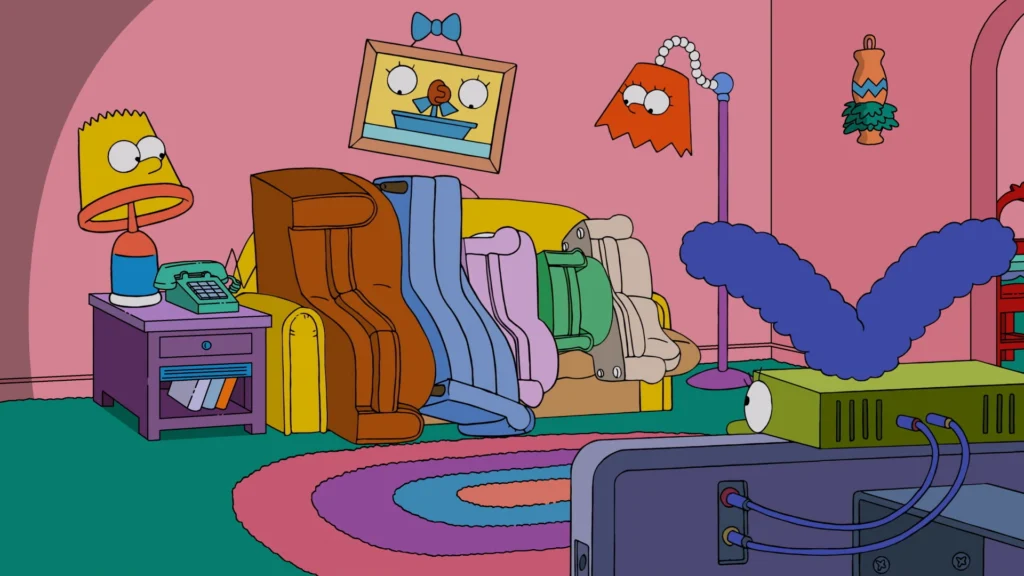
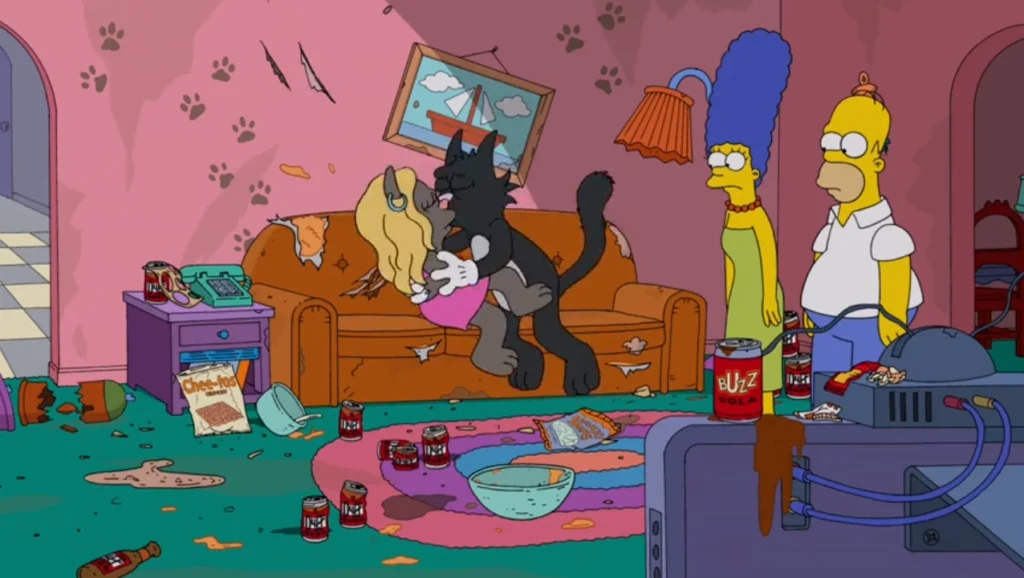
    Growing up, my favorite part of The Simpsons was the intro. At that familiar theme song, I’d race into the living room, dying to know how they’d riff on the piling-on-the-couch gag this week. 

    That childhood fascination was a strong predictor of my grown-up creative work. The mash-up of the familiar + the unexpected turned out to be the catnip my brain craves. 

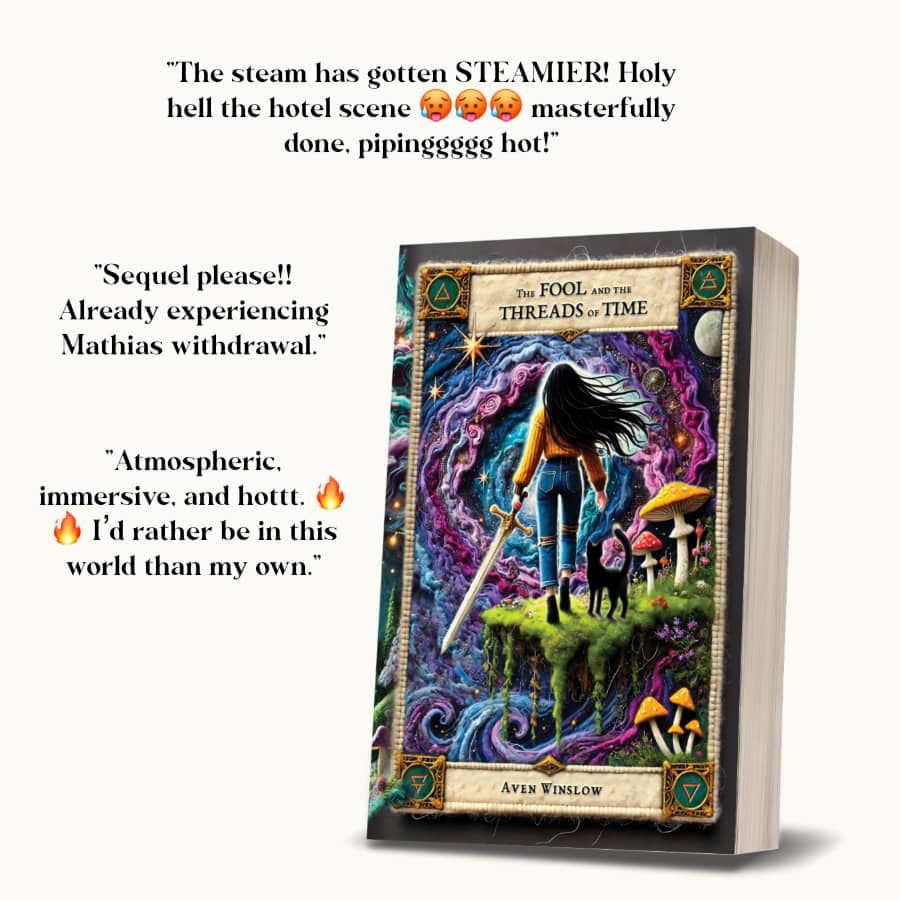
    I wasn’t conscious of this influence when, holed up in an Oklahoma City hotel room in 2022, I started writing what would become (after many, many iterations) The Fool & the Threads of Time

    But a book series about past lives is, at its core, a story of remixing. Same souls, different contexts.

    It’s the romance-novel version of the couch gag.

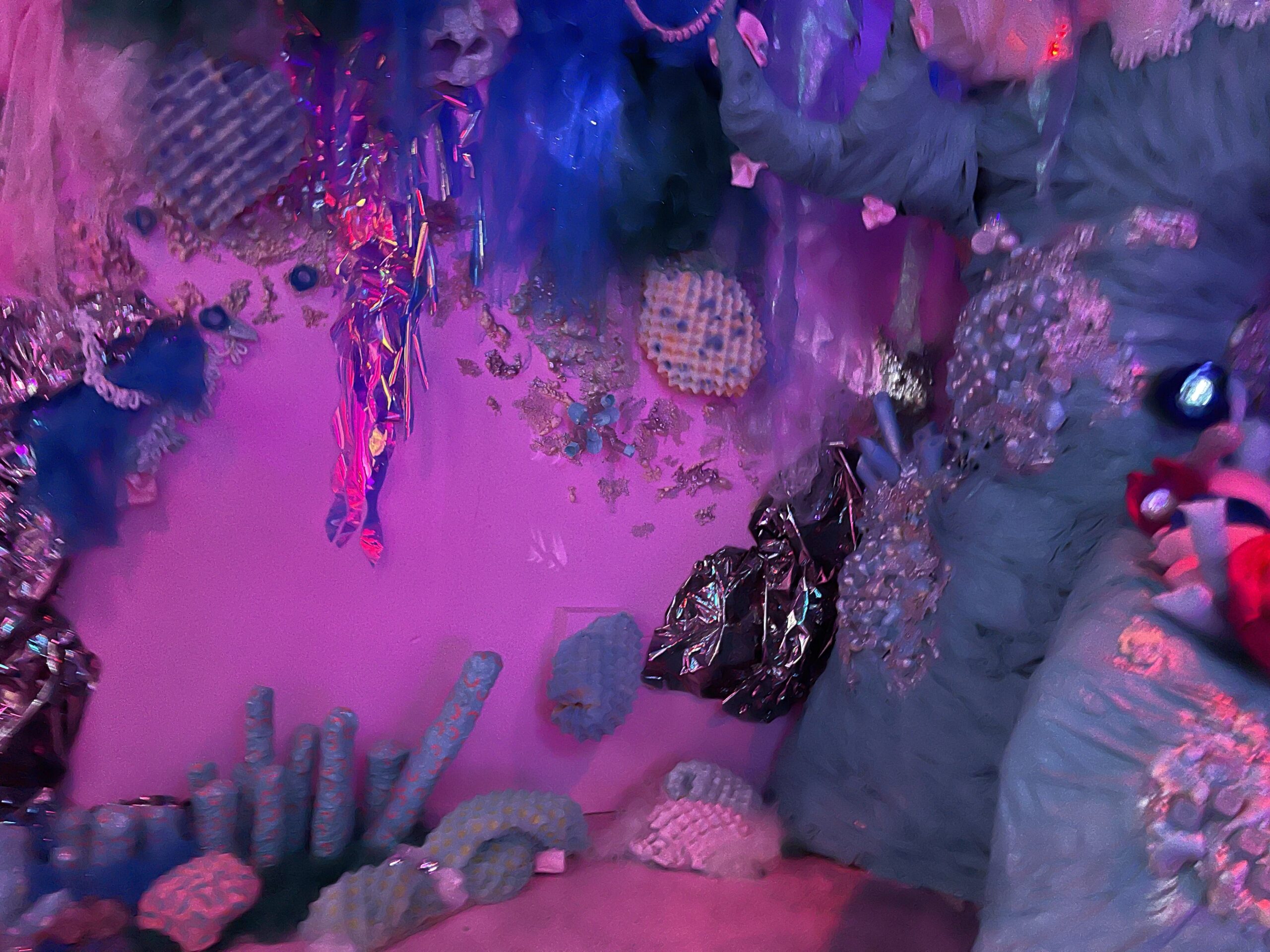
    Speaking of remixing…it was only in writing this essay that I remembered my favorite part of that Oklahoma City trip—going to Factory Obscura: MixTape, an interactive art space that had me dreaming in yarn, glitter, and tulle for weeks.

    I got to wander through a multi-room coral reef created entirely from textiles, an influence you’ll be able to spot in The Magician & the Labyrinth of Yesterdays (releasing in 2026).

    The Fragmentary Land of Memory

    Have you read Carmen Maria Machado’s memoir, In the Dream House?

    It utterly blew me away—both for Machado’s gut-wrenching honesty in recounting her experience of domestic abuse, and for the brilliant way she used narrative structure to reflect the fragmentation of memory and trauma. 

    While the story was roughly chronological, each chapter was told through the lens of a different narrative trope—for instance, “Dream House as Lesbian Cult Classic” or “Dream House as Inciting Incident.”

    That approach—using story structure to shape and reveal meaning—left a lasting impression on me. It illuminates a (sometimes uncomfortable) truth about the messiness of reality: There is no single way to understand a thing.

    A Tale of Two Tarot Readings

    I used to be a professional tarot reader, and in the 1,000-plus readings I did over the years, I will never forget two readings in particular. 

    Two new clients, booking roughly a week apart. At the center of both spreads was the Hierophant, but given how many readings I did every week, I didn’t think much of it. 

    Until I neared the end of the second reading, that is. 

    Neither client had mentioned the other’s name, so I hadn’t known that they knew each other, that they were, in fact, getting readings on the very same situation. 

    The spread was a startlingly clear map of first-person POV.

    There was the Hierophant at the center (the core theme), and a unique constellation of cards radiating outward. What one person saw as useful structure and clarity, the other experienced as dogma and control.

    Each of them was carrying a story that felt irrefutably true, but those truths were shaped by where they were standing.


    Next time, I’ll show you how this tarot-style framing shows up in my creative process—how changing the question, or the lens, can lead to dead ends…or open the door to mysterious new worlds

    See you soon.

  • I have a magical secret.

    I have a magical secret.

    Psst…did you know that I inserted a special type of magical character into my books?

    In an earlier post, I talked about the magic circle, which is the temporary boundary witches cast to create a container for their work. A space beyond space, a time beyond time. A place where the strange and the sacred can unfold…with guardrails.

    📖 Stories ripple beyond our control. They land in other people’s minds, they exist in the world, and sometimes they start to grow lives of their own.

    Grant Morrison is a comic book writer and occultist, and they’ve spoken openly about how elements of The Invisibles—characters, plotlines—began leaking off the page and into their life.

    They’re not alone.

    I recently met a fellow witch who confessed…

    …they were afraid to keep writing, because things they’d penned were happening off-page—and a little too often to be coincidence. So far, it was all good stuff…but what if that changed?

    🪄 To me, writing a book is like an extended spellworking. I’m putting so much of my intention, energy, and will into the project that it can’t help but be a magical act.

    But I knew, right from the start, that I’d need to put my characters through hell to tell the stories I wanted to tell (and to keep from boring you, dear reader, half to death).

    How to prevent unwanted magical bleedthrough beyond the book?

    Well, this is an ongoing experiment, but here’s what I did…

    I created a character inside theTwin Flames Series​, a character linked to me via a magic ritual. I call this my Cameo Character, and they have very limited page time—i.e., they’re not dashing down dark alleys, arm wrestling monsters.

    I then created a special notebook emblazoned with magic sigils. Sigils are my absolute favorite magical tool, because they work eerily well.

    Within the confines of the sigilized notebook, I write my Cameo Character’s story—the things I want to experience in my life (in other words, I’m casting a spell).

    Part of the experiment is this: when other people read the book, encountering my Cameo Character, does the magic get a boost? ¯\_(ツ)_/¯

    You better believe I’ll be tracking any strange occurrences in my grimoire!

    Want to meet my Cameo Character? They’re hidden in plain sight in the pages ofThe Fool & the Threads of Time.

    Thanks for wandering through the Crooked Door with me.

    Until next time, my friend.

    P.S. Step inside Quayside, the enchanted coastal town inThe Fool & the Threads of Time

  • What if your imagination was a place?

    What if your imagination was a place?

    Ever wonder where stories go once we imagine them? Not just on paper or glowing on a screen. I mean…beyond that.

    Back in the day, I devoured Fables, the comic series by Bill Willingham. The idea that fairy tale characters exist, tucked away in modern cities and remote forests, always gave me goosebumps, because it touches on a belief of mine.

    The boundary between fiction and reality? It’s never as solid as we pretend.

    The more I wandered through psychology, magic, and occult studies, the more I realized: those hidden corners? They’re real. Maybe not “real” like the chair you’re sitting in, but real in the way dreams, archetypes, and stories are real.

    That space is what some call the astral, a subtle layer of reality.

    And look, I get it—the word astral can sound a little floaty if you’re not used to it.

    But think about it: even when someone closes a book, that world doesn’t disappear. It still exists—in your mind, in the minds of others who’ve wandered through that fictional landscape, in that shared, intangible space we all contribute to, whether we realize it or not.

    That collective, immaterial space is the astral.

    It’s just that, in a steady process of disenchanting the world, humans have convinced ourselves that the only “real” that counts is the material one.

    C.G. Jung urged us to treat psychic contents as real—not because they exist physically, but because they ripple through our emotions, our choices, our relationships, impacting, not only our lives, but the world around us in profound ways.

    And isn’t that, in its own way, a form of real-ness?

    📺 If you watched Twin Peaks, Season 3, you might remember Dougie Jones—the eerily subdued version of Cooper, living an ordinary suburban life while the real Cooper was…elsewhere.

    Dougie (well, there were eventually two Dougies, but the same principle applies) was a tulpa—concentrated thought energy imbued with materiality, molded by intention and sustained by belief, until he existed independently of whoever first imagined him.

    The concept of a tulpa comes from Indian and Tibetan Buddhist traditions, where it refers to an emanation or manifested form, often created through advanced meditative or mystical practice. And then Western occult traditions, like Theosophy, ran with the idea, naming it a “thoughtform.”

    Every time someone imagines something, it leaves a mark on the astral.

    And the more people engage with that thing, the stronger—and more detailed—that imprint becomes.

    For instance, a cause starts as an idea, maybe one person dreaming of change, of a different future. That dream gets shared. It catches in someone else’s mind. And someone else’s.

    Soon, people are rallying behind it. Organizing. Speaking out. Creating art, symbols, movements. And even though it started as an intangible idea, it changes physical reality. Policies shift. Communities form. The world bends, even slightly, in a new direction.

    That’s the astral, feeding back into the visible world.

    Fictional worlds work the same way.

    ​The Twin Flames universe​ exists now, on the astral. The more readers wander through it, wonder about it, co-create with it in their own imagination, the more vivid and real it becomes.

    And it makes me wonder: as the astral Twin Flames becomes more fleshed out, will it get easier for me to write about?

    For example, in Book Zero: The Fool & the Threads of Time, and in Book One: The Magician & the Labyrinth of Yesterdays, you’ll encounter a place called the chrysling.

    🧐 As more people explore the chrysling, will my imagination have access to more details? Will that part of the world adopt a new level of vibrancy and depth? And if I translate that onto the page…and people read that version…will the cycle continue?

    I don’t know for sure. But I do know it’s delightfully brain-bendy to contemplate!

    I’ll let you in on a secret:

    I inserted a very special character into my books. Not quite a tulpa…but close.

    Next time, we’ll peek behind the curtain, and I’ll tell you why.

  • Is fate real?

    Is fate real?

    Ever had one of those moments where you cram your foot in your mouth or make a rash decision, only to wonder later…what got into me?

    We like to believe we’re fully in control of ourselves. It’s comforting to think that.

    But C.G. Jung pointed out a catch—the more convinced we are of our total control, the deeper, the inkier, the shadows in our unconscious become. Deny their existence, and they slip further underground, where they gain more power to shape our lives without our say so.

    😶‍🌫️ Jung called these hidden patterns complexes. But forget the pop-culture version of that word—a complex isn’t just “daddy issues.” It’s an emotionally charged cluster of ideas, feelings, and images, like a psychic splinter lodged beneath the surface.

    (Complexes are also potent energy generators that can be used in magic, but that’s a topic for another space. Curious? Check out my guide,All the Feels: The Inner Architecture of Spellwork.)

    Complexes often carry intense archetypal energy, those universal patterns we all know in our bones: love, betrayal, the hero, the shadow. When constellated (Jung’s term for “activated”), a complex floods our system with affect—emotional energy that can temporarily override our conscious will.

    It can feel inevitable. It can feel like fate.

    I am who I am. Life just is what it is. That’s how I’ve always been.

    But sometimes? It’s really a fragment of ourselves we’ve refused to examine, steering the wheel from the shadows.

    As Jung famously warned, “Until you make the unconscious conscious, it will rule your life and you will call it fate.”

    And yet, even though we can never be fully conscious of ourselves, we’re still responsible for what we do. That’s the maddening, magical paradox at the heart of being human.

    It’s also one of the obsessions behind my Twin Flames series.

    🔮 You might have noticed I’m weaving tarot symbolism into these stories.The Fool & the Threads of Time is Book Zero for a reason—the Fool card in the tarot is numbered zero, representing the beginning of a journey, full of possibility and risk.

    But this isn’t just an aesthetic choice. For me, the tarot is a map—a guide to the process of waking up inside our unconscious patterns. A way to recognize when archetypal forces flood our system… and when we might, just might, reclaim our choice.

    click the image to get the free guide!

    My characters wrestle with fate. With shadow—both their own, and the shadows cast by the many villains you’ll meet along the way. But they also wrestle with free will—the exhilarating, terrifying work of making conscious choices when it would be easier to sleepwalk through life.

    And holy hell, isn’t the siren call everywhere?

    Endless scroll. Clickbait. The commodification of our attention, carefully engineered to keep us numb, distracted, compliant…and profitable. 😵‍💫

    But story? Story invites us to wake up.

    Here at Through a Crooked Door, and within my books, you’ll find that I keep returning to those hidden intersections—fate + free will, shadow + light, truth + illusion.

    Because the boundary betwixt opposites is blurrier than most people think.

    (Something I live every day as a nonbinary person.)

    Take the “line” between imagination and reality.

    What if the worlds we imagine exist beyond the page?

    And what if they grow stronger the more people think about them?

    Next time, we’ll take a trip to the astral—a place where every story leaves its mark.

  • The real reason I use a pen name

    The real reason I use a pen name

    The internet makes introductions weird.

    We’ve gotten so used to clicking, scrolling, and baring all with virtual strangers that most of us barely question it anymore.

    Meanwhile, Big Tech lines their pockets with ad revenue earned from our free labor—the endless stream of content we create, consume, and trade for connection.

    Point being, when it comes to introducing myself, I like to be intentional about it. Do I go by Melissa or my pen name, Aven Winslow? You might wonder—what the hell does it matter?

    But the answer carries a seed of magic.

    (as do most things in my world)

    As a witch, when I cast a spell or perform a ritual, I often begin by casting a circle, an energetic boundary that creates a temporary space beyond space, a time beyond time, where all things are possible.

    🪄 I want to be intentional about what I include in my magical working, because this boosts the chance that I’ll get what I’m asking for, and not something wildly different.

    It’s like making soup: If you throw ingredients in a pot while blindfolded, you could end up with…well, anything. That’s a very different situation than purposely assembling the ingredients for minestrone or clam chowder.

    To continue our soupy metaphor, it’s also much harder to gather those ingredients without a container—in this case, a pot. Can you imagine making soup with everything dumped on the counter? Far from ending up with lunch, you’ll just have a mess to clean (on an empty stomach, no less).

    With magic, raising energy is more effective and less draining on the witch if that energy has a place to gather until you’re ready to use it.

    And, like soup, it’s less likely to make a mess—meaning, you won’t have excess energy ping-ponging about, powering who knows what.

    ☠️ Occultist Dion Fortune, in her book The Mystical Qabalah, wrote that many instances of “bad luck” could perhaps be attributed to this free-floating energy.

    What does this have to do with introducing myself?

    Well, no matter which name I use—Melissa or Aven—I’m still creating a persona, a magic circle that I inhabit when I’m online.

    We all do this, both offline and on. 🥸 We adopt personas—the interface between our inner world and the noisy world ‘out there.’

    C.G. Jung, who you’ll hear about a lot in my world, recognized that the persona could be both a help and a hindrance. We need a way to interact with others that smooths some of the inevitable hiccups of living in society with other humans.

    I mean, good god, can you imagine if the mail carrier dropped off some packages, but also divulged the sexy dream they had last night? In great detail? ThanksButNoThanks.

    I mean, more power to the mail carrier and their spicy nighttime escapades, but that’s probably best shared with someone they know well, not some rando like me who just wants their mail before retreating into their hermit cave.

    🎭 Personas have gotten a bad rap, commonly associated with being “inauthentic,” which presupposes that it’s better or “natural” or supportive of people’s health to make absolutely everything we think, feel, and do available for public consumption.

    And if we don’t overshare, we must be hiding something nefarious, something that could get us “canceled.”

    And to be sure, some people do hide nefarious things!

    But in my humble, witchy opinion, the solution isn’t mandating that everyone surrender their privacy.

    I don’t know about you, but I want to limit how much corporations get to colonize and profit off of my time, attention, and life experiences.

    Where personas can trip us up…

    …is when we mistake them for the sum totality of who we are. Personas typically contain the aspects of ourselves that society has deemed “acceptable,” and they’re a mere sliver of our gloriously messy, capital-S Self.

    I like to view my persona(s)—yes, we all have multiple personas, like outfits 👖 that we wear with friends versus co-workers and so forth—as magic circles.

    I am not the magic circle. The magic circle is a temporary container for my sprawling, wild, uncontainable Me-ness, but this circle-casting allows me to step into our shared space as Aven Winslow, with intention.

    That’s the reason I use a pen name.

    Aven Winslow isn’t a mask to hide behind—it’s a magic circle of its own.

    On a practical level, it also helps keep the worlds I create clear.

    If you’ve read ​my magical nonfiction​ under Melissa Tipton, that doesn’t automatically mean you’ll be into my ​super spicy romantasy​—and having separate magic circles (er, pen names) makes it easier for everyone.

    Through a Crooked Door (this email you’re reading being one installment) is part field journal + grimoire, and part rebellion against the algorithms trying to bulldoze us all.

    I’ll share aspects of my life that are relevant to my writing, like…

    ✨ My studies in occultism, Jungian psychology, politics, writing craft, etc., and how they relate to my books.

    ✨ My creative process—and often, how that dovetails with my magical practice. (Tarot and spells and rituals, oh my!)

    ✨ Juicy details about my characters, their world, and its lore and magical systems.

    This space is more than a digital soup pot of ones and zeros. It’s a circle where magic happens.

    If that sounds like your kind of place—welcome. 👋 I’ll see you on the other side of the Crooked Door.

    🚪Next time, I’ll be back with a story about fate, free will, and the hidden forces that shape us—both through the lens of my books and in everyday life.

    Until then, thanks for wandering this way, my friend.