
One treacherous day last winter, I ran out of books to read. 😱 The library was closed for bad weather, and for once, I didn’t have a TBR stack silently judging me from my nightstand.
Louisa May Alcott to the rescue!
Years ago, I’d picked up a collection of her pseudonymous thrillers at a used bookstore and promptly forgot all about it. Scouring my shelves in a state of desperation, the weekend was saved.
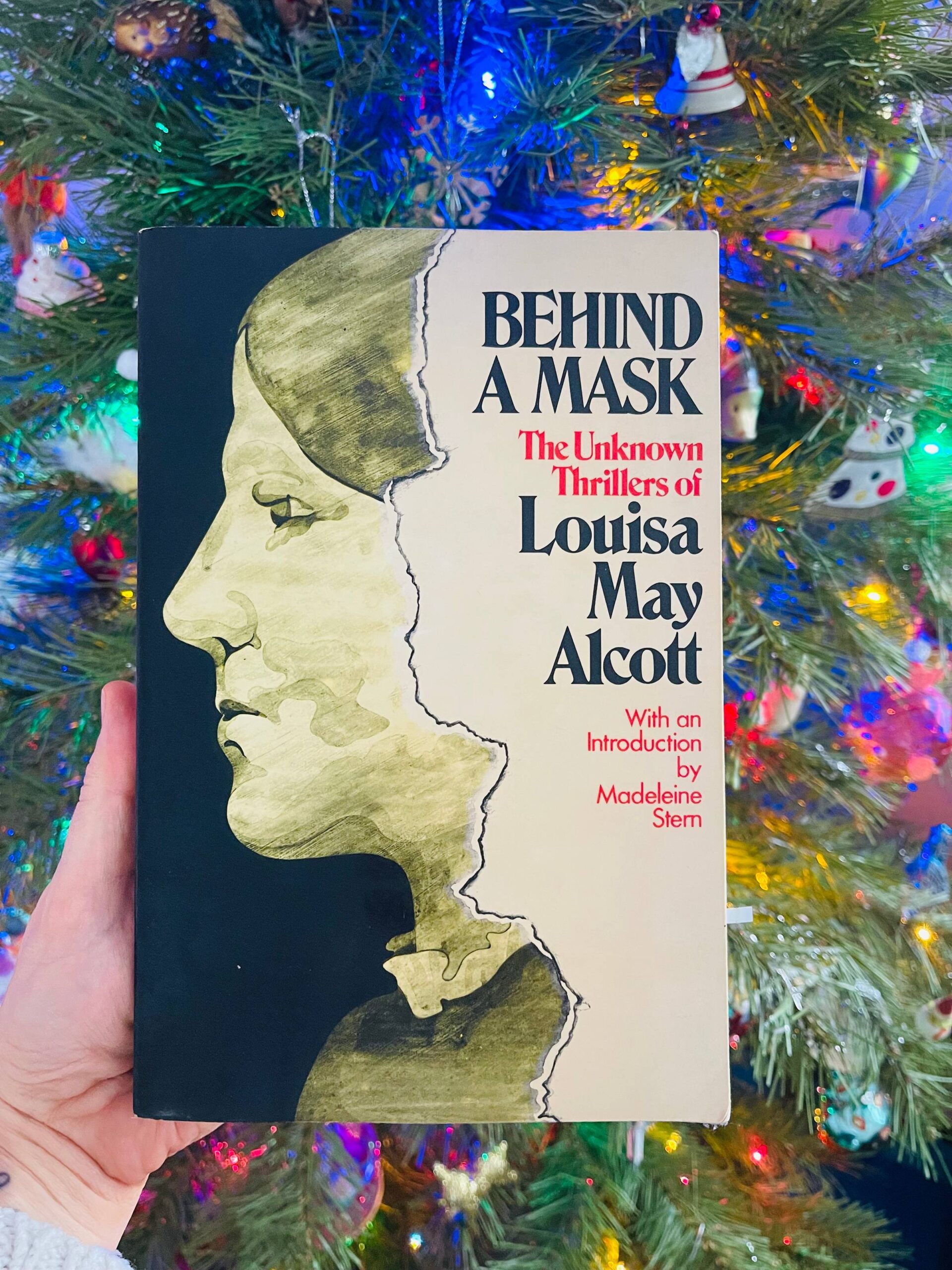
The first—and in my opinion, best—story is Behind a Mask. The protagonist, Miss Muir, takes a job as a governess in a house with three eligible bachelors (two brothers and an uncle) and proceeds to make the moves on all of them in hopes of bagging a rich husband.
Now, the story is dated, to be sure, and I definitely got the ick over the elderly uncle, who wants to marry the very young governess, being presented as charming and naïve, not predatory, due to his “inherent” nobility (read: richness, maleness, and whiteness), but this isn’t an essay about how I’d change things with a modern retelling.
What I want to know is, how did this story have me turning pages well past bedtime?
Turns out, Behind a Mask had a thing or two to teach me about pacing.
Before we take one step further, what do I mean by “pacing”?
I don’t necessarily mean rapid speed, like a nail-biting thriller. I’m referring to the sustained sense that something is in motion, that every character choice tightens the situation rather than letting it lag.
Skillful pacing keeps the reader oriented toward a question, generally some variation on what’s gonna happen?? Even in quieter scenes, if the character’s actions elevate risk, sharpen desire, or narrow their options, the story keeps pulling us forward.
That pull is pacing.
When we get down to it, we’re primates who like watching other primates 🐒 and it’s particularly hard to peel our eyes away when another monkey is doing something that could blow up in their face. Even if our main character (MC) isn’t dodging flamethrowers while leaping from a derailed train car, the reader gets hooked if they see the character progressively digging themselves in deeper.
“Deeper” doesn’t necessarily mean something dreadful is on the horizon. In a romance, it could be the delicious anticipation of the lovers finally gettin’ it on. The point is that we’re trundling onward such that there’s never a good moment to put the book down.
This is why it isn’t about sheer speed, because different stories (and different scenes) might call for a lickety split or more leisurely tempo. Either can feel well-paced, so long as we’re eagerly anticipating what will happen next. And this is precisely how Behind a Mask kept me up past my bedtime. Miss Muir relentlessly tightens the web drawing the men closer, and each tug risks one suitor discovering the other two and toppling her house of cards.
If we boil this down to essentials, what makes this scenario interesting are the questions:
- What is the character doing (and often, why)?
- What’s gonna happen?
It’s easy to read mountains of craft books and forget the basics (for me, anyhow). We get so wrapped up in building a compelling character arc or a meticulously structured plot that we forget to reel in the reader with an ever-tightening loop of “what are they doing, and what’s gonna happen?”
Unless a reader is analyzing a text, they’re less likely to think, “Hmm…we’re nearing the midpoint. I bet something pivotal is about to happen that will thrust the MC from a reactive to a proactive stance.” Rather, our primate brains are constantly scanning for risk, and if the story loops have been tightening, the reader is instinctively bracing for a whammy (and hopefully unable to put the book down in the meantime).
In a future essay, we’ll talk more about raising the stakes, but at this stage, we can note that simply repeating this loop of “what are they doing, and what’s gonna happen?” isn’t enough. The reader also wants a sense that things are building, that the risk isn’t resetting after every cycle.
The Hidden Pacing Killer
As a writer you might think, “Well, duh, of course I want things to ratchet up,” but it’s surprisingly easy to let the balloon deflate and then fill it up again, as opposed to squeezing in a bit more air, and a bit more, until—BOOM.
In Behind a Mask, it wasn’t just that Miss Muir was reeling in three bachelors at once. Every success with one dude made it more likely the other two would discover her scheme, and the danger escalated until so many plates were in the air, it seemed certain they’d all come crashing down. If, instead, Miss Muir had ample time to regroup and start afresh after every mishap, I never would’ve made it past page three. 😴
For me, the reasons I unwittingly deflate my story’s pacing are:
One, even as the writer—not the character whose feet are over the flames—this stuff is stressful! I sometimes find myself releasing pressure for my own writerly comfort.
Two, amping up the stakes requires careful planning, whether you’re an outliner who maps it out ahead of time or a discovery writer who weaves it in as you go. Without planning (and skillful revising), the story can feel more episodic than cumulative, something we’ll explore in an upcoming essay, and the end of each episode subtly presents the reader with a choice: keep reading or DNF it?
Three, when you’re steadily making life harder for your characters, this typically complicates the story. We’ll look at this in a future essay, but I’ve been guilty of smoothing friction to make a scene easier to write. Instead, I’d be better off taking a break so I can come back renewed and ready to unleash the fury of hell on my characters. 😈
Keep ‘Em Guessing
It probably goes without saying, but interrupting a reader’s expectations makes the basic story loop even more effective. If every time the reader asks, “What are they doing, and what’s gonna happen next?” their guess is precisely what happens? Bedtime. 🥱
By violating reader expectations in ways that nonetheless feel inevitable (meaning, they track with the story’s logic), you never let readers relax into complacency. This keeps those core questions alive, which, in turn, maintains a compelling pace.
This brings us to a potential pitfall. Sometimes, as your character is diligently digging themselves deeper into the muck, they earn the dreaded label of Too Stupid to Live (TSTL). To ensure your readers aren’t yelling, “Oh, come on,” before flinging the book across the room, you won’t want to miss next week’s installment.
See you then!