Category: 2025 Writing Lessons

  • 3 Habits of Productive Writers

    3 Habits of Productive Writers

    Welcome to the final installment of All the Writing Shit I’ve Learned Since My First Novel! Today is a bit of a junk-drawer roundup. So, without further ado…

    #1 Don’t Be a Big Ol’ Meanie to Yourself

    Learning to be a good steward of my energy—and adapting my work processes to fit my needs, rather than cramming my sparkly unicorn-shaped peg into a square hole—has been one of my biggest lessons. And, frankly, it’s still ongoing.

    To put it mildly, I haven’t always been great at listening to my body and spirit when it comes to work-life balance. I have a tendency to push, push, push, adhering to rigid to-do lists at the expense of my health. But 2025 was a year of slooooowing down and paying attention—something I plan to continue into 2026.

    One very practical application of this shift? I stop each writing session while I still feel energized. If you read a lot of craft books, you’ve probably encountered Hemingway’s advice:

    “The best way is to always stop when you are going good and when you know what will happen next. If you do that every day when you are writing a novel you will never be stuck.”

    Ernest Hemingway on Writing

    Some writers stop in the middle of a sentence. Others leave off before the final paragraph of a chapter. Both approaches create an easy on-ramp the next day: finish the sentence, polish the paragraph. For me, it’s less about where I stop and more about how I feel when I do.

    In the past, total exhaustion was my signal to quit. Until I reached that frazzled, frustrated point of depletion, stopping felt lazy. This is like driving your car until you run out of gas on the side of the highway every single time. Not only is it wildly inefficient, it’s stressful, demoralizing, and—when we’re talking about a human rather than a car—punishing and cruel.

    Not cool, Past Me.

    ✍️ Now, I leave energy in the tank. And as Hemingway suggested, I make sure I know exactly where I’m picking up the next day. If I’m revising, I’ll highlight the next item in ​my revision checklist​. If I have a thought about how I want to approach an upcoming scene, I’ll leave myself a comment in Scrivener before closing up shop.

    These small adjustments make it a billion times more likely that I’ll be excited to get back to work tomorrow.

    #2 Cook Up a Juicy Premise

    One of the unexpectedly delightful parts of writing The Magician & the Labyrinth of Yesterdays (Twin Flames: Book One) has been the element of fanfic.

    The book is a parallel timeline to The Fool & the Threads of Time (Twin Flames: Book Zero), and this time, Ev Knox has finally published her debut novel.

    She’s floored when it becomes a runaway success—such a success, in fact, that the internet’s boyfriend, Matt Byrne, is cast as the lead in the film adaptation. Matt is the type of famous that has fans obsessively dissecting every social media post for clues about his fiercely guarded private life—especially his dating life—while producing reams upon reams of fanfic about him and his on-screen characters.

    After Ev meets Matt on set and finds him to be funny, sweet, and distractingly hot, she “stumbles” into the world of Matt Byrne fanfic. (Just a bit of harmless internet stalking!)

    Translation: not only did I get to invent fake movies for Matt to star in, I also got to come up with spicy fanfic premises based on those movies. Fake fanfic about a made-up character starring in made-up films. Deliciously meta. 🤤

    For one scene, I actually needed to write an excerpt of this fanfic, and oooowee, was that ever fun. So fun, in fact, I’ll be fleshing it out into a novella called Never Answer After Dark at some point.
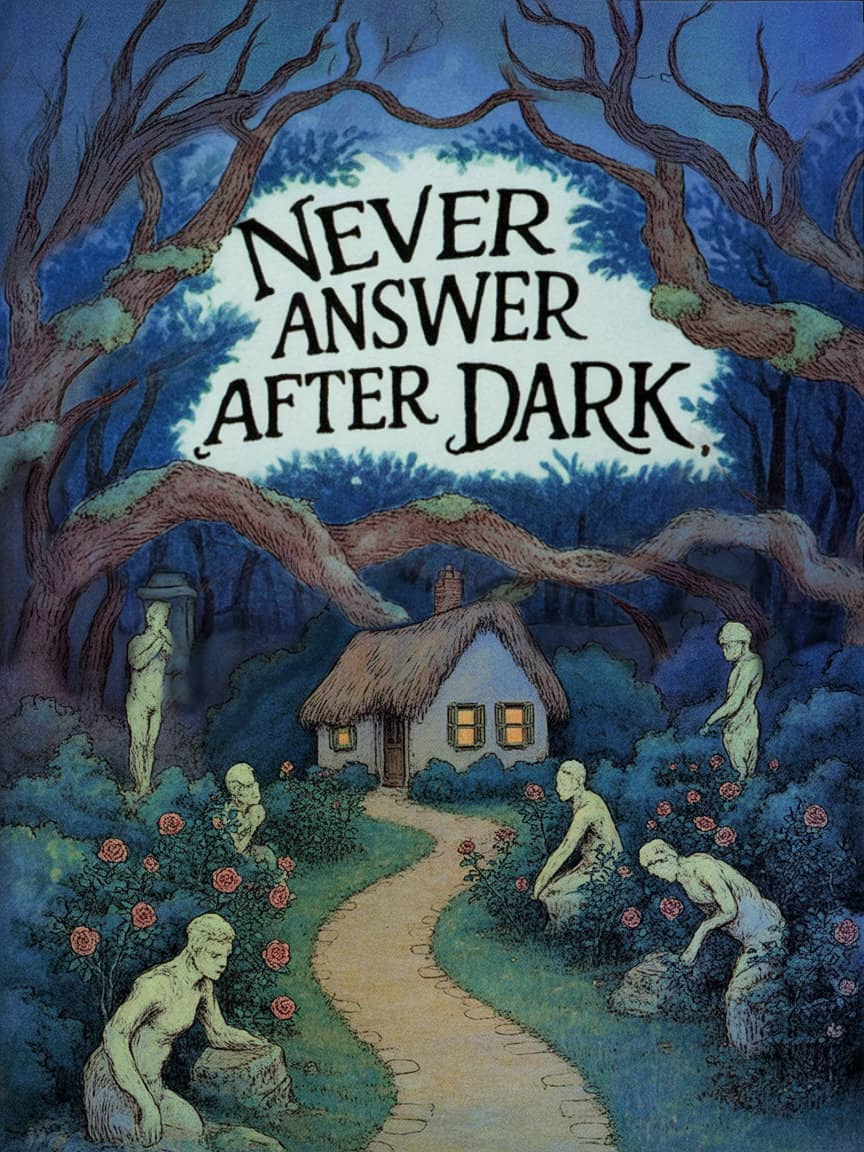
    💡 Here’s what I noticed: some fanfic premises had sparkle, baked in from the start. I could explain them to a friend in a sentence or two, and had to actively resist getting sidetracked writing the whole damn thing.

    Contrast this with my experience explaining The Fool & the Threads of Time. It spans multiple lifetimes, so some complexity is inevitable, but I now recognize that the premise itself is also a bit sprawling.

    With Never Answer After Dark, I know exactly who the characters are, what the central conflict is, and what’s at stake if they fail—the three building blocks of a strong premise.

    With The Magician & the Labyrinth of Yesterdays, I got much, much closer to cooking up a juicy premise, but you better believe that with the next book, I’ll be spending even more time refining the premise at the outlining stage.

    A strong premise doesn’t just make a book easier to market, so the right readers instantly know, oh, this is so totally for me, it also makes the book easier to write. And hey, I’ll happily take both!

    #3 Notice When You’re Getting Lost in Busy Work

    One of the best things about writing—we’re usually working alone, doing things however we damn well please—can also be one of the worst things about writing. There’s no little writing angel perched on our shoulder, ready with a loving pinch when we’re frittering away time on bullshit. 👼🏾

    Sometimes we think we’re being productive, but to quote Tyler Durden in Fight Club, we’re just “polishing the brass on the Titanic.”

    This cropped up for me toward the end of Draft 4 of The Magician & the Labyrinth of Yesterdays. I’d just taken two weeks off during the height of ​my tiny food​ busy season before diving back in, ready to continue with my revision checklist.

    Because I’d been addressing a specific subsection of the manuscript (the group dynamics), I’d tackled things out of order. Now I was back at Chapter 1, ready to move through the manuscript from beginning to end. Even though this was not the stage for a careful line edit, I found myself obsessing over word choices and fiddling with superficials.

    What tipped me off was a familiar feeling of dissatisfaction at the end of my writing session, and I’ve learned to pay attention to that! Within ten minutes of sitting with it, the issue became clear:

    Two weeks away from the manuscript, combined with two drafts in a row focused on targeted revisions, meant it had been months since I’d done a full read-through. Those focused passes were absolutely necessary, but I’d reached a point where my sense of the whole had grown fuzzy. Without that big-picture orientation, my revisions were reactive and cosmetic rather than strategic.

    It felt like a massive win to realize this after a single day, instead of grinding forward for weeks, making changes that didn’t meaningfully improve the book, just so I could tell myself I’d been working.

    💡 Sometimes the most productive thing you can do is recognize that you’re no longer doing the work you think you’re doing and change course. Learning your own tells makes that much easier. Do you feel grouchy and dissatisfied? Do your thoughts feel slippery, like you can’t quite get a handle on what you’re doing or why? Do you find yourself procrastinating?

    You may not have a harp-playing angel perched on your shoulder, but your body, mind, and spirit are continually offering feedback. They’ll let you know when you’re forcing something that needs space, clinging to a rigid method that doesn’t fit you (or this particular project), or when you simply need to step away and rest.

    The challenge often isn’t getting the signals. It’s listening to them and choosing to honor what you hear.

    ✍️ Thank you for hanging out with me as I waded through my lessons learned! I hope this Creative Season has been as helpful for you as it has been for me.

    And now…I’m off to finish revising The Magician & the Labyrinth of Yesterdays! I’ll see you next time, for a brand new ​Creative Season​. 💖

  • Handling Messy Revisions

    Handling Messy Revisions

    Last week, I promised to break down my approach to revising the messy climax sequence in The Magician & the Labyrinth of Yesterdays, so let’s get into it…

    Timing Matters

    💡 First, it’s important to say what I didn’t do: I didn’t attempt this revision after the first draft, or even the third.

    Despite meticulous outlining, there’s always an element of surprise once I start writing. The first couple of drafts are about getting the story onto the page and stabilizing the plot. They’re exploratory by nature, even when I know where I’m headed.

    With The Magician, by Draft 4, something important had shifted. The characters’ progression through the climax sequence was mapped, at least in a physical sense. Everyone was showing up in the right place, at the right time, more or less doing the right things. I wasn’t likely to make radical structural changes at that point, which made it the right moment to drill down into specifics.

    💡 Just as importantly, I finally had the mental bandwidth to tackle this work. These climax revisions were a subset of the larger group-dynamics glow-up ​we talked about last time​, and trying to do all of that earlier would have been a recipe for burnout.

    Attempting to revise your story from too many angles at once is a reliable way to trigger overwhelm and procrastination. If revising feels like hell, narrowing your focus can make all the difference!

    Clear goals make it easier to sit your butt in the chair because you know exactly what you’re meant to tackle next, rather than scrolling through your manuscript with the vague intent of “revising.” Without a plan, it’s far too easy to lose yourself in line-level tweaks when larger plot or character-arc issues need attention first.

    Choosing a Draft Focus

    So how do you decide what to focus on in a particular draft?

    The frustrating but honest answer is: it depends—on you, on the project, and on where you are in the process. Not every book will follow the same progression.

    For me, I usually start to sense the focus of the next draft about halfway through the current one. In this case, while working through Draft 3, I noticed that too many of the side characters felt flat. That flatness showed up most clearly in the climax—the first time they’re all on page together—where the interactions felt cookie-cutter.

    ✍️ Rather than trying to address that during Draft 3, when I already had plenty of structural changes on my plate, I created a Draft 4 checklist. Whenever I spotted a revision related to side characters or group dynamics, I added it to my list and organized those notes by scene and character.

    This did two things: it kept me from getting sidetracked mid-draft, and it meant I entered Draft 4 with a clear, contained focus.

    Group Dynamic Plan

    Last week, I walked through how I built my group-dynamics outline: mapping both the arc of the group as a whole and the individual character arcs within it.

    I combined that outline with the checklist I’d been compiling during Draft 3, which gave me a master plan for my next draft: scene-by-scene, character-by-character, focused entirely on group dynamics.

    At that point, the question became less what do I need to fix? and more where do I start? 🤔

    Why I Started at the End

    Every project is different, but in this book, the side characters don’t appear together as a group until the climax. Because of that, it felt far more manageable to revise the climax sequence first and then tackle the rest of the book. By hammering out where the group ends up, I could clearly see what needed to be earned earlier.

    For example, knowing that Adrian eventually needs to relinquish control and trust other people made it obvious that I needed to show him grasping for control—and fearing trust—earlier in the story.

    Your brain could work very differently from mine, and revising out of order might sound like a nightmare to you. Adjust as needed!

    The real takeaway here isn’t start at the end, but rather: notice when your usual approach is creating unnecessary friction. I usually prefer working linearly, but in this case, insisting on that order was generating too much mental static. Once I adjusted my approach, those roadblocks turned into tumbling dominoes—one solution revealing the next.

    Breaking Down the Climax

    My climax sequence consists of 10 scenes. Simply telling myself “revise the climax” was far too blobby of a task. So I broke it down.

    ✍️ Working backward again, I started by revising Climax Scene 10 using my outline checklist. From there, I expected to move on to Scene 9, then Scene 8, but diving into Scene 9 felt like slamming into a brick wall.

    Once I paused and examined the resistance, the problem became clear: the climax alternates between action scenes and reaction scenes. Action scenes carry forward momentum—events, decisions, consequences. Reaction scenes process that momentum, emotionally and strategically, and my brain simply didn’t want to switch gears mid-revision.

    So I didn’t.

    ✍️ Instead, I worked backward through only the action scenes on my first pass. This small adjustment made the process feel intuitive and energizing instead of sloggy. Once the action backbone of the climax felt solid, I returned to the reaction scenes, this time revising from the beginning of the sequence to the end.

    My point in sharing such nitpicky details is to illustrate how you can combine a clear plan—my scene-by-scene checklist—and adapt when you meet resistance—huh, I actually need to start at the end—rather than letting things grind to a halt if they’re not working the way you expected.

    Expanding Beyond the Climax

    With the climax revised, I zoomed back out to the rest of the book—again, in a deliberately constrained way. Remember, Draft 4 was solely about group dynamics, and I used my checklist to guide the work. I didn’t get sidetracked by line edits, nor did I dive into other issues if they arose. Those were added to my Draft 5 checklist!

    ✍️ Starting at Chapter 1, I revised each character’s arc leading up to the climax, ensuring their individual goals and conflicts were clearly established before they converged.

    Once that groundwork was in place, I returned to the climax one final time to add any ripple effects—small details that now felt earned because the foundation was now established.

    Do Try This at Home

    When a scene or sequence feels impossible to revise, it might be because the problem is too big for your brain to comfortably hold. Books are complicated little beasties!

    Clear focus. Smaller tasks. Willingness to adjust when you hit resistance.

    These are the tools that turn a tangled ball of yarn into a puzzle your writerly brain actually enjoys solving. If you’re staring down a revision that feels overwhelming, my hope is that this gives you permission to shrink the problem until forward motion becomes possible again.

    Next week, we’ll wrap up this series on All the Writing Shit I’ve Learned Since My First Novel with a few more thoughts on outlining, revising, and bringing the spark back into your work.

    See you then!

  • Mapping Your Story’s Group Dynamics

    Mapping Your Story’s Group Dynamics

    Last week, I named one of the key archetypes animating my work: people coming together. Today, I want to show you what it looked like to actually build that on the page.

    After all, just because people coming together opens the floodgates for me doesn’t mean I’m automatically translating that depth of emotion into my story. There are scenes in my first novel, The Fool & the Threads of Time, I’d now revise, knowing what I know about building group dynamics—but that’s a task for another day!

    ✂️ Today, I want to show you how I divided this problem into manageable chunks, so I wasn’t trying to juggle a circus tent of details all at once.

    My exact process might not work for you, but the underlying principle still applies: once you identify the archetype you want to channel through your writing, you can break the work into doable, focused tasks.

    Coming up with a Game Plan

    Given that my chosen archetype was people coming together, I began by researching what other smart people already knew about group dynamics. This led me to improv theater, anthropology, ritual behavior, and a framework called Tuckman’s stages of group formation (among other cool stuff).

    I’d just finished Draft Three of The Magician & the Labyrinth of Yesterdays, and based on my research, I created a Draft Four outline focused entirely on group dynamics. Importantly, I didn’t aim to fix anything else in this draft.

    I wasn’t polishing the haunting subplot and fixing the opening chapter and tightening Ev’s character arc.

    💡 Draft Four was about group dynamics—full stop. This constraint kept me from getting overwhelmed and throwing in the towel.

    If you find yourself spinning, it may be time to narrow your focus. Trying to revise everything at once is a reliable way to do nothing—or to redo scattered efforts later, which can be pretty demoralizing.

    Mapping the Arc of the Group

    I approached the outline in two phases: mapping the arc of the group as a whole, and mapping the arcs of individual characters within it.

    ✍️ Using Tuckman’s stages—forming, storming, norming, performing, and adjourning—I mapped the emotional trajectory of the group across the story, relative to the main plot beats. This immediately solved a recurring problem: scenes where characters were technically present, but nothing progressed relationally.

    Once I started asking, What stage is the group in right now?, the scene-level choices became clearer. I didn’t force scenes to match the stages mechanically, but holding them in mind helped me figure out which seeds needed to be planted where and kept me from rushing emotional payoffs the story hadn’t earned.

    This became especially important when building the climax sequence, which we’ll talk about next week.

    Defining Roles Without Erasing Difference

    Once I’d mapped the group’s arc, it was time to define each character’s role within it. Some of this work existed in earlier outlines or was already on the page, but studying group dynamics pushed me to go further, especially around contrast and conflict.

    It made little sense to have multiple characters performing the same function, like several people diffusing tension with humor, but it’s not always easy to spot this overlap in your own story. You get attached to the characters’ personalities, overlooking that they’re functionally redundant.

    I also knew—based on why the people coming together archetype hits so hard for me, personally—that unity without difference would drain the archetype of its numinous quality. To keep the magic alive, I had to build a group powered by contrasting personalities and conflict, showing why the characters chose to work together.

    ✍️ To make my job easier, I assigned Enneagram types as a shorthand for how each character would respond under stress. This helped me map each character’s arc in relation to the group.

    For example, in The Magician & the Labyrinth of Yesterdays, Adrian is an Enneagram 8. Early in his arc, his reflex is to shut down vulnerability and take control, which puts him in direct conflict with Inés.

    As an Enneagram 7, she’s oriented toward vision and possibility; she wants to steer the group because she’s already living a few steps ahead, impatient with anything that feels like stagnation or constraint.

    Over time, they learn how to use those same instincts in service of the group. Adrian’s impulse to take control evolves into an ability to steady the group under pressure, while Inés’ vision and forward momentum helps them push through fear that might otherwise stall their quest.

    And crucially, when individual strategies break down, this creates space for someone else to step in. When Inés spirals, it’s Margot, whom Inés has dismissed as a hopeless nerd, who brings her back to the present. Those moments build trust and strengthen the group’s bonds—in other words, they channel that people coming together energy I’m after.

    Keeping Track of Who’s Doing What

    One of my biggest practical concerns with a large group was accidentally dropping threads, and in doing so, missing opportunities to earn the emotional impact of people coming together.

    ✍️ So, I did something unglamorous but effective: I listed every scene by character, creating a checklist of revisions specific to that character’s arc within the scene.

    Even if a character only had a line or two, those lines needed to count. They needed to advance the character’s individual arc alongside that of the group, bringing to life a person with their own goals, hopes, and fears—someone who exists independently of the protagonist.

    This isn’t just about avoiding cardboard cutouts.

    It’s about making sure that when the group finally does come together, it feels earned. When a character steps up in a critical moment, the reader shouldn’t be thinking, Oh right, that person exists.

    They should experience the swelling recognition of seeing someone they know choose differently, feeling, in their bones, that this is the moment the character has been growing toward.

    It’s the person who’s always handled things solo—the fixer, the one who never wants to be a burden—realizing they can’t brute-force their way through this one. The plan is unraveling. Time is running out. And instead of pushing harder…they stop. They take a breath. And they finally admit, I can’t do this alone.

    Someone leans in, noticing the tremor in their hand, and steadies the map before helping to find a new escape route. Someone else flips through the grimoire and finds the spell that changes everything. Another person doesn’t say anything at all; they simply move closer, anchoring with a quiet hand on a shoulder.

    The character doesn’t become weaker for asking; they become part of something larger. And that—that shift from isolation to interdependence—is what turns on the people coming together waterworks for me, every single time. 😭

    Untangling a Knotty Climax

    Next time, I want to show you how I tackled revising a climax sequence that initially felt impossible to hold in my head—especially with the whole group in play—and how I transformed it into a puzzle I actually enjoyed solving, one piece at a time.

    If you’re wrestling with scenes that feel too messy to revise, this one’s for you.

    See you next week.

  • Finding Your Secret Sauce as an Author

    Finding Your Secret Sauce as an Author

    Over the past month or so, we’ve been talking about pacing, story goals, and stakes, but I want to pause and get personal today, because the kinds of stories we’re drawn to aren’t arbitrary.

    They’re often expressions of archetypes that carry real charge for us as individuals, whether we’ve named them or not.

    When you identify the archetypes that speak deeply to you, they become wellsprings of surprisingly potent energy, and when you channel this energy into your writing, you’re not manufacturing meaning—you’re tapping into something that’s already alive.

    Throughout my 2025 adventures in learning how to improve my pacing and romantic tension, at one point I set aside all the craft books and post-its and asked myself, What actually matters to me when I’m writing? Like flicking on a movie projector, I was flooded with images and sensations, all woven together by a crystal-clear theme.

    My personal archetype is…

    My One Ring to Rule Them All is People Coming Together. (Henceforth, I shall call it PCT, so I don’t have to keep typing that out.) This is any depiction of folks choosing to work together for the betterment of everyone.

    I can read the driest, most textbook-y description of a PCT scenario, and I’ll be dabbing my eyes with a tissue.

    I can watch a car commercial with a dash of PCT and straight up happy-cry. And if they really slather it on, it’s more like happy sobbing.

    This archetype is so readily accessible to me that I have to choose when to engage it, or I’ll end up weeping in grocery store aisles. Really, weeping is shorthand for a whole constellation of sensations: my heart swells with warmth and compassion, and my body hums with love, generosity, and a sense of this is what it means to be human.

    Not all forms of togetherness hit me the same way, though.

    To understand why, we need to time travel back to my childhood, where PCT energy came with a catch. In my family, connection was available, but only if you were willing to pay the price. You could belong if you denied large swathes of yourself and merged with the blob. It wasn’t togetherness so much as absorption.

    You could be part of the group, but only if you sacrificed your selfhood.

    It took me decades to realize how profoundly lonely this form of “connection” was. Being together meant disappearing. It meant divorcing myself from my inner world, because that world contained messy things that could disrupt the blob. There was no room for meaningful difference.

    💡 Which is why, for me, the most potent charge of PCT isn’t just unity. It’s unity through difference.

    Each person brings their own shape, their own strangeness, their own way of being, and the collective becomes stronger because of it, not in spite of it.

    When I obey my old programming—difference is dangerous—I feel chronically unsafe, cynical, and angry at the world. (And if you want to see this fear writ large, turn on the news.)

    But when I look for ways to honor differences while still working together, something shifts. Sometimes only for a minute or two, but that’s often enough. After all, miracles aren’t bound by ordinary space and time.

    When I live from this place, the world hums with connection. When I cast spells from this place, they work. And when I write from this place, the words feel alive.

    This is what matters to me when I’m writing, and it’s why group dynamics keep showing up in my stories. By learning how groups form, strain, fracture, and learn to function together—and how to translate this onto the page—I’m becoming a more competent channel for this personally meaningful archetype.

    This imbues my writing with a greater sense of purpose and meaning, which is wonderful in and of itself, and it’s also handy on days when I can find a million excuses not to sit my butt in the chair.

    When we identify the archetypes that matter to us personally, we gain clarity.

    We stop fearfully copying other people’s formulas in hopes of “getting it right,” and start channeling something that already has energy, coherence, and life. This opens up avenues of research, skills-building, and story that you’re uniquely motivated to explore. These threads seem to glow, to beckon you onward, and no two people will be drawn to the exact same ones.

    When you follow these threads, your writing glimmers with a magic only you can bring into the world, and I don’t know about you, but those are the kinds of books I want to read!

    Next time, I want to stay with this idea and show how I translated this meaningful archetype into concrete choices on the page so you can do the same in your work.

    See you then.

  • Avoid These Subplot Snafus

    Avoid These Subplot Snafus

    Today we’re exploring the magic of subplots, because when handled skillfully, they pass the baton of tension from one story thread to the next, never letting it lag.

    Mishandled subplots stall a story, and this pitfall has very little to do with how interesting a subplot is on its own. In fact, the more interesting the subplot, the more likely you, as the author, will struggle to discern whether it truly adds to the story.

    Let’s call on trusty Sir RidesALot to help us out.

    Avoid episodic subplots

    Sir RidesALot encounters a village plagued by a vicious bridge troll. Not one to leave innocents at the mercy of monsters, he stops and battles the beast. The fight is a well-choreographed nail-biter, and when Sir RidesALot swings his sword one final time, dashing the troll off a mile-high cliff, the villagers swoon with gratitude. Sir RidesALot mops off his brow and rides on toward the castle, satisfied by a job well done.

    On the surface, this is dramatic, it shows Sir RidesALot’s competence, and it may even be memorable. But nothing has really changed. Sure, the troll is gone and the villagers are safe, but once Sir RidesALot crests the next hill, the subplot seals itself off. We return to the main plot, which is entirely unchanged by this trollish diversion.

    These side quests lose their power when they merely enrich the protagonist’s résumé without altering the trajectory of the story.

    Skillfully weave compounding subplots

    ✍️ This time, let’s change nothing about the surface action, but get this subplot working much harder for the story.

    Sir RidesALot gallops into the village and vanquishes the troll. Afterward, while enjoying his congratulatory meal at the local pub, the villagers reveal something unsettling: the bridge troll wasn’t an anomaly. In this once-peaceful region, monsters have become frighteningly common, such that a third of the villagers have already packed up and moved.

    Suddenly, the bridge troll isn’t a one-off worry. It’s a sign of a bigger problem.

    Oh, and did I mention that Old Mister Thorndike, once he’s had an ale or five, starts ranting about Count McFang meddling with forces best left alone, weakening the magical wards separating our realm from the Underworld?

    Even if, at this point in the story, Sir RidesALot doesn’t know about his eventual showdown at Count McFang’s castle, these details seed that future conflict, a conflict that will feel earned and satisfying to readers when those threads converge.

    And if he’s already en route to the castle? This disturbing intel lays the groundwork for the eventual reveal: that McFang intends to use Sir Beloved as a magical battering ram to break down those protective wards for good, overrunning the mortal world with creatures that will make that bridge troll look like the Easter Bunny.

    Even after we leave the village, pressure remains. The journey to the castle is no longer a simple race against time, but a narrowing corridor of worsening conditions. The story doesn’t reset—it tightens.

    This is what effective subplots do, and one useful way to think about them is as a river. Your main plot is the river’s current. Subplots shouldn’t be calm, isolated ponds ten miles from the bank. They should be tributaries feeding the same flow, and each time we return from a subplot, the main current should be stronger than before.

    By the time you reach the climax, the river has swollen into white-water rapids. The outcome feels inevitable not because it was predictable, but because everything has been pushing in that direction all along, even if the reader didn’t know it at the time.

    What about static subplots?

    What if your subplot isn’t a village-ravaging troll, and it’s more of a throughline that doesn’t change much throughout the story?

    For instance, in my upcoming book The Magician & the Labyrinth of Yesterdays, Ev Knox’s financial woes is one subplot. I’m being a bit vague to avoid spoilers, but essentially, there’s a big ol’ bill she needs to pay by a certain date, and she doesn’t have the money.

    I need to return to this subplot from time to time—I can’t just mention it once and then drop the subplot until the bill is due. Not only would it be highly unlikely for Ev to think of this massive problem once and never again, but dropping this subplot ensures that the reader will forget all about it. When the subplot concludes, rather than the reader eagerly wondering if Ev will succeed or fail, it will feel like a whole bunch of nothing.

    But given the subplot’s static nature, how do I keep the financial subplot from feeling tiresomely one note?

    ✍️ Let’s retrofit our river metaphor to show how you can keep a subplot feeling fresh and propulsive, even when the surface details aren’t changing much or at all.

    This time, think of the river as the character’s arc. If Ev is changing throughout the story, even if she steps into the river at the same exact spot—financial worries—it’s no longer the same river, because she’s not the same person she was 10, 20, or 100 pages ago.

    What does this look like in practical terms?

    At different points, the very same money pressure might lead Ev to:

    • Question whether she’s staying in her relationship for financial security, triggering guilt and anxiety.
    • Fear repeating those patterns in a future relationship.
    • Try to scrounge up the cash, perhaps by selling off precious heirlooms or taking out a loan.
    • Confront the erosion of her self-efficacy as she realizes that, as a grown-ass adult, she can’t fully support herself.

    The problem hasn’t changed, but Ev has, and where she is relative to both the main plot and her character arc will determine her experience each time she steps into the river.

    Next time, I want to reveal a hidden current that kept tugging at my stories, quietly shaping them without my awareness—and what changed when I finally named it.

    See you then.

  • Your Story’s Gotta Have These…or Else

    Your Story’s Gotta Have These…or Else

    Today we’re talking about stakes. Not the kind you drive through Count McFang’s heart—the kind that keeps readers turning pages.

    Last time, we explored how clear goals orient the reader and create momentum, and while goals are necessary, they’re not sufficient. You can know exactly what a character wants and still end up with a flatlining story if failure doesn’t cost anything meaningful, or if those costs never increase.

    That’s where stakes come in.

    What stakes actually do

    At their core, stakes answer a simple question: What changes if the character succeeds or fails? And just as importantly: Is that change meaningful? If failure mildly inconveniences the character or ends up helping them in the long run, the story trains the reader not to worry.

    Let’s return to Sir RidesALot to see how this plays out.

    Sir RidesALot needs to rescue his lover, Sir Beloved, from Count McFang’s castle. That’s a clear goal with obvious stakes: if he fails, Sir Beloved will be lost.

    But let’s look at how an author might flub the obstacles Sir RidesALot encounters on his quest, steadily leaking air out of the balloon, resulting in a flaccid story.

    Sir RidesALot takes a risky shortcut through the forest and is bitten by a wolf—curse ye, furred demon!—but the injury conveniently slows him just enough to overhear crucial information. He sneaks toward the castle and is spotted by guards—blast!—but manages to slip away unharmed. He interrogates a servant in search of another way in, but the servant lies—foul wretch!—only for him to stumble upon a forgotten drainage tunnel hidden behind a tangle of briars, and it leads straight to the castle’s storage rooms.

    On paper, plenty is happening—danger! Setbacks! But every failure resets the board. Nothing is truly lost. Each stumble either resolves cleanly or nets Sir RidesALot an unexpected boon. He ends every chapter with just as many tools, allies, and possibilities as he had before—sometimes more.

    (If you think this only happens in my absurd examples, trust me…I had a stack of published books I could have used to illustrate the point.)

    After enough repetitions, the reader knows the drill: he’ll be fine. Even if the story insists the danger is dire, the structure tells a different tale. The tension evaporates, the pace grinds to a halt, and the book inches ever closer to the DNF pile.

    Be horrid to your character—like, really horrid

    ✍️ Let’s make things a whole lot worse for Sir RidesALot, shall we?

    This time, that festering wolf bite on his ankle hurts like a bitch and he’s slowed to a stumble. He misses the guards’ shift change making the hidden route he planned to use no longer viable.

    The servant not only lies but runs straight to Count McFang, hoping for a reward in exchange for their tattling, and now the Count is hip to the rescue attempt. Sir Beloved is dragged deeper into the castle, with four more hell hounds posted outside his cell.

    Oh—and one thing the servant didn’t lie about? The reason Count McFang captured Sir Beloved in the first place.

    The Count has learned Beloved’s true surname. As a descendant of the ancient Line of Aurelion, his blood amplifies magic like a match tossed into a barn full of gunpowder. If Count McFang completes the blood ritual on tomorrow’s full moon, turning Sir Beloved into a vampiric battery, he’ll be able to raise an undead army and turn the entire country into his personal feeding grounds, one ravaged village at a time.

    Well, now.

    Sir RidesALot is no longer leisurely regrouping and having another go whenever he damn well feels like it. One door after another slams in his face as the country careens toward a bloodbath, his Beloved standing squarely in the crossfire.

    This is escalation.

    Why we tank our story’s stakes

    Sometimes, as writers, we fail to escalate the stakes, not because we don’t understand the importance, but because doing so makes the story harder to write. 😮‍💨

    What began as a simple chess move—get Sir RidesALot from the forest to the castle’s hidden entrance—is now a jagged path through a vampiric hellscape. Escalation complicates everything. Plans break. Timelines shift. Entire sections have to be rethought.

    And when that realization hits mid-draft, it’s tempting to postpone the reckoning. I’ll fix it in revision. Or maybe the next revision. Or the next. Until we’re so tired of looking at this story that it quietly joins the growing heap of abandoned drafts.

    Learning to escalate stakes often means working with the discomfort this escalation creates—on the page and in the writing process—because the moment you allow failure to truly matter, the story stops behaving nicely.

    But hidden within that mess is vital story energy that paradoxically makes your job as a writer easier. Instead of trying to manufacture emotional impact with overwrought prose or contrived plot twists, your readers feel something because they want to know whether your character succeeds at their goal—and rising stakes make it crystal clear why that success matters.

    When that energy hums through your scenes, that’s the tug of a well-paced story.

    Next time, we’ll look at one of the most powerful tools for managing that energy over the course of a book.

    See you next week.

  • The Real Reason Your Scenes Need Goals

    The Real Reason Your Scenes Need Goals

    Here’s something I find curious: you can have a book with witty characters being witty, zipping from one exotic locale to another, battling villains and falling in love…yet it feels like a whole bunch of nothing.

    It’s weird, when you think about it. Things are absolutely happening. So how can it feel like nothing? 🤔

    Stories often feel inert because the reader doesn’t have a question they’re dying to learn the answer to. As authors, it’s surprisingly easy to generate this inertia without realizing it.

    When I’m drafting, I know what my characters are aiming for, and I know what cool thing is just around the corner, but if I haven’t triggered compelling questions for the reader, as far as they’re concerned, nothing much is happening at all.

    Goals create motion—but only if the reader knows what they are.

    Most writers understand that characters need goals. Scenes where no one wants anything tend to sag (and they’re often as boring to write as they are to read), but it’s not enough for the character to have a goal. That goal must be legible to the reader.

    If the reader doesn’t know what the character is trying to do in this moment, the scene won’t generate momentum, no matter how witty the dialogue or how hair-raising the action. The scene fails to generate a key question: will the character succeed or fail? The reader won’t be asking this if they have no idea what the character’s trying to do.

    Let’s resurrect our intrepid knight, Sir RidesALot.

    We’ll dial back the clock and look at the days leading up to his lover, Sir Beloved, being chained in Count McFang’s castle, on the verge of an exceedingly unsexy vampiric transformation.

    At this point in the story, we don’t yet know that Sir Beloved is missing.

    The author, hoping to build suspense, throws us straight into what’s meant to be a fast-paced scene.

    Sir RidesALot gallops into Count McFang’s territory, his steed foaming at the mouth. He scans the darkening woods for danger. Breaking through the tree line, Sir RidesALot slows, clopping down the desolate street of a village, its houses shuttered and silent.

    Dammit, he shall have the answers he seeks!

    He bangs on doors, questioning wary villagers. He trades barbed, witty banter with a suspicious innkeeper. All the while, he tortures himself over the argument he had with Sir Beloved the night before.

    There’s movement. There’s atmosphere. Things are indubitably happening.

    But I have no idea why Sir RidesALot is questioning these people. I haven’t a clue what he’s hoping to learn, or what would count as a useful answer. And because I don’t know what success looks like in this scene, any information he does uncover is unlikely to land with much force.

    In fact, the author will probably have to halt the story to tell me why this information matters, which is about as effective as explaining the punchline of a joke.

    Story-level goals anchor scene-level goals.

    ✍️ Let’s revise the scene and give Sir RidesALot a clear goal.

    In this version, we know that he’s questioning the villagers because he’s desperate to learn as much as he can about Count McFang’s castle—its defenses, its layout, its haunted reputation.

    Fantastic! This gives the scene direction. I know what Sir RidesALot wants in this moment.

    And yet…as he amasses more and more intel, my interest starts to flag, because I still have no clue what problem this knowledge is meant to solve. Without knowing that Sir RidesALot is gathering this information in order to rescue Sir Beloved, this flurry of action starts to feel like busy work.

    Whether the villagers describe the castle as impregnable, haunted, or overrun by Care Bears, nothing meaningfully changes. The scene goal is clear, but because it isn’t anchored to a compelling story-level goal, it feels inconsequential.

    Questions generate momentum—but only when they converge.

    Once the reader understands that Sir RidesALot is trying to rescue Sir Beloved, momentum comes from seeding additional questions. (Remember our basic story engine: what are they doing, and what’s gonna happen next?)

    We don’t want to throw just any ol’ questions at the reader, though. Those questions must converge, with subsequent scenes tightening the knot. When they don’t, the story starts to sprawl, no matter how intriguing the individual threads may be.

    As Sir RidesALot questions the villagers, gathering intel in hopes of rescuing Sir Beloved, the scene generates plenty of questions:

    • Why is the castle said to be haunted?
    • What deal did Count McFang strike with the neighboring lords?
    • Why do travelers disappear on the eastern road?
    • Who was the cloaked figure seen in the tower window the night Sir Beloved went missing?

    Individually, these are interesting, but if, in the end, they have nothing to do with Sir RidesALot rescuing Sir Beloved—if they don’t clarify the danger, narrow the options, or affect his chances of success—then they’ll begin to feel like filler or loose ends.

    This isn’t to say you can’t include material purely for worldbuilding or mood-setting. You absolutely can. But when too many details are introduced that don’t intersect with the scene or story goals, readers begin to lose trust. Instead of feeling rewarded for their close attention, they begin to wonder which details matter—and whether any of them do.

    When a story relies solely on diffuse curiosity—on vibes, lore, and eeriness—without tying those questions to a clear goal or outcome, the reader may be intrigued, but that will only tug them forward for so long.

    Without goals, the story stalls, and all the spooky forests, haunted castles, and shirtless knights in the world can’t save it. (The shirtless knights are still welcome to tag along, for the record.)

    Scene goals turn information into vital clues instead of infodumps.

    We brushed up against this idea earlier: without scene goals, the author often has to halt the story to explain why a piece of information is important.

    Juicy story goals give rise to juicy questions—at a basic level, the question of, Will they succeed at their goal? And when a reader is already asking the question, getting the answer doesn’t feel like an infodump; it feels like a sought-after clue.

    Let’s return to Sir RidesALot.

    While he’s banging on villagers’ doors, the author pauses to tell us that Count McFang’s castle was built centuries ago atop unstable ground, its foundations reinforced unevenly over time. Apparently, there’s an old cistern beneath the keep, fed by underground springs that are no longer maintained, and one wing of the castle, predating the rest, is rumored to be sealed off. Servants come and go quickly, few lasting more than a season. Food deliveries arrive twice a week from nearby farms, and travelers avoid the eastern road, where people have a habit of disappearing.

    ✍️ If this info is trotted out with zero context the reader’s eyes rapidly glaze over, but let’s orient it in relation to Sir RidesALot’s goal of rescuing Sir Beloved:

    Unstable ground, he thinks. That means weak points—possibly an entrance. Or my tomb, if I’m not careful. And the cistern beneath the keep? Water always finds a way through stone. Maybe it can show me the way in.

    The sealed-off wing snags his attention next. If it’s been abandoned, it may be less guarded…or it could be where Sir Beloved is being held.

    Servants who never last a season aren’t loyal; they’re afraid. Afraid people talk. Afraid people can be bought.

    Twice-weekly food deliveries mean wagons. Gates that must open.

    And the eastern road everyone avoids? That’s where patrols get lazy.

    When details are tied to a clear goal, the reader isn’t just absorbing information; they’re actively assembling it, quietly asking, Could that work? What about this? feeling the thrill of recognition when later events confirm—or cleverly upend—their expectations.

    What Really Keeps Readers Reading

    All of this points to a paradox: a compelling mystery comes from clarity.

    Curiosity isn’t created merely by withholding information. It’s generated by orienting the reader toward a meaningful question, and then making them wait to see how it’s answered. When the reader knows what the character is trying to do, and what’s at stake if they fail, their actions become charged.

    It’s no longer busy work. Every scrap of information becomes a potential clue.

    Without that orientation, withholding information doesn’t build suspense—it creates drift. The reader isn’t leaning forward, wondering what will happen next. They’re flipping pages, waiting for the story to tell them why any of this matters (or the book was abandoned chapters ago).

    By giving your characters clear goals, planting compelling questions before supplying the answers, and ensuring those questions converge toward a meaningful outcome, you’re well on your way to crafting a page-turner.


    After all that, you’d be forgiven for wanting to throttle me when I say this: clear goals are necessary, but they’re not enough. For a story that really moves, we need another vital ingredient.

    I’ll see you next week!

  • Is your character Too Stupid to Live?

    Is your character Too Stupid to Live?

    Last time, we talked about pacing in terms of your character digging themselves deeper with every choice they make. Sometimes, though, this leads characters to do downright asinine things, walking away with the dreaded Too Stupid to Live (TSTL) trophy.

    But readers don’t think a character is TSTL simply because they do something risky. After all, without taking risks, the heroine wouldn’t be the heroine.

    You can have an MC (main character) do absolutely batshit things and readers will cheer—if you follow some basic guidelines.

    How Characters Become Too Stupid to Live ☠️

    A character becomes TSTL when they choose danger for no good reason other than the plot needs them to.

    Sir RidesALot knows the 1,000-year-old vampire who hasn’t had a snack in three weeks is dangerous. Everyone does. He’s been warned repeatedly that going into Count McFang’s creepy castle—alone—is a T-E-R-R-I-B-L-E idea.

    Still, he thinks, I’ll just take a gander. 🤬 This is where we’ll be rooting for McFang to drain Sir RidesALot the moment he sets foot inside.

    How about, instead…

    Sir RidesALot knows the back gate of Count McFang’s castle will be unguarded for exactly twelve minutes. He’s been tracking the patrol pattern for days. Miss this window, and the next chance won’t come until the full moon.

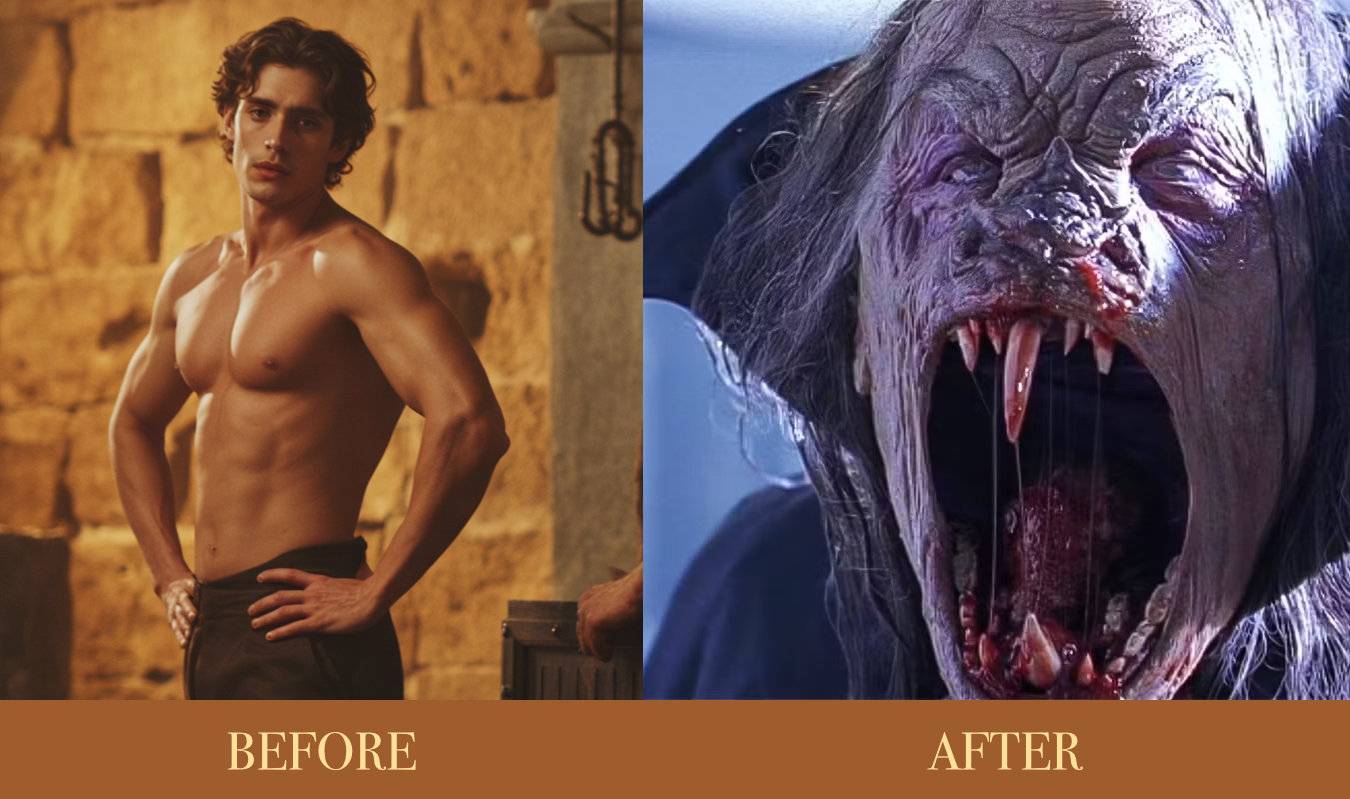
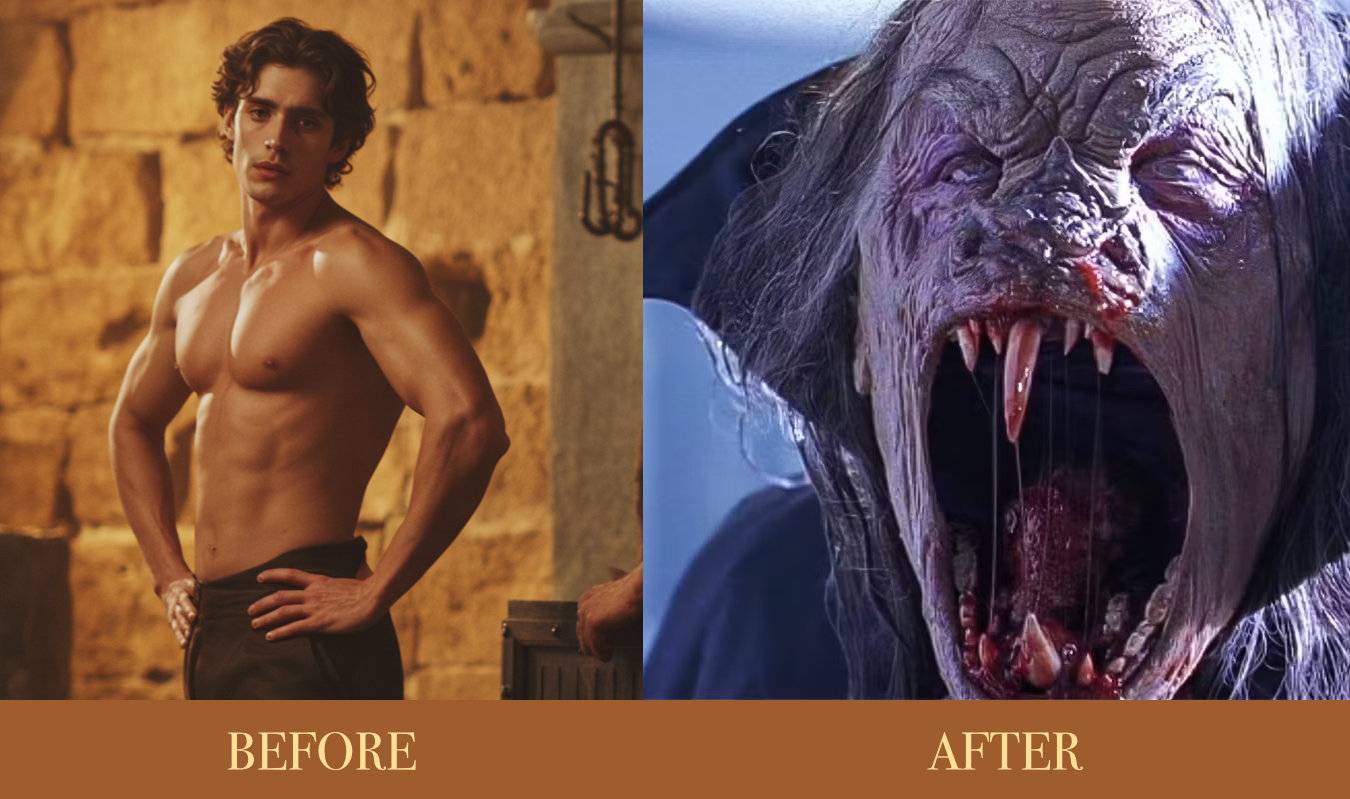
    Problem is, Count McFang has Sir Beloved, Sir RidesALot’s sweetheart, chained up in the dungeons. By the next full moon, Sir Beloved will be transformed into a baby vamp—and we’re not talking the sexy kind:

    godawful creature courtesy of The Night Fliers

    Well, then. Looks like we’re breaking into Count McFang’s tonight.

    Let’s break down how to bring your character back from the TSTL brink…

    Signal that the character knows it’s a risk.

    In the first example, Sir RidesALot is oblivious to the danger that everyone else, the reader included, has spotted from a mile away. Unless there’s a very good reason for Sir RidesALot’s blind spot, readers will find this supremely annoying.

    However, if he beats his breast, wailing, “This is folly, but go I must! I would sooner die a fang-chewed husk than abandon Sir Beloved to so cursed an end!” he’s no longer a dumdum. He’s a lovestruck hero, and we’ll be cheering him on to the final reckoning.

    Granted, the character’s acknowledgement doesn’t operate in a vacuum. We also need…

    Let the risk-taking be competent, even if flawed.

    In the fixed-up version, Sir RidesALot is doing his damnedest in a damnable situation. A competent-but-flawed risk reads very differently than a dumbass decision, even if things go sideways.

    A TSTL knight blunders into Count McFang’s castle armed with nothing but bluster and is promptly torn apart to the reader’s eye-rolling approval.

    But we’ll gladly follow Sir RidesALot when he:

    • spies on the walls for three nights straight, memorizing the patrol routes
    • pores over the castle’s layout from a half-burned floor plan stolen from the abbey archives
    • disables the magical ward using a hard-won trick that nearly got him killed ten years ago

    Once inside, Sir RidesALot allows himself a moment of triumph, and we’re cheering right along with him.

    That’s when the stones beneath his feet begin to steam. The Count’s new hell hound, just adopted from the infernal kennels this evening, lifts its head and scents the air.

    Dammit.

    It’s okay for plans to go sideways. In fact, until the book reaches its climax, they often should. Just be sure to show your character:

    • anticipating consequences and taking precautions
    • using their skills and drawing on past experience (instead of conveniently forgetting at the pivotal moment)
    • attempting a less risky workaround first—or being unable do so for plausible reasons

    Make the risk feel inevitable, not optional.

    It’s maddening when a character risks everything for lame-ass reasons—in other words, because the plot needs them to. If Sir RidesALot hazards life and limb just to ask Count McFang a few questions that could’ve been sent by letter, the reader would be forgiven for gnashing their teeth in protest.

    But if Sir RidesALot is the only thing standing between Sir Beloved and an eternity as—gasp—an unsexy vampire, the risk no longer feels optional. Act now, or lose everything.

    Nooooo!!!

    Readers will gladly follow a character into danger when the risk is proportionate to what’s at stake, whether that’s the life of a loved one, a vital piece of knowledge, or a moral line that can’t be uncrossed.

    But that acceptance only happens if the author has laid the proper groundwork. The reader has to understand why this outcome matters so deeply and care enough about the character to be invested in their success.

    This is why opening a book with the MC already in peril can be tricky.

    Not impossible, but tricky. If we open the story with Sir RidesALot battling his way through the castle, no amount of sulfuric, slobbering hell hounds or flocks of blood-sucking bats can substitute for emotional investment in the characters.

    Chances are readers don’t yet care—about Sir RidesALot, Sir Beloved, or what happens to either of them. They don’t know these dudes. You can still hook readers in other ways (voice, mystery, spectacle), but you can’t rely on them biting their nails over characters they’ve only just met three sentences ago.

    This is an easy goof, because as the author, you are already deeply invested. You love these characters! (And if they look like Sir Beloved, I can see why!) You’ve probably spent months, if not years, with them, and you’re picturing readers on the edge of their seats, frantic with worry.

    But the reader, alas, has not yet fallen in love with Jimmy Joe Rando.

    Avoid clichéd stupidity.

    Based on your genre, there are likely well-trampled TSTL paths that are best avoided, and you probably already have a list based on what irks you in the books you read!

    To name just a few:

    • In horror, entering the monster’s hell lair and splitting up to “cover more ground.”
    • In fantasy or action, abandoning allies, preparation, and an actual plan to face the Big Bad alone, because “this is my fight!” or “we can’t wait for backup!” (I’ve totally done this—in my books, not real life, thankfully!)
    • In romance, refusing to ask a clarifying question for 200 pages, because the entire conflict depends on a misunderstanding that could be resolved in a single, mildly uncomfortable conversation. (Yep—done this one, too! Yippee!)
    • In a mystery or thriller, withholding critical information for “reasons,” perhaps sitting on key evidence while the serial killer closes in instead of ringing the police, like, yesterday.
    • In sci-fi, removing a helmet on an alien planet because the air “seems fine,” or dismissing a warning from the massively-advanced AI as a “glitch,” moments before everything explodes.

    If you recognized yourself in any of these, welcome to the club, my friend. We meet on Tuesdays; free coffee and donuts. 🍩

    Next time, we’ll explore why some stories can have loads of action, yet feel like they’re going nowhere fast.

    See you then!

  • How to Write a Page Turner

    How to Write a Page Turner

    One treacherous day last winter, I ran out of books to read. 😱 The library was closed for bad weather, and for once, I didn’t have a TBR stack silently judging me from my nightstand.

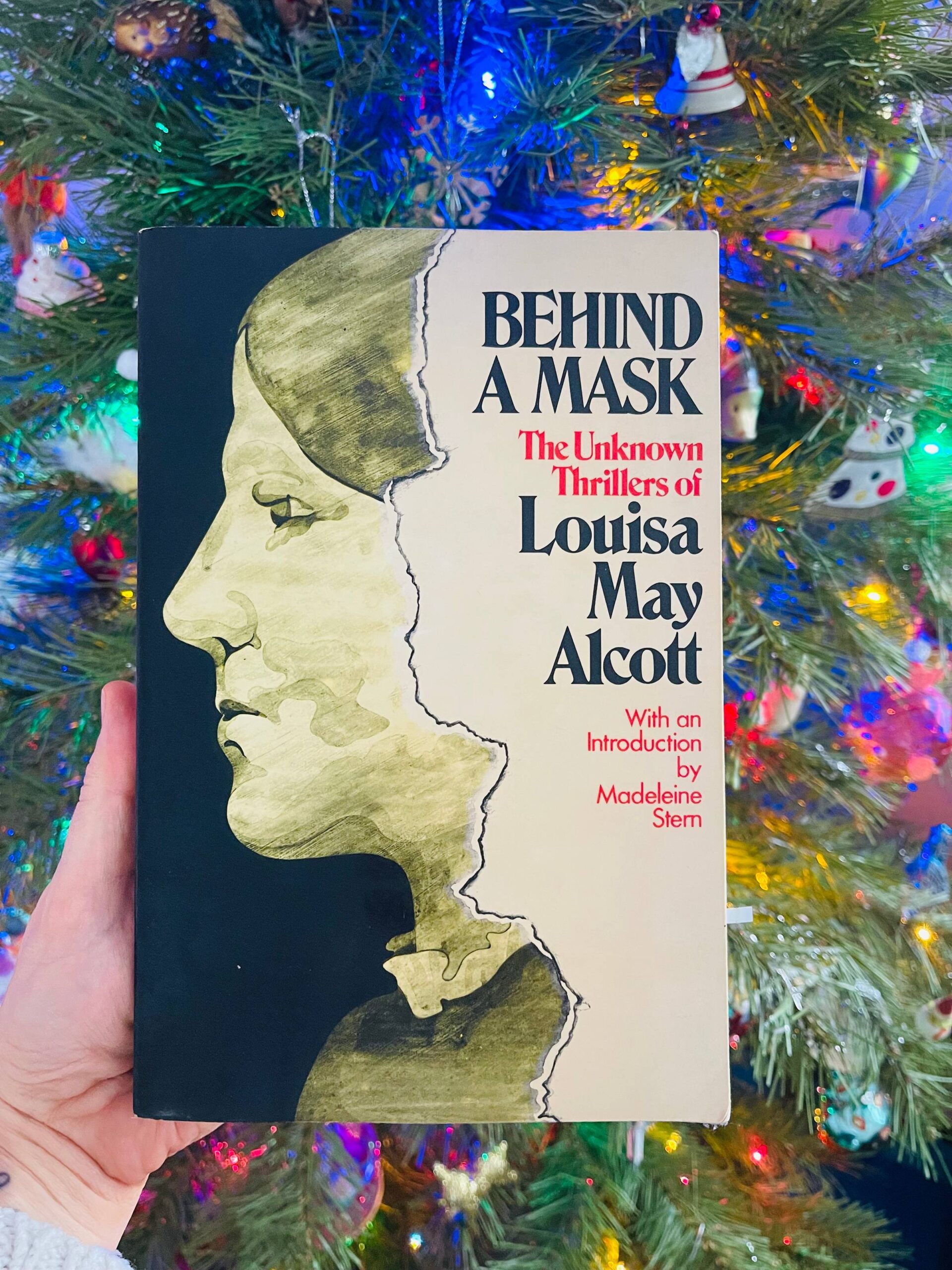
    Louisa May Alcott to the rescue!

    Years ago, I’d picked up a collection of her pseudonymous thrillers at a used bookstore and promptly forgot all about it. Scouring my shelves in a state of desperation, the weekend was saved.

    The first—and in my opinion, best—story is Behind a Mask. The protagonist, Miss Muir, takes a job as a governess in a house with three eligible bachelors (two brothers and an uncle) and proceeds to make the moves on all of them in hopes of bagging a rich husband.

    Now, the story is dated, to be sure, and I definitely got the ick over the elderly uncle, who wants to marry the very young governess, being presented as charming and naïve, not predatory, due to his “inherent” nobility (read: richness, maleness, and whiteness), but this isn’t an essay about how I’d change things with a modern retelling.

    What I want to know is, how did this story have me turning pages well past bedtime?

    Turns out, Behind a Mask had a thing or two to teach me about pacing.

    Before we take one step further, what do I mean by “pacing”?

    I don’t necessarily mean rapid speed, like a nail-biting thriller. I’m referring to the sustained sense that something is in motion, that every character choice tightens the situation rather than letting it lag.

    Skillful pacing keeps the reader oriented toward a question, generally some variation on what’s gonna happen?? Even in quieter scenes, if the character’s actions elevate risk, sharpen desire, or narrow their options, the story keeps pulling us forward.

    That pull is pacing.

    When we get down to it, we’re primates who like watching other primates 🐒 and it’s particularly hard to peel our eyes away when another monkey is doing something that could blow up in their face. Even if our main character (MC) isn’t dodging flamethrowers while leaping from a derailed train car, the reader gets hooked if they see the character progressively digging themselves in deeper.

    “Deeper” doesn’t necessarily mean something dreadful is on the horizon. In a romance, it could be the delicious anticipation of the lovers finally gettin’ it on. The point is that we’re trundling onward such that there’s never a good moment to put the book down.

    This is why it isn’t about sheer speed, because different stories (and different scenes) might call for a lickety split or more leisurely tempo. Either can feel well-paced, so long as we’re eagerly anticipating what will happen next. And this is precisely how Behind a Mask kept me up past my bedtime. Miss Muir relentlessly tightens the web drawing the men closer, and each tug risks one suitor discovering the other two and toppling her house of cards.

    If we boil this down to essentials, what makes this scenario interesting are the questions:

    • What is the character doing (and often, why)?
    • What’s gonna happen?

    It’s easy to read mountains of craft books and forget the basics (for me, anyhow). We get so wrapped up in building a compelling character arc or a meticulously structured plot that we forget to reel in the reader with an ever-tightening loop of “what are they doing, and what’s gonna happen?”

    Unless a reader is analyzing a text, they’re less likely to think, “Hmm…we’re nearing the midpoint. I bet something pivotal is about to happen that will thrust the MC from a reactive to a proactive stance.” Rather, our primate brains are constantly scanning for risk, and if the story loops have been tightening, the reader is instinctively bracing for a whammy (and hopefully unable to put the book down in the meantime).

    In a future essay, we’ll talk more about raising the stakes, but at this stage, we can note that simply repeating this loop of “what are they doing, and what’s gonna happen?” isn’t enough. The reader also wants a sense that things are building, that the risk isn’t resetting after every cycle.

    The Hidden Pacing Killer

    As a writer you might think, “Well, duh, of course I want things to ratchet up,” but it’s surprisingly easy to let the balloon deflate and then fill it up again, as opposed to squeezing in a bit more air, and a bit more, until—BOOM.

    In Behind a Mask, it wasn’t just that Miss Muir was reeling in three bachelors at once. Every success with one dude made it more likely the other two would discover her scheme, and the danger escalated until so many plates were in the air, it seemed certain they’d all come crashing down. If, instead, Miss Muir had ample time to regroup and start afresh after every mishap, I never would’ve made it past page three. 😴

    For me, the reasons I unwittingly deflate my story’s pacing are:

    One, even as the writer—not the character whose feet are over the flames—this stuff is stressful! I sometimes find myself releasing pressure for my own writerly comfort.

    Two, amping up the stakes requires careful planning, whether you’re an outliner who maps it out ahead of time or a discovery writer who weaves it in as you go. Without planning (and skillful revising), the story can feel more episodic than cumulative, something we’ll explore in an upcoming essay, and the end of each episode subtly presents the reader with a choice: keep reading or DNF it?

    Three, when you’re steadily making life harder for your characters, this typically complicates the story. We’ll look at this in a future essay, but I’ve been guilty of smoothing friction to make a scene easier to write. Instead, I’d be better off taking a break so I can come back renewed and ready to unleash the fury of hell on my characters. 😈

    Keep ‘Em Guessing

    It probably goes without saying, but interrupting a reader’s expectations makes the basic story loop even more effective. If every time the reader asks, “What are they doing, and what’s gonna happen next?” their guess is precisely what happens? Bedtime. 🥱

    By violating reader expectations in ways that nonetheless feel inevitable (meaning, they track with the story’s logic), you never let readers relax into complacency. This keeps those core questions alive, which, in turn, maintains a compelling pace.

    This brings us to a potential pitfall. Sometimes, as your character is diligently digging themselves deeper into the muck, they earn the dreaded label of Too Stupid to Live (TSTL). To ensure your readers aren’t yelling, “Oh, come on,” before flinging the book across the room, you won’t want to miss next week’s installment.

    See you then!

  • All the Writing S#%t I Learned in 2025

    All the Writing S#%t I Learned in 2025

    Why, hello!

    I took a short break from Through a Crooked Door, because I’ve been buried beneath an avalanche of tiny food. November-December is the busy season at my day job, ​The Mouse Market​, and I’ve been sculpting dollhouse food like an absolute fiend.

    Before we get to the writing stuff, here’s a little peek at a ​miniature pastry case​ that I made.

    Aside from a two-week pause, I’ve been steadily revising my next book, though I did release myself from all other Twin Flames to-dos, postponing our next Creative Season until…right now. 😉

    So, what’s on the agenda this season? *gleefully rubs hands together*

    All the Writing Shit I’ve Learned Since My First Novel

    At the time of this writing, I’m embarking on Draft 6 of The Magician and the Labyrinth of Yesterdays (Twin Flames: Book 1), which I plan to release this spring/early summer. Throughout the writing + drafting process, I’ve been thinking a great deal about what I’ve learned since releasing The Fool & the Threads of Time (Book 0).

    I know at least some of you are writers as well as readers, so I thought it might be fun (and, not gonna lie, useful for me) to organize all of my lessons learned, giving you a peek at what I’ve done differently with Book 1, so that will be our focus this Season.


    Update: I wrote the first six emails in this series with an ever-increasing sense that something was off, but I couldn’t put my finger on what. I was excited about the topic, the territory of each essay felt juicy, but things didn’t have that magic spark. 🧐

    I took a few days away, and that’s when it dawned on me: there was an aspect of the project not fully aligned with my values.

    One of the challenges in writing these essays was finding illustrative examples. I didn’t want to use The Fool & the Threads of Time as that would mean divulging oodles of spoilers. Same issue with using my upcoming book, The Magician and the Labyrinth of Yesterdays.

    My initial solution was to use other authors’ works, but as it turns out, that nagging feeling came from picking apart someone else’s book. It simply didn’t feel good! 👎

    So, I went back to the drawing board. With the exception of one positive example (shout out to Louisa May Alcott), I developed my examples from scratch. This let me flex my story-telling muscles without pooh-poohing someone else’s hard work.


    My 2025 Writing Goals

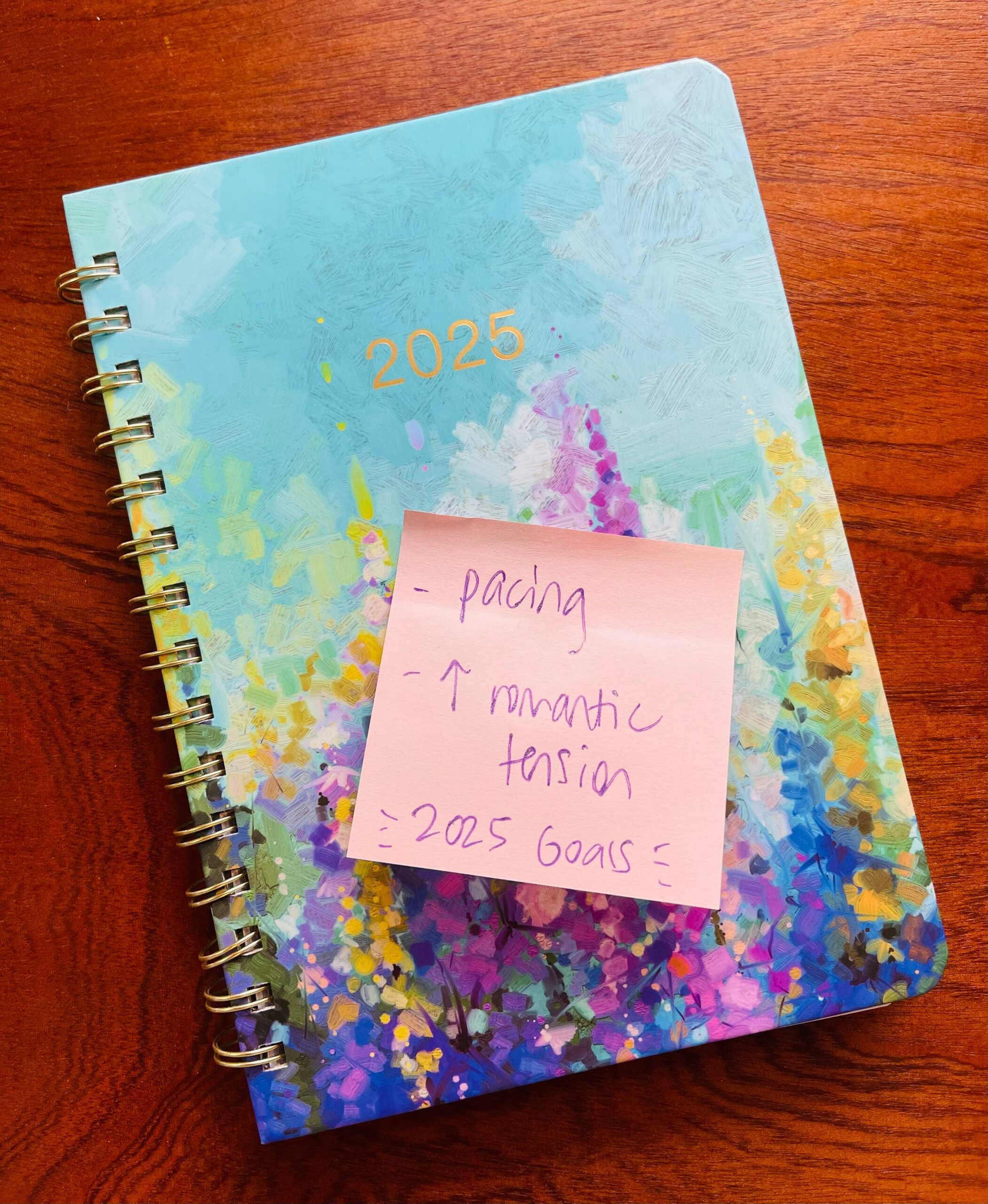
    Last year, I set two overarching writing goals, and I still have the post-it note to prove it!

    I read a boatload of craft books on pacing and tension, took a handful of writing courses, and early on in the process, I used the writing of Falling Phoenix, a companion short story to The Fool & the Threads of Time to practice what I was learning. (You can ​read it for free​!)

    Over the coming weeks, we’ll explore techniques for improving pacing and tension, and we’ll also look at how I streamlined my outlining and revision process, what I learned about crafting group dynamics and skillfully weaving subplots, and more writing nerdery.

    If this sounds like your cup of tea ☕️ I’ll see you next week for the first installment of All the Writing Shit I’ve Learned Since My First Novel.