
Welcome to the final installment of All the Writing Shit I’ve Learned Since My First Novel! Today is a bit of a junk-drawer roundup. So, without further ado…
#1 Don’t Be a Big Ol’ Meanie to Yourself
Learning to be a good steward of my energy—and adapting my work processes to fit my needs, rather than cramming my sparkly unicorn-shaped peg into a square hole—has been one of my biggest lessons. And, frankly, it’s still ongoing.
To put it mildly, I haven’t always been great at listening to my body and spirit when it comes to work-life balance. I have a tendency to push, push, push, adhering to rigid to-do lists at the expense of my health. But 2025 was a year of slooooowing down and paying attention—something I plan to continue into 2026.
One very practical application of this shift? I stop each writing session while I still feel energized. If you read a lot of craft books, you’ve probably encountered Hemingway’s advice:
“The best way is to always stop when you are going good and when you know what will happen next. If you do that every day when you are writing a novel you will never be stuck.”
Ernest Hemingway on Writing
Some writers stop in the middle of a sentence. Others leave off before the final paragraph of a chapter. Both approaches create an easy on-ramp the next day: finish the sentence, polish the paragraph. For me, it’s less about where I stop and more about how I feel when I do.
In the past, total exhaustion was my signal to quit. Until I reached that frazzled, frustrated point of depletion, stopping felt lazy. This is like driving your car until you run out of gas on the side of the highway every single time. Not only is it wildly inefficient, it’s stressful, demoralizing, and—when we’re talking about a human rather than a car—punishing and cruel.
Not cool, Past Me.
✍️ Now, I leave energy in the tank. And as Hemingway suggested, I make sure I know exactly where I’m picking up the next day. If I’m revising, I’ll highlight the next item in my revision checklist. If I have a thought about how I want to approach an upcoming scene, I’ll leave myself a comment in Scrivener before closing up shop.
These small adjustments make it a billion times more likely that I’ll be excited to get back to work tomorrow.

#2 Cook Up a Juicy Premise
One of the unexpectedly delightful parts of writing The Magician & the Labyrinth of Yesterdays (Twin Flames: Book One) has been the element of fanfic.
The book is a parallel timeline to The Fool & the Threads of Time (Twin Flames: Book Zero), and this time, Ev Knox has finally published her debut novel.
She’s floored when it becomes a runaway success—such a success, in fact, that the internet’s boyfriend, Matt Byrne, is cast as the lead in the film adaptation. Matt is the type of famous that has fans obsessively dissecting every social media post for clues about his fiercely guarded private life—especially his dating life—while producing reams upon reams of fanfic about him and his on-screen characters.

After Ev meets Matt on set and finds him to be funny, sweet, and distractingly hot, she “stumbles” into the world of Matt Byrne fanfic. (Just a bit of harmless internet stalking!)
Translation: not only did I get to invent fake movies for Matt to star in, I also got to come up with spicy fanfic premises based on those movies. Fake fanfic about a made-up character starring in made-up films. Deliciously meta. 🤤
For one scene, I actually needed to write an excerpt of this fanfic, and oooowee, was that ever fun. So fun, in fact, I’ll be fleshing it out into a novella called Never Answer After Dark at some point.
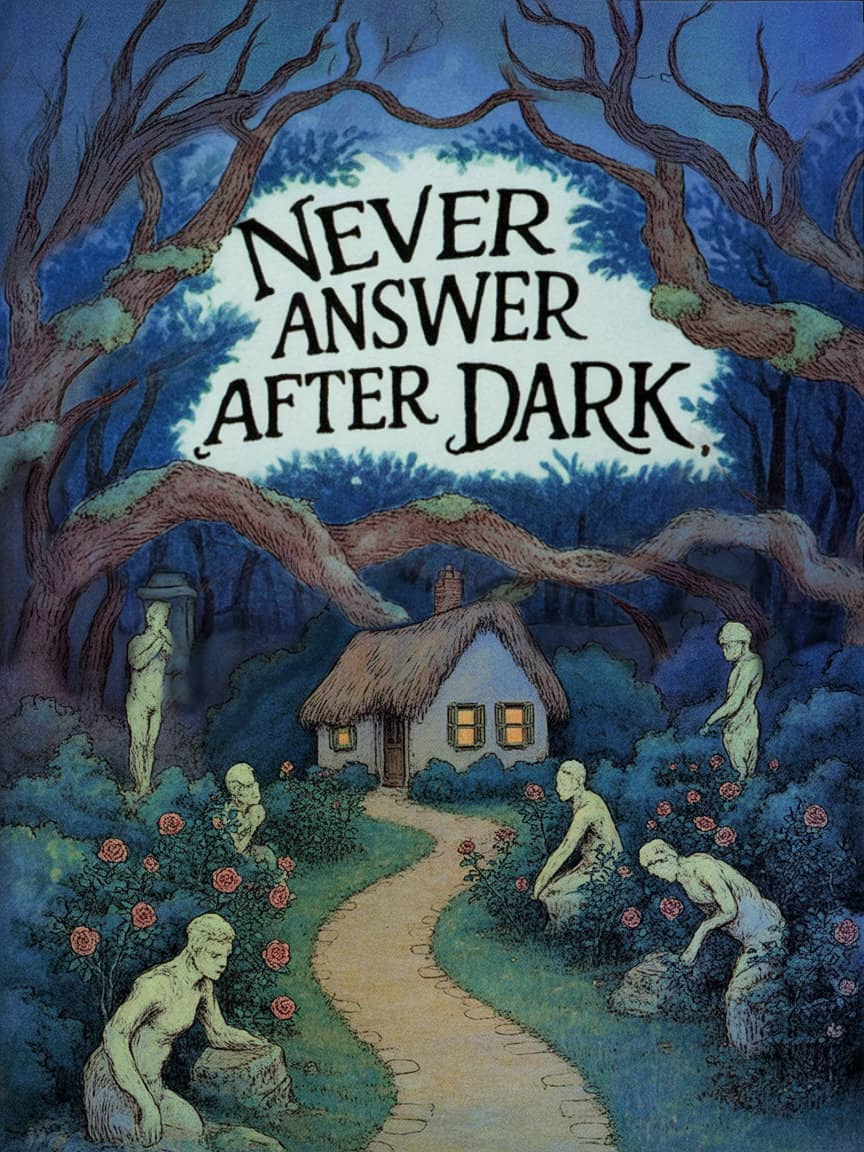
💡 Here’s what I noticed: some fanfic premises had sparkle, baked in from the start. I could explain them to a friend in a sentence or two, and had to actively resist getting sidetracked writing the whole damn thing.
Contrast this with my experience explaining The Fool & the Threads of Time. It spans multiple lifetimes, so some complexity is inevitable, but I now recognize that the premise itself is also a bit sprawling.
With Never Answer After Dark, I know exactly who the characters are, what the central conflict is, and what’s at stake if they fail—the three building blocks of a strong premise.
With The Magician & the Labyrinth of Yesterdays, I got much, much closer to cooking up a juicy premise, but you better believe that with the next book, I’ll be spending even more time refining the premise at the outlining stage.
A strong premise doesn’t just make a book easier to market, so the right readers instantly know, oh, this is so totally for me, it also makes the book easier to write. And hey, I’ll happily take both!
#3 Notice When You’re Getting Lost in Busy Work
One of the best things about writing—we’re usually working alone, doing things however we damn well please—can also be one of the worst things about writing. There’s no little writing angel perched on our shoulder, ready with a loving pinch when we’re frittering away time on bullshit. 👼🏾
Sometimes we think we’re being productive, but to quote Tyler Durden in Fight Club, we’re just “polishing the brass on the Titanic.”
This cropped up for me toward the end of Draft 4 of The Magician & the Labyrinth of Yesterdays. I’d just taken two weeks off during the height of my tiny food busy season before diving back in, ready to continue with my revision checklist.
Because I’d been addressing a specific subsection of the manuscript (the group dynamics), I’d tackled things out of order. Now I was back at Chapter 1, ready to move through the manuscript from beginning to end. Even though this was not the stage for a careful line edit, I found myself obsessing over word choices and fiddling with superficials.

What tipped me off was a familiar feeling of dissatisfaction at the end of my writing session, and I’ve learned to pay attention to that! Within ten minutes of sitting with it, the issue became clear:
Two weeks away from the manuscript, combined with two drafts in a row focused on targeted revisions, meant it had been months since I’d done a full read-through. Those focused passes were absolutely necessary, but I’d reached a point where my sense of the whole had grown fuzzy. Without that big-picture orientation, my revisions were reactive and cosmetic rather than strategic.
It felt like a massive win to realize this after a single day, instead of grinding forward for weeks, making changes that didn’t meaningfully improve the book, just so I could tell myself I’d been working.
💡 Sometimes the most productive thing you can do is recognize that you’re no longer doing the work you think you’re doing and change course. Learning your own tells makes that much easier. Do you feel grouchy and dissatisfied? Do your thoughts feel slippery, like you can’t quite get a handle on what you’re doing or why? Do you find yourself procrastinating?
You may not have a harp-playing angel perched on your shoulder, but your body, mind, and spirit are continually offering feedback. They’ll let you know when you’re forcing something that needs space, clinging to a rigid method that doesn’t fit you (or this particular project), or when you simply need to step away and rest.
The challenge often isn’t getting the signals. It’s listening to them and choosing to honor what you hear.
✍️ Thank you for hanging out with me as I waded through my lessons learned! I hope this Creative Season has been as helpful for you as it has been for me.
And now…I’m off to finish revising The Magician & the Labyrinth of Yesterdays! I’ll see you next time, for a brand new Creative Season. 💖