Category: Creative Seasons

  • Dr. Ashcroft’s Tantalizing Clue

    Dr. Ashcroft’s Tantalizing Clue

    Last week, I left you with two curious names from Harrowfell’s blueprint: Salon Nysa and Salon Lethe.

    Naturally, I started tracing where those names intersect with Harrowfell’s history, and that’s when I stumbled across a blog called Beyond the Hedge.

    Here’s where the floor really dropped out: the blog was written by none other than Margot Takada, a character I’m pretty damn sure I invented.

    In The Magician and the Labyrinth of Yesterdays, Margot is an independent scholar investigating the hauntings at Harrowfell, along with the many hikers who have disappeared in the surrounding woods.

    Yet here she was, publishing essays on timeslips and local urban legends as if she’d been doing it for years. As if she actually existed.

    You better believe I emailed her. I haven’t heard back…but it’s only been twenty minutes, so I probably need to chill. (Easier said than done.)

    In one post, Margot explains the myths behind the names.

    Nysa was the secret grove where the god Dionysus was hidden and raised—a wild, vine-choked place set apart from the ordinary world, where divine and mortal boundaries blurred.

    Lethe, by contrast, was one of the rivers of the underworld. To drink its waters meant to forget—memories erased, identities dissolved—so your soul could be reborn unburdened by its past.

    Margot asked the question already burning in my mind:

    Why would Finneas Thorne name his salons Nysa and Lethe—one promising divine refuge, the other offering divine oblivion?

    The deeper I read, the stranger it became, because Margot’s blog also ​mentioned correspondence​ with none other than Dr. Mira Halstead of Barton College—the same archivist responsible for digitizing Josephine Ashcroft’s journals.

    Speaking of Dr. Ashcroft’s journals, let’s pick up with her next entry, following along as she wanders deeper into the castle.


    August 15, 1926 — Harrowfell Hall

    Beyond the grand staircase there was a remarkable structure, at the castle’s dead center if I’m not mistaken. Concentric circular hallways, guiding the viewer through ring after ring of elaborate murals. Finneas Thorne did not merely paint on the walls’ curvature; he exploited it to the full, so that the figures seemed to shift and flow as one walks past, the arc of the wall lending their gestures an uncanny momentum.

    The first showed Orpheus, glancing back at a fading Eurydice. His fingers curled desperately in thin air, the brushwork deft, almost cruel in its precision. A single glance unraveling what mattered most.

    Another turn revealed Persephone in a meadow, flowers blackened and dripping. A shadowed Hades gripped her wrist, while her eyes seemed to plead with me directly. Finneas had applied the pigment so it looked as if it were running off the canvas like a dripping hot candle. The choice was highly unorthodox, and all the more disturbing against Harrowfell’s backdrop of ruin.

    Next, Cassandra silhouetted against a city in flames, arms flung wide, her silent cry forever frozen. Faceless figures streamed past, deaf to her warning. Another curve: Medusa, her serpents coiling outward, dozens of black-slitted eyes meeting mine. Around her, men screamed, hands clawing at petrified faces.

    The final mural was, quite fitting, the River Styx. A boat drifted through black water, its cloaked ferryman leaning on his pole. Pale hands broke the surface, fighting uselessly to clamber aboard. I could almost feel those cold wet fingertips clutching at my sleeves, dragging me under.

    At the lower edge of the wall, where the plaster had cracked away, I caught a glimpse of something unexpected: a layer of red pigment beneath the surface paint.

    The discovery puzzled me. Imprimatura is not uncommon, of course, but a red ground is typically used to lend depth or warmth to a composition. Here, beneath black water and pallid flesh, such an underlayer made no sense at all.

    I will need to secure permission to bring proper equipment. With lamps set at oblique angles, I might reveal textures hinting at an underdrawing. Better still, perhaps I would be permitted to lift a tiny sample of the plaster for analysis. Short of that, Thorne’s secret will remain sealed beneath the surface.

    Already, that glimpse of red has lodged in my mind like a splinter. I must know what lies beneath.

  • What Dr. Ashcroft Found in Haunted Harrowfell Hall

    What Dr. Ashcroft Found in Haunted Harrowfell Hall

    ​Last week​, we left off with Dr. Josephine Ashcroft, who was hired to catalogue the paintings at Harrowfell Hall.

    After seeing how outdated her bio on the Barton College website was, I didn’t expect to find much, but I was wrong—spectacularly wrong. Buried in the archives was a project spearheaded by ​Dr. Mira Halstead​, a faculty member in Barton’s Art Conservation Department, and it included a digitized series of journal entries written by Ashcroft herself.

    And get this: they chronicled her time at Harrowfell. Jackpot.

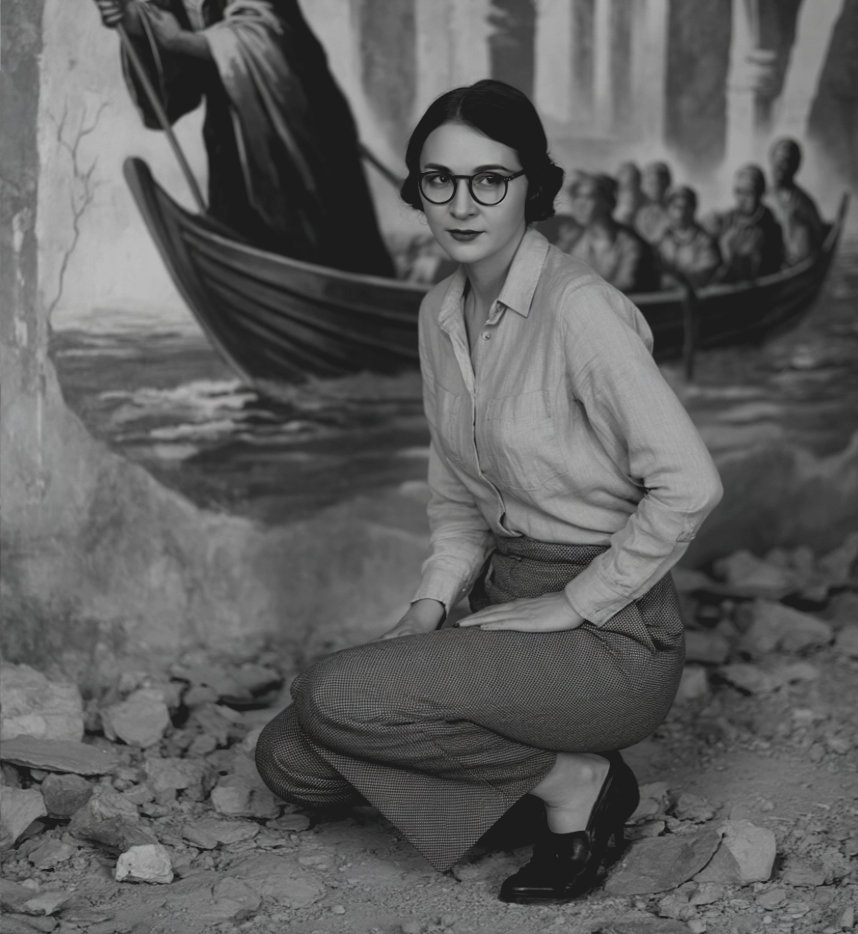
    Dr. Josephine Ashcroft

    Because Dr. Ashcroft’s findings caused quite a stir, Barton College preserved all of her reports, along with her handwritten journal entries. There was even a photograph of Dr. Ashcroft beside the painting that would later become the subject of endless speculation.

    But I’m getting ahead of myself.

    Let’s start with Dr. Ashcroft’s journal entry from her arrival at Harrowfell.


    August 14, 1926 — Harrowfell Hall

    I was well aware Harrowfell wasn’t in its prime, but the trustees vastly undersold its condition. The vestibule alone was nearly impassable: plaster hanging in jagged sheets, rain-warped boards sagging beneath my feet, stone fragments scattered like loose teeth across the floor. A once-grand space, reduced to ruin.

    Thankfully, I had come prepared: flashlight, gloves, sturdy boots, and a well-fitting dust mask. One doesn’t step into a crumbling castle unarmed, after all.

    To my right stretched a corridor, narrow and close, the walls crowded with frames. I could already tell I’d have my work cut out for me, the thought alone quickening my pulse. A conservator’s dream: a trove of neglected canvases, each one a case study in survival, every crack and layer of grime a clue to its past.

    Testing each step before committing my weight, I approached a heavy oak door. To its left, a painting caught my attention, and the sweep of my flashlight revealed a landscape of jagged escarpments plunging into darkness. As the light steadied, more details surfaced: a cavernous pit littered with coal-black boulders, every plane modeled with remarkable control of shadow. Between the stones, what I first mistook for twisting weeds resolved into arms—scores of them—straining upward toward the surface.

    Quite the macabre subject, though masterfully rendered.

    Inside the adjoining room—the library—I could go no farther than the threshold. The floor had collapsed in places, beams yawning like broken ribs. Such a shame, for above the fireplace one canvas remained astonishingly intact: a portrait of young Finneas Thorne himself.

    The museum holds a single authenticated painting of Thorne, and I recognized him at once. Strawberry-blond hair swept across his brow, his gaze shadowed, half brooding, half defiant. Byronic in its melancholy. He sat at a table strewn with books, an easel behind him bearing a half-finished version of the very portrait in which he sat.

    The doubling effect unsettled me. It was technically clever, yes, but also disorienting, as though Thorne had painted himself into the act of painting, and then abandoned both canvases to watch from the walls.

    I retraced my steps to the vestibule, turning this time toward the grand staircase. I did not dare climb it—the banisters leaned, and the treads sighed under the barest touch. From the ground floor, I craned my neck at the fresco soaring across the distant dome above.

    Figures swirled upward in concentric rings of fire, each form twisted in torment. It was Dante’s Inferno rendered on a monumental scale—far grander than anything I have seen attempted in this country. Even at such a distance, I could make out bold brushwork, pigments laid down in broad, confident strokes, the colors startlingly vivid despite decades of neglect. My gaze followed the spirals until the whole dome seemed to spin above me, and I felt myself caught in the vortex of their suffering.


    That was only the beginning of Dr. Ashcroft’s discoveries. In another entry, she described finding a partial blueprint tucked inside what she believed to be Finneas Thorne’s study. Two of the castle’s rooms were marked with curious names: Salon Nysa and Salon Lethe.

    Perhaps you recognize the names?

    Look at me, getting ahead of myself again. I’ll share what I uncovered about Nysa and Lethe next week.

  • The Corruption Deepens

    The Corruption Deepens

    Last time​, I told you about the strange newspaper clipping I found hidden under my armchair—the one about the bloody trail and the bootlegging ring? A newspaper clipping that shouldn’t exist.

    Here’s the thing about stories like this: you seize a thread, hoping it will guide you out, toward something that makes sense. Instead, it snakes into shadow, doubling back on itself, luring you deeper into the labyrinth.

    When I went looking for more about that Dunsmere Gazette article, what I found was chilling.

    The sheriff at the time, Sheriff Calloway, concluded that the cave had only recently been commandeered for bootlegging. To be honest, I couldn’t tell if this was just clever PR, a bid at placating the townspeople to save his own ass. People were understandably up in arms that Harrowfell had become a hideout for the mob, right under the sheriff’s nose.

    But what didn’t feel staged was Sheriff Conway’s fear.

    “I’ve seen what men can do to each other when liquor and guns are involved,” he told the reporter. “I’ve seen bullets tear through bone, knives leave a man in ribbons. But this…this wasn’t like that. The drag marks in the dirt, the blood on the crates, all over the walls—it looked more like an animal had been at them. But I can’t imagine what sort of animal would be big enough to do it, not around here.”

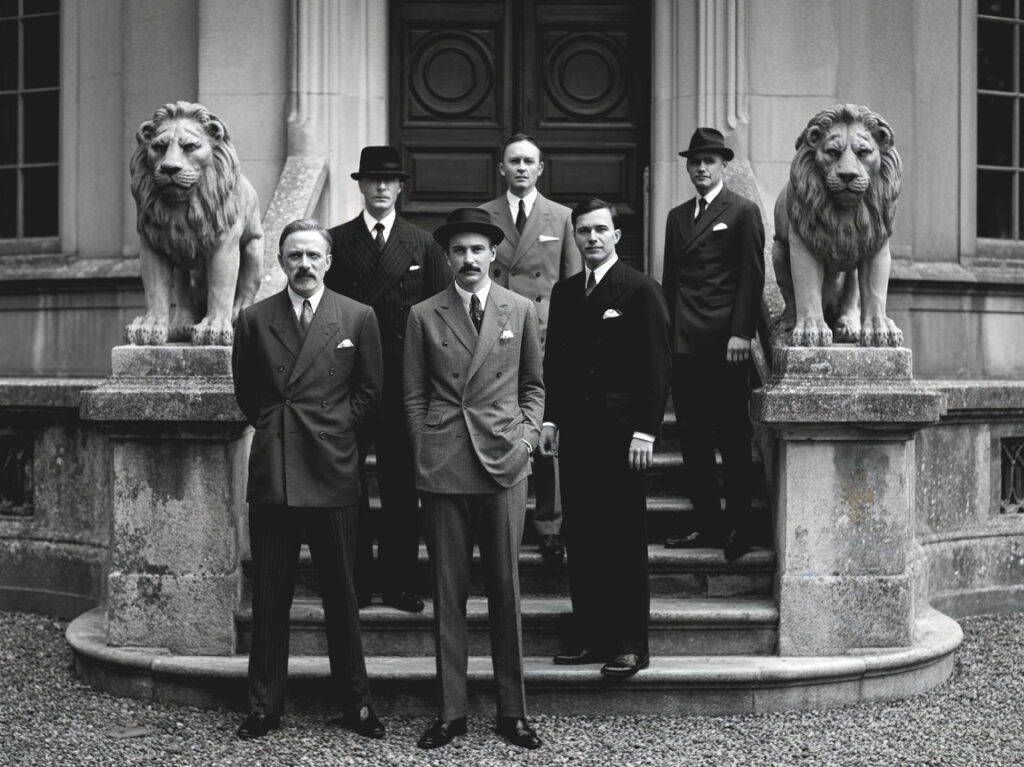
    I’m not sure they ever found out what it was, but the hubbub finally jolted the Harrowfell estate trustees out of their self-serving silence. Apparently, though the board had been hired to maintain the sprawling estate and its grounds—grounds that included a walled-in garden, a labyrinth, and the unfortunate cave—they’d let the property fall apart, skimming from the coffers all the while.

    Their excuse? Finneas Thorne—son of a coal magnate and the eccentric mind behind Harrowfell Hall—had left behind adamant instructions: not a stone was to be moved, not a hedge trimmed, without consulting the labyrinthine addendum to his will.

    For years, the trustees threw up their hands, hiding behind their paper shield while Harrowfell crumbled to ruins. But now, with the townsfolk outraged, the board was cornered. They could stall no longer—someone had to be sent inside.

    I would have thought they’d hire a contractor, someone to assess toppled walls and sagging beams. But here’s where the story takes another turn.

    Instead, the trustees brought in an art conservator from ​Barton College​, a Dr. Josephine Ashcroft.

    The decision shocked the townsfolk. One villager fumed to the Gazette: “It’s disgraceful, sending that young woman up there alone. Shows you what kind of people sit on that board—heartless, every one of them.”

    The trustees claimed that they needed Dr. Ashcroft to catalogue Finneas’ Thorne’s extensive art collection to ensure priceless works were protected before attempting major renovations. Thorne was a prolific painter, and apparently there were very few walls in Harrowfell not covered in paintings, many of them depicting nightmarish scenes of winged beings tumbling into pits of fire.

    I’d buy their story if the board had shown one iota of concern over the paintings during the 100-odd years when Harrowfell sat empty following Finneas’ disappearance.

    I don’t know, I might be biased because they referred to Dr. Ashcroft as “Josie,” even though none of them knew her personally, and her Barton College bio clearly indicated she’s a PhD. If you ask me, it was pure stalling tactic by the board, and given the safety hazards, a particularly unscrupulous one at that.

    Well, as it turned out, the joke was on them, because the board underestimated just how thorough Dr. Ashcroft was. While meticulously cataloging Finneas’ paintings, she found something none of them had bargained for.

    See you next week.

  • Boozy Bloodbath at Harrowfell Hall

    Boozy Bloodbath at Harrowfell Hall

    Last time​, I told you about a dream I had while napping on the couch—the one with the bootleggers, the cave, and the strange hiss in the dark. When I woke, the Harrowfell sketch still beside me, I thought that was the end of it.

    I figured I’d been jolted awake by the dream’s unsettling end.

    But then I heard music, tinny and staticked, drifting from the next room…

    I pushed the afghan aside, listening hard. The music wasn’t in my head. It was real, a faint trumpet, a jaunty beat, like something you’d play at a speakeasy party. Not exactly my usual playlist—and never mind that I hadn’t left anything on.

    The sound wafted down the stairs, and I padded soundlessly, skipping over the squeaky fifth tread. Our back room is a guest bedroom that rarely sees guests, a hideaway for extra chairs and a cozy reading nook.

    Apparently, I’d left my ipad on the armchair playing what was beginning to feel like the world’s creepiest song.

    There, curling beneath the armchair’s ruffled skirt, was a piece of paper, yellowed and brittle looking. I tugged it free, the sheet soft with age, and across the top—The Dunsmere Gazette, a name I recognized immediately. I rocked back on my heels, my throat drier than dirt.

    This was the newspaper from The Magician and the Labyrinth of Yesterdays. A newspaper I’d completely made up, for a town that shouldn’t exist.

    Dunsmere Gazette

    October 11, 1926

    Boozy Bloodbath at Harrowfell Hall

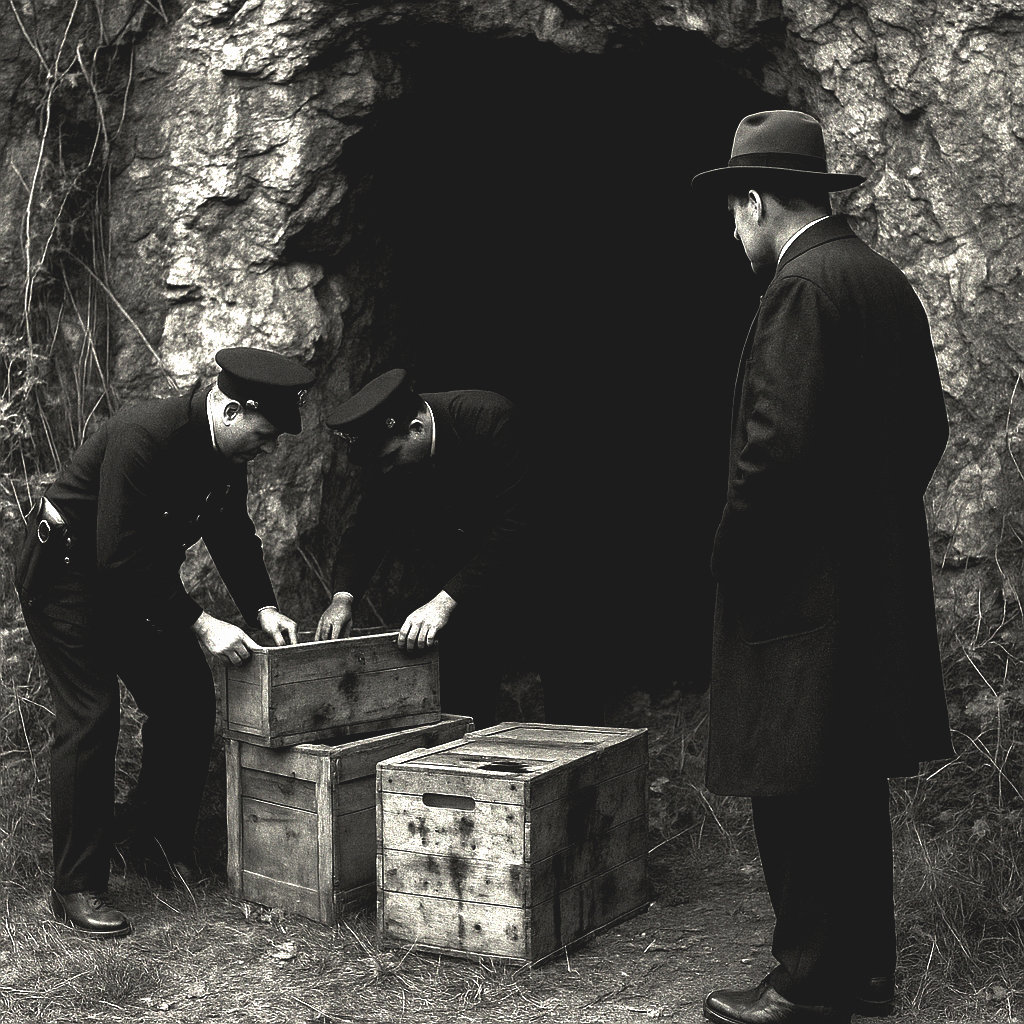
    Sheriff Calloway was called to the Harrowfell estate late Tuesday night after a local farmer, in pursuit of a wayward cow, came across a truck abandoned near the long drive. The vehicle was heavily laden with crates and stood unattended, its engine cold, the driver nowhere in sight.

    What the sheriff found at the old property has the whole town talking. Blood was discovered near the mouth of a cave situated behind Harrowfell Hall, along with drag marks in the dirt. No body has yet been recovered. “The scene suggests someone came to harm,” Calloway told the Gazette, “but until we have more, we can’t say who—or what—we’re dealing with.”

    Further investigation revealed dozens of crates hidden in the cave, packed with bottles of liquor. Authorities now believe Harrowfell Hall—long abandoned and rumored haunted—has been serving as a distribution point for a bootlegging operation right under our noses.

    The news has sparked indignation among the citizens of Dunsmere. “It’s a disgrace,” declared Mrs. Agnes Whitlow, president of the Ladies’ Temperance Circle. “That such wickedness could be carried on at one of our town’s oldest landmarks—why, it stains the very soul of Dunsmere.” Others called upon Harrowfell’s trustees to “put an end to this shameful business once and for all.”


    Next time, we’ll follow the story threads deeper into Harrowfell’s secrets.

    At least…I think it’s a story I made up.

  • A Moonshine Mystery

    A Moonshine Mystery

    Last week, I shared that when I’m working on a book, I need to craft a world I can cozy up and live in for a year.

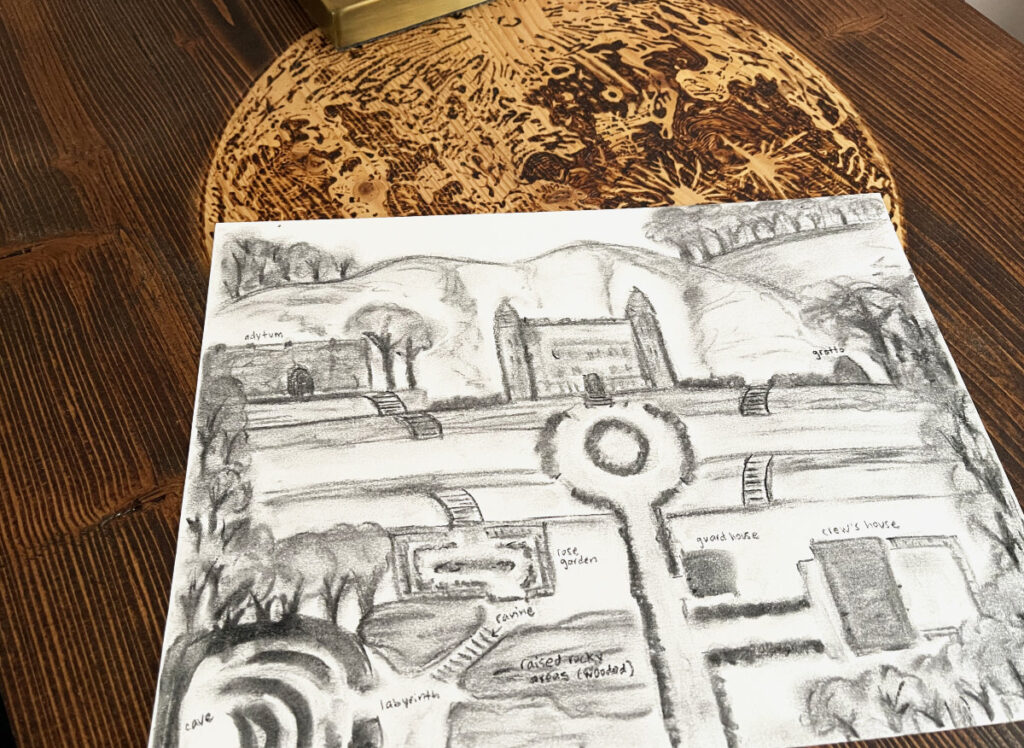
    Sometimes I do that through sketches. I’m not much of a 2D artist (sculpting is more my thing—specifically ​teeny tiny food​), but as long as I capture the basics, the sketch does the trick.

    In between the first and second drafts of The Magician and the Labyrinth of Yesterdays, I needed a visual for the setting, Harrowfell Hall. It wasn’t purely for atmosphere; it was also a practical way to map the space, so I could track where characters were wandering as they solved the mystery of the haunting (while engaging in romantic shenanigans, of course).

    Well, one afternoon, I left the sketch beside the couch and drifted into a nap. That’s when I had the dream…

    Harrowfell rose against a midnight sky, the moon sliced in two by ragged clouds.

    A wavering light glimmered beyond the castle, a lantern’s glow at the jagged mouth of a cave. A shadow bent, then resolved into the figure of a man. Eddie Russo, wiry as a whipcord. He stooped to lift a wooden crate, his shirtsleeves rolled to the elbows despite the night’s chill.

    The crate shifted with the musical clink of bottles as he carried it inside, joining his two companions. They worked in the half-dark, voices low and laughter muffled, stacking crates against the cave’s curving wall.

    Levi “Lucky” Callahan, his chestnut hair a damp mop, dragged a crate across the floor. His boot clipped a box.

    “Watch yourself, Lucky,” Eddie muttered—too late. A bottle tipped and rolled free, glass rattling over the dirt until it spun to a stop deeper in the tunnel, unbroken.

    “See? Lucky.” Levi grinned, mopping his brow with a handkerchief. “I’ll fetch it.”

    “Nah, I’ve got it,” said Tom Brennan, brushing dust from his trousers with a mechanic’s hands, grease ground into his nails. He stepped into the passage, lantern glow chasing him a few paces before the dark swallowed him whole.

    Levi and Eddie bent back to their work, stacking crates, the scrape of wood echoing off stone. A moment passed, then another. No footsteps, no joke from the shadows.

    Silence stretched.

    “Tom?” Levi called.

    Nothing.

    “Quit foolin’,” Levi tried, but his voice didn’t carry far.

    No answer.

    “Aw, c’mon, Tom,” Eddie whined, freeing a cigarette tucked behind his ear, stabbing it between his lips. “Time’s money, and we’re short on both.”

    They waited, knowing he’d step back into the glow with that lopsided grin. Only razzin’. But the moment stretched thin, expectation feathering into hope, hope into something sharper.

    The black throat of the passage swelled, no longer empty but watchful, waiting.

    Levi and Eddie exchanged looks, Eddie’s unlit cigarette dangling limply. Levi raised the lantern, its glow trembling against damp-streaked stone. His knees felt too loose, unreliable, as he took a step toward the tunnel.

    Behind him, he sensed Eddie hesitate—the faint scrape of his shoe as though he might hang back. But then he followed, maybe to avoid being left behind as Levi carried off the only lantern.

    The tunnel narrowed, heavy with soil and stone. Water dripped in the dark, too loud for Levi’s liking, though it was probably better than silence. Levi thought of calling Tom’s name again, the sound clawing at his throat. He couldn’t bring himself to do it.

    Just tonight. He folded the thought tight. His last run, and he’d have Claire and Annie on the Friday train.

    Another step. The lantern light licked over rough-hewn walls, deeper shadows yawning between them. The crates, their easy laughter, seemed a lifetime away. He prayed his luck hadn’t worn thin.

    That’s when he saw it—a dark shine smeared across stone, an iron tang wrinkling his nose. Drag marks gouged the dirt, trailing right into an inky black hole.

    Levi froze, his palms slick on the lantern’s handle. For a coward’s heartbeat, he thought of turning back.

    A low rustling in the dark, like Claire’s stiff, pretty skirts when she rose laughing to dance with him. Then a hiss.

    Chased by a surge of bile, a strangled sound rose from his throat. Shame might have followed, if fear hadn’t gutted him first, his bowels turning to water. His gaze dropped to a wet, torn lump glistening on the ground. A clotted snarl of hair.

    Behind him, Eddie gave a raw heave before staggering sideways, retching in the dark. The scrape of his boots scuffed against stone as he stumbled back the way they’d come.

    Levi knew he should stay, should have called out for Tom—oh Jesus, what did it do to him?—should have done something, anything but run like a fucking coward. But terror had left his legs sacks of sand and he had to make them move, no room for courage at all. He was afraid. God help him, he was so afraid.

    He threw a glance over his shoulder, nearly stumbled, the lantern jerking wild in his grip. Lucky. Something shifted in the dark, fast as a rattler’s strike. The hiss swelled, filling his ears, and Levi had never run so fast in all his 21 years.

    The tunnel stretched endless, walls streaking past, the cave mouth an oval of moon—always there, never nearer, like a dream that traps you in place.

    The hiss rose again, so much closer, and for one foolish instant it reminded him of the radiator, ticking and sighing on winter nights, Claire humming in the kitchen, Annie’s soft babbling from her crib.

    But that was a sound of home—dear god, will I ever get out of here?

    The tunnel widened, Levi stumbling toward the opening—so close—and then, in the lantern’s swing, he saw it: a clotted arc of blood, sprayed across carefully stacked crates. He lurched, the lantern smashing against a jag of rock, glass bursting, the flame doused.

    Gravel nipped his palms as he lunged to his feet, and then—air. Glorious, glorious air. Blood thundering in his ears, the hot swell of relief was almost enough to make him retch.

    The night was still, impossibly still, just the hammering of his boots on the packed-dirt drive, not even the crickets daring to sing. And there, up ahead, the shadowed bulk of the truck loomed, wooden stake-sides like a fence in the dark. Just a few paces more.

    The relief washed through his belly—then pain. White-hot, searing down his spine like liquid fire. Levi’s knees buckled.

    Somehow he was staring at the glittering sky.

    So much pain, warmth flooding his back all sticky and hot, even as his feet, his hands, everything fell cold, the stars snuffed out, one by one by one.


    I jolted awake, the Harrowfell sketch where I’d left it, my legs tangled in the threadbare afghan. The dream murmured under my skin.

    Or was it just a dream?

  • Just in Time for Spooky Season

    Just in Time for Spooky Season

    Psst…it’s time for a brand new Creative Season! 

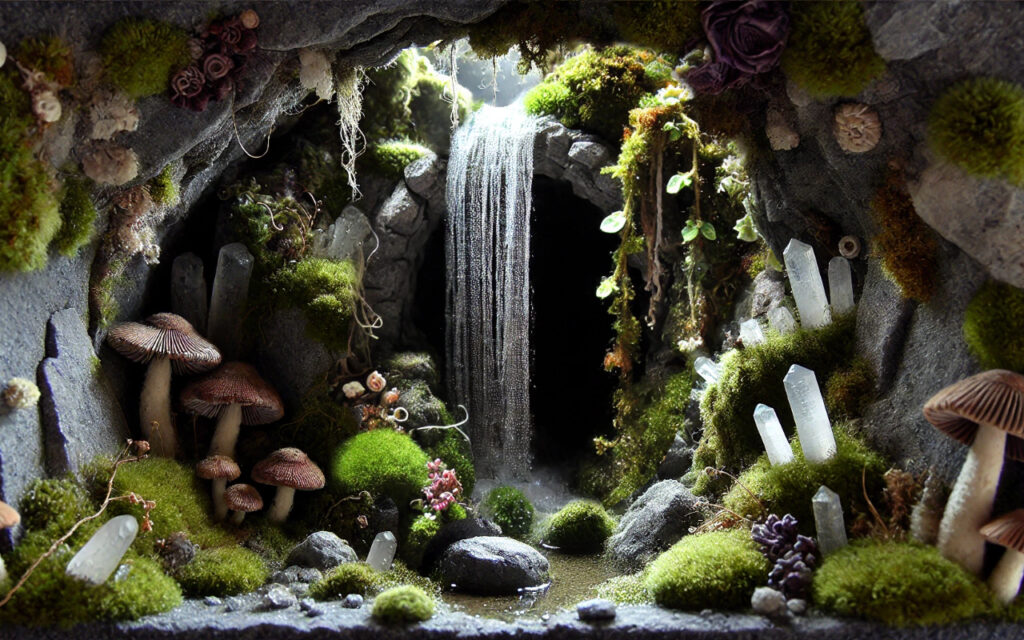
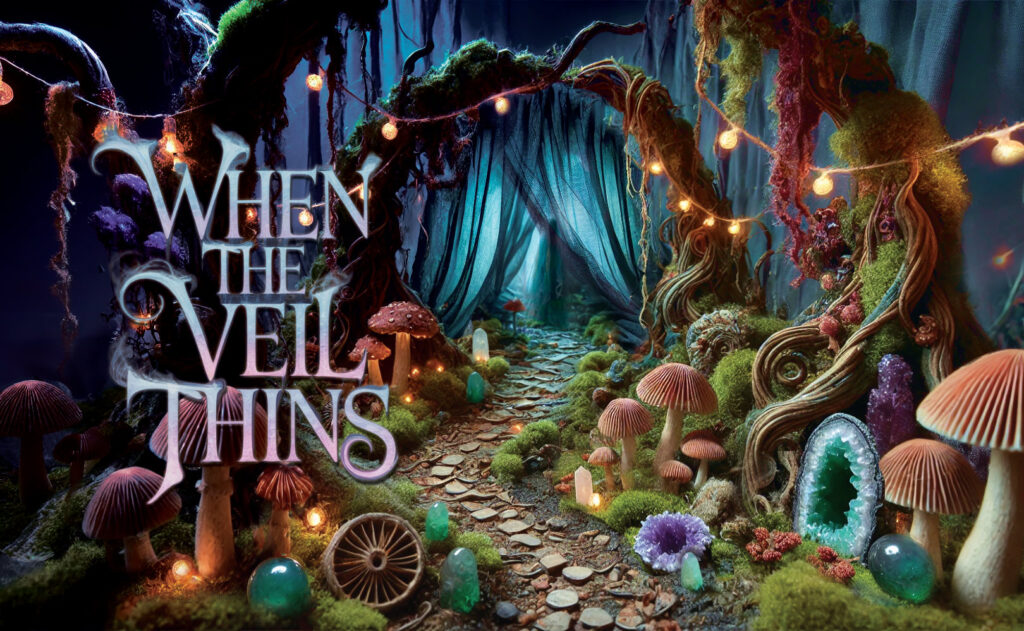
    We’re stepping out of the dreamy haze of Languorous Summer, with its enchanted waterfalls and mossy caves, and slipping into something darker and stranger.

    Say hello to our new theme…

    Two threads will guide our way:

    First, we’ll explore the shifting boundary between fact and fiction—something my character Ev Knox will be forced to confront head-on in The Magician and the Labyrinth of Yesterdays (coming Spring Equinox 2026).

    Second, we’ll see what happens when the veil does more than just blur—when it frays and tears, letting things slip through (not all of them friendly).

    We’ll start by peeling back the veil on my own writing journey.

    Like Ev, I didn’t know what was waiting on the other side when I first sat down to write this story—only that once I did, there was no going back.

    🥳 The Fool and the Threads of Time (Twin Flames, Book 0) was born on February 22, according to the handy timestamp.

    I remember where I was, too: holed up in an Oklahoma City hotel room while my husband was trapped in a conference room for a week-long class.

    For months my spirit guides had been nudging me to write a romance novel. (Yep, guides exist in my worldview, and they’re immensely helpful, if sometimes annoying in their persistence.)

    At the time, I couldn’t have picked a more absurd project. I wasn’t a romance reader, and I wasn’t a fiction writer.

    What could possibly go wrong? 🧐

    But my guides wouldn’t let it drop, so I turned that Oklahoma week into an impromptu writing retreat.

    Holy cow, was that first draft a blast to write.

    It was also very, very bad, and I say that with love. (Seriously, no one will ever be allowed to read it.) Pretty much the only thing I carried into subsequent drafts was Ev’s first name.

    That was the start of a three-year process.

    I wish I’d kept track of how many drafts I went through, but it was at least thirty.

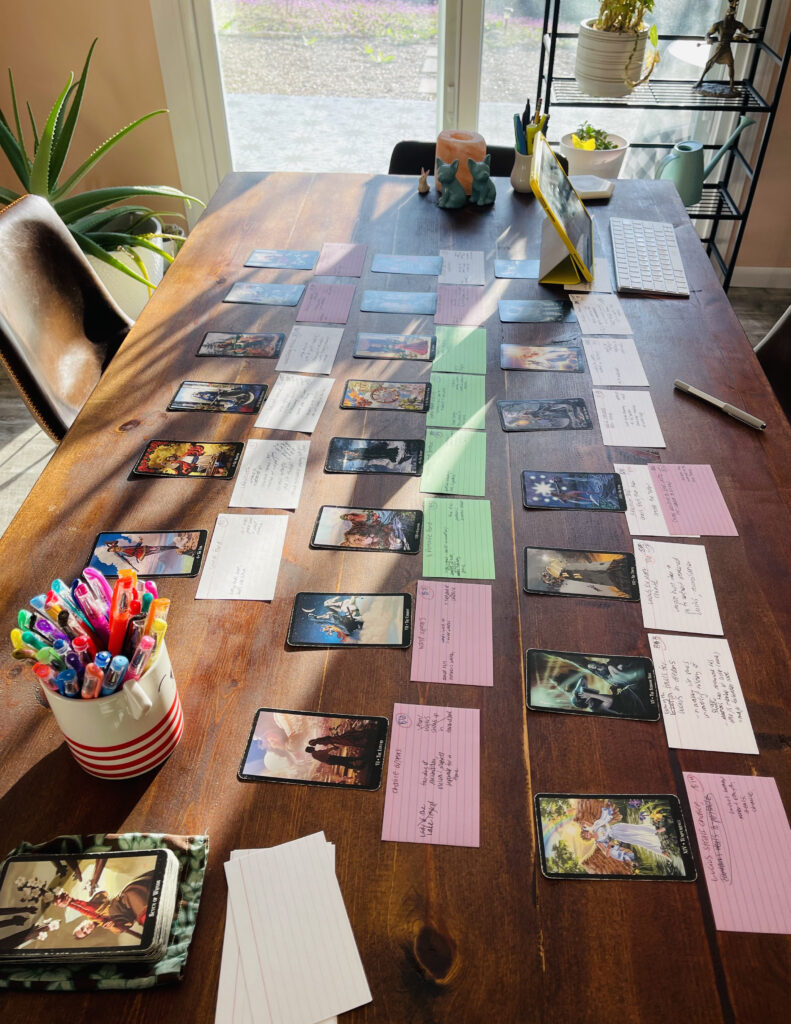
    Somewhere around draft five or six, a series arc slowly emerged. The book had a gaggle of friends, it seemed, and they wanted to be invited to the party, too. A few drafts later, I spread out a set of index cards and mapped out the entire arc.

    Round about year two, I realized if I ever wanted to finish the damn book, I desperately needed an outline. So I finally built a reverse outline—cue the parting of clouds and angelic choruses.

    Oh, it was glorious! Instead of drowning in endless rewrites, I could hammer out the kinks in outline form, saving my energy for the actual writing. The outline transformed an unwieldy mess into a puzzle that was actually fun to solve. Who knew??

    In hindsight, I’m grateful for those chaos years, because I learned a hundred things that don’t work for me and how to support the way my brain likes to craft stories.

    Ideas aren’t my problem—if anything, I have too many, and without an outline, every draft gets progressively kitchen sink-ier until the whole house is underwater.

    By the time I finished Book 0, the series arc had undergone extensive remodeling, and I knew I needed to scrap the original and begin again.

    Which brings us back to the tarot…

    Laying out the Major Arcana across my dining room table, I paired each card with the plot points I’d mapped out.

    (The cards stayed there for a week, while we ate meals standing in the kitchen—sorry, husband!) 

    My favorite part of outlining?

    That moment when, in my mind’s eye, it shifts from scribbly index cards to a living web, each point connected to another, and another, until the whole thing vibrates with potential.

    That’s when I know I’ve captured enough detail to move on.

    I’ve also noticed a pattern in how my creative energy flows. In the early drafts of a book, 90% of my energy hums inside that book’s world. The other 10% flits about the series universe, seeding ideas for short stories, companion novellas, or future arcs.

    But as I near the finish line, that free-floating energy starts orbiting the next book—plot downloads, snippets of dialogue, flashes of character arcs. The ratio shifts until suddenly I’m living 90% in the next story.

    It’s like a relay race: one book hands the baton to the next.

    And some books—like The Hermit (Book 9) and The Star (Book 17)—are especially magnetic. My imagination keeps returning to them, almost obsessively. It’s been fun breaking down why this is, so I can slather more of that magic sauce onto every book.

    A major ingredient of the sauce…

    …is creating a world I actually want to live in for the better part of a year.

    This could include a story that grips me so much I start dreaming about it, characters with problems juicy enough to low-key stress me out (in a fun way!), or a setting that oozes a particular mood.

    Which brings me to Harrowfell Hall. 

    I love me some gothic novels where the setting is a character in its own right. A place brimming with dark secrets that you have to pry out of its cold, dead hands, only to wish you’d never gone digging in the first place.  

    I already knew the basic (romantic) premise of my next book,The Magician and the Labyrinth of Yesterdays:

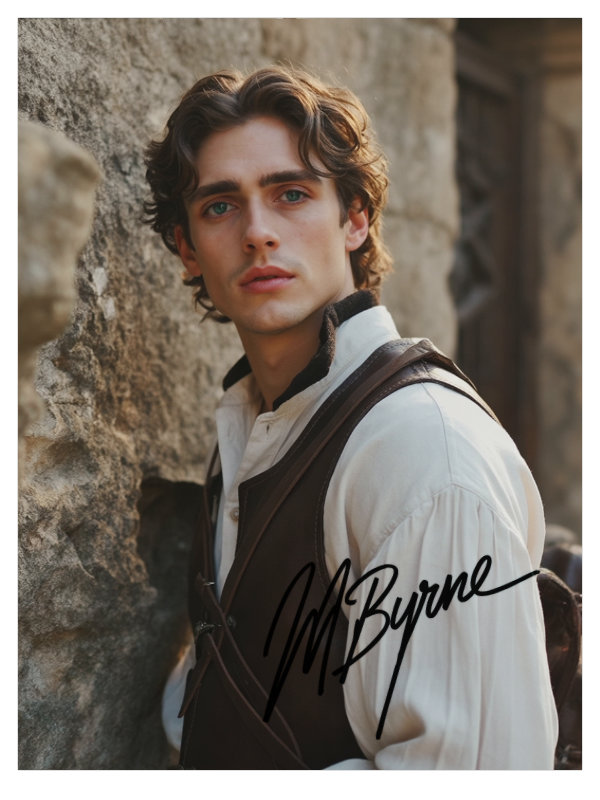
    Ev Knox’s debut novel is an overnight sensation, and Matt Byrne—the internet’s smoking hot boyfriend—gets cast as the love interest in the film adaptation. 

    I also knew I’d be thrusting Ev, a professional introvert, into the chaotic world of the film set, but I didn’t have a clue where that would be. Definitely not a soundstage. (Yawn.)

    Hmm…how about a secluded castle built in the late 1700s by an eccentric heir to a coal-mining fortune who dabbled in occultism and—if the rumors are true—sex magic?

    Now we’re getting warmer. Forget “only one bed.” Only one haunted castle, baby! 👻

    And stepping outside? Not much safer. You see, Harrowfell is tucked deep in the woods where hikers keep vanishing. And Margot Takada, local expert on Harrowfell’s hauntings, claims to have found bizarrely oversized hoofprints disappearing into the trees. 

    Naturally, that means only one thing.

    Ev is stuck inside Harrowfell with Matt Byrne, doing her level best to remember she has a boyfriend back home and that it should not matter if her celebrity crush is even hotter (and sweeter) in person. 

    Easier said than done when Matt—famous for guarding his love life like a state secret—suddenly acts like the only thing he wants to keep all to himself…is her. 🥵

    Okay, now that is a story I can live in for a year, and I’ve barely told you anything about the haunting yet! 

    Next time, we’ll peel back the veil and explore the grounds of Harrowfell.

  • Your Ancient Star Sign

    Your Ancient Star Sign

    The following is an excerpt from Beyond the Hedge, the blog of folklorist and time-slip researcher Margot Takada. Used with permission.

    Last month, I received an unexpected email from Dr. Mira Halstead, curator at the Barton Museum of Antiquities. She’d gotten her hands on a strange manuscript—The Secret Garden of the Stars—which may have originated in the lost kingdom of Harandaal.

    Regular readers will know that when I say “lost,” I don’t mean simply lost in the annals of history. Yep, we’re talking lost timelines, folks—a Beyond the Hedge specialty.

    My research points to the possibility that Harandaal truly did exist—just not in the river of time you and I are swimming in.

    If that’s true, then there’s another timeline out there in which Harandaal was as real as Athens. It’s only from our alternate vantage point that we’ve demoted it to the mythical status of Atlantis.

    But back to Dr. Halstead.

    I get a lot of weird messages, but rarely do they include high-res scans of an ancient manuscript. Obviously, I was hooked.

    Dr. Halstead has been awesome enough to post all the scanned pages on the Barton Museum website. The manuscript appears to be part field guide to the Star Garden’s flora and fauna, and part astrological treatise.

    How cool is that??

    I’ve spent the past few weeks cross-referencing the star patterns, and in Harandaal, summer was divided into three distinct constellations, each said to shape the fate—and personality—of those born under its influence.

    Sound familiar? Yep, even across timelines, the ancient Harandeans developed a relationship to the night sky that echoes our own. Pretty beautiful, isn’t it?

    The Harandean Night Sky

    Of course, their constellations weren’t identical to ours. The Harandeans saw in the stars:

    • The Star Phoenix, who rises in early summer, with a bold, passionate energy.
    • The Crowned Stag, who reigns in midsummer, with a loyal, protective vibe.
    • The Ember Moth, who flickers on late summer nights, drawn to bittersweet endings.

    As a fun experiment (and because I know you all love this stuff as much as I do), I’ve adapted this ancient system into a short quiz based on personality patterns.

    When you’re done, you’ll get a fun forecast based on your Harandean star sign!

    It’s speculative, of course—but aren’t most things worth doing?

  • The Kingdom that Vanished (Or Did It?)

    The Kingdom that Vanished (Or Did It?)

    From: Dr. Mira Halstead m.halstead@bartonmuseum.org
    To: Prof. Elias Merrow e.merrow@lyndengrove.edu
    Subject: Have you ever heard of this place??

    Elias,

    I know it’s summer and you’re supposedly on sabbatical, but something just landed on my desk and I need your brain.

    A donor left us an uncatalogued manuscript—vellum folios, hand-stitched binding, phoenix-red wax seal. No provenance paperwork, naturally. We’re tentatively dating it to the 11th or 12th century, but the ink composition is…odd. The lab says it contains trace elements they “can’t identify using current standards.” Not encouraging.

    The title page reads:
    The Secret Garden of the Stars
    A royal account of the flora of the Star Garden

    The illustration is bizarrely charming—anthropomorphic flowers holding hands, a smug little fox in the margins—but the text is what really got me. The Star Garden is described as the royal sanctuary of the Bryndiel family, rulers of a place called Harandaal.

    I’ve run it through every geographic and mythographic index I can think of, and I’m turning up squat.

    Have you ever come across these names? Harandaal? Bryndiel??

    Oh, and did I mention the final pages are sealed shut, because of course. We’ve looped in Niko from Conservation, and apparently, the seal is made with some kind of resinous compound that resists both heat and solvent. Very dramatic.  

    Let me know what you think. I’m attaching a photo of the title page, but I can scan a few folios if you want a better look.

    Mira


    From: Dr. Mira Halstead m.halstead@bartonmuseum.org
    To: Prof. Elias Merrow e.merrow@lyndengrove.edu
    Subject: RE: RE: Have you ever heard of this place??

    Seriously, Elias, you have got to tell me these things sooner.

    Also, I’m tagging along the next time you take your daughters to Harrowfell Hall—I had no idea you were a haunted castle enthusiast.

    I checked out the blog you mentioned, Beyond the Hedge. Pretty random that you met this Margot Takada person at Harrowfell. Despite some of the, shall we say…creative theories she’s proposing, her citations are surprisingly rigorous. And she’s definitely read more 10th-century herbals than half the grad students in our program.

    If we’re looking at the same post, she refers to Harandaal as one of the more “compelling examples of a kingdom caught in a timeline bifurcation.”

    I had to read that about three times before it still didn’t make sense.

    The footnote led me to a book my teenage self would’ve gobbled right up, in between obsessive re-readings of Lord of the Rings.

    The Collapse of Crowns: Hidden Histories and Lost Empires.

    Have you read this, or am I tumbling way too deep down the rabbit hole here?

    Believe it or not, we had a copy in the stacks. Chapter 31—The Battle of Harandaal. Some versions say the kingdom fell overnight. Others claim the king struck a deal, and the fall never happened.

    Check this out:

    “What if both things happened, but in different timelines…and for some reason, only one reality survived?”

    For the record, I don’t believe in “timeline bifurcations,” just in case you’re getting worried about me.

    M

    P.S. Okay, but what if there is something to this? 

    I mean…how has not a single historian ever heard of this place, yet we now have one book that mentions Harandaal and another manuscript that claims to be from there?? (cue Twilight Zone theme song)


    [Editor’s Note – Barton Museum Archives]

    Dr. Halstead’s correspondence is included here with permission.

    Readers wishing to explore further references to Harandaal—and the mysterious manuscript known as The Secret Garden of the Stars—will find relevant material in The Fool & the Threads of Time (Book Zero).

    Those seeking additional context regarding Harrowfell Hall, timeline bifurcations, and other related phenomena are advised to consult The Magician and the Labyrinth of Yesterdays (Book One, coming 2026).


  • The Chrysling (and a Surprise Threeway?)

    The Chrysling (and a Surprise Threeway?)

    Some say the Spiral Gardens—those rocky hollows within the palace that teem with bizarre plants and insects—are the strangest place in all of Harandaal.

    Well. Those people have clearly never been to the chrysling (pronounced KRIS-ling).

    Shall we go exploring?

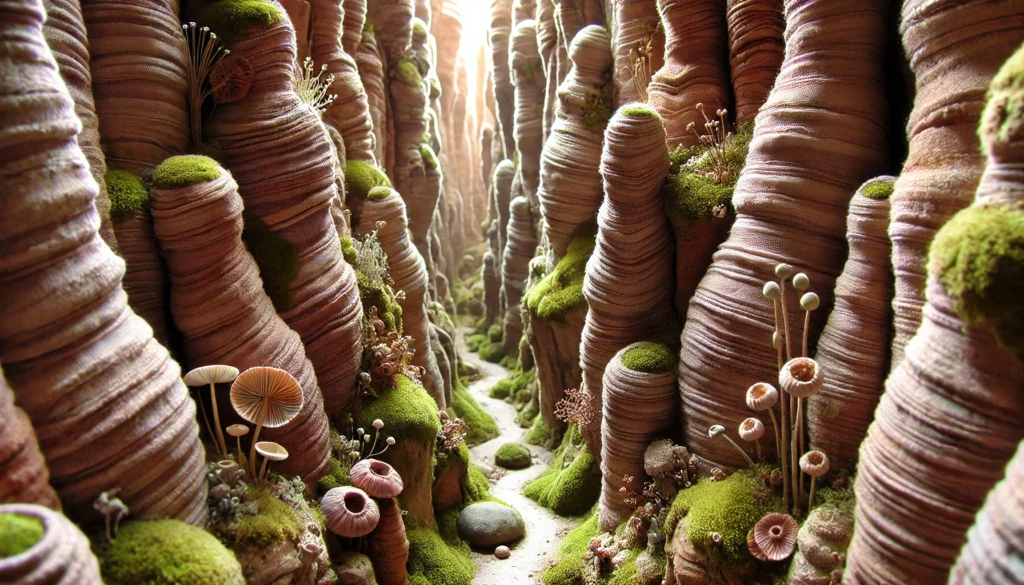
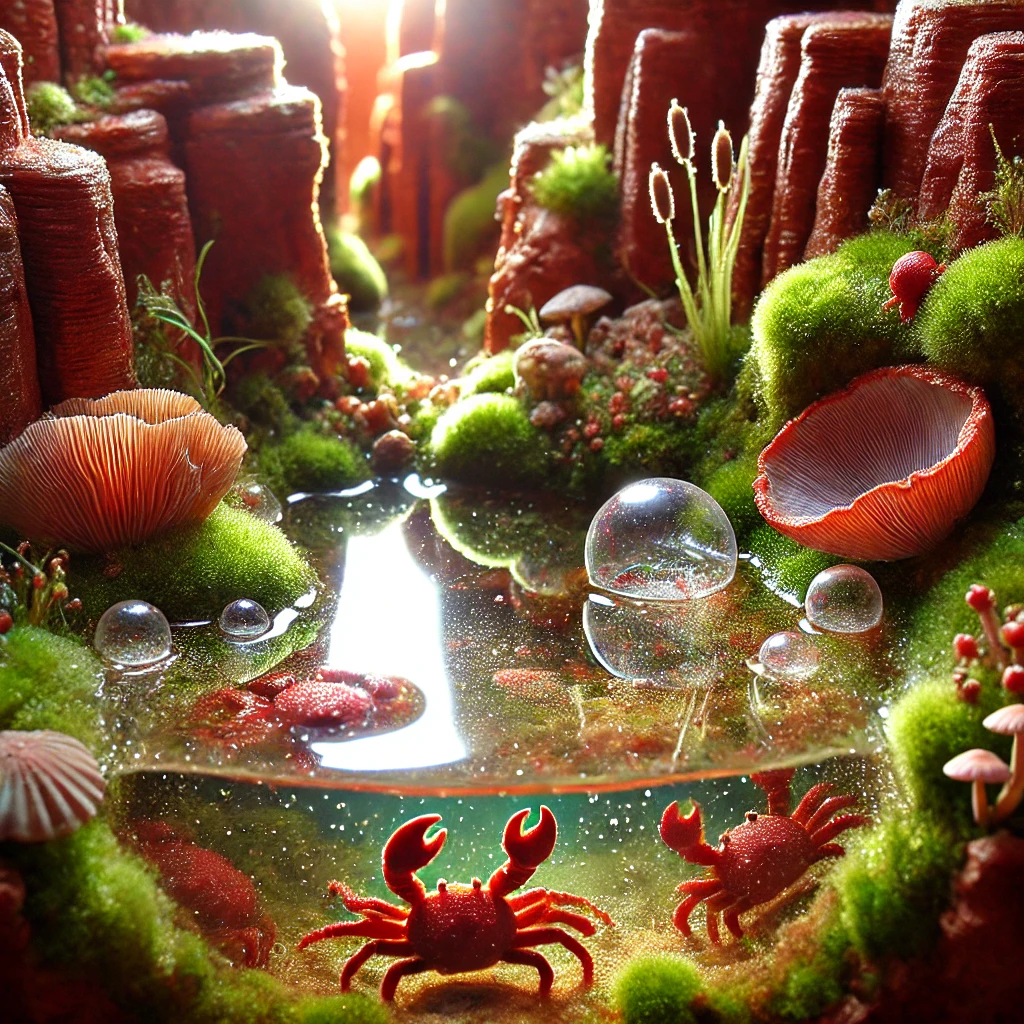
    Bulbous stone spires rise like giant coral. Narrow ravines snake between, the rock adorned with moss and fungi found nowhere else in Harandaal. 

    Pools of glassy water shimmer on ledges, and if you look closely, you might spot a phoenix scuttler: a shy red crab, known to naturalists as Rubicampus harandaali.

    Why phoenix? Because the chrysling’s stone is no ordinary rock—it’s phoenix stone, the very same material from which the palace of the Bryndiel family was carved.

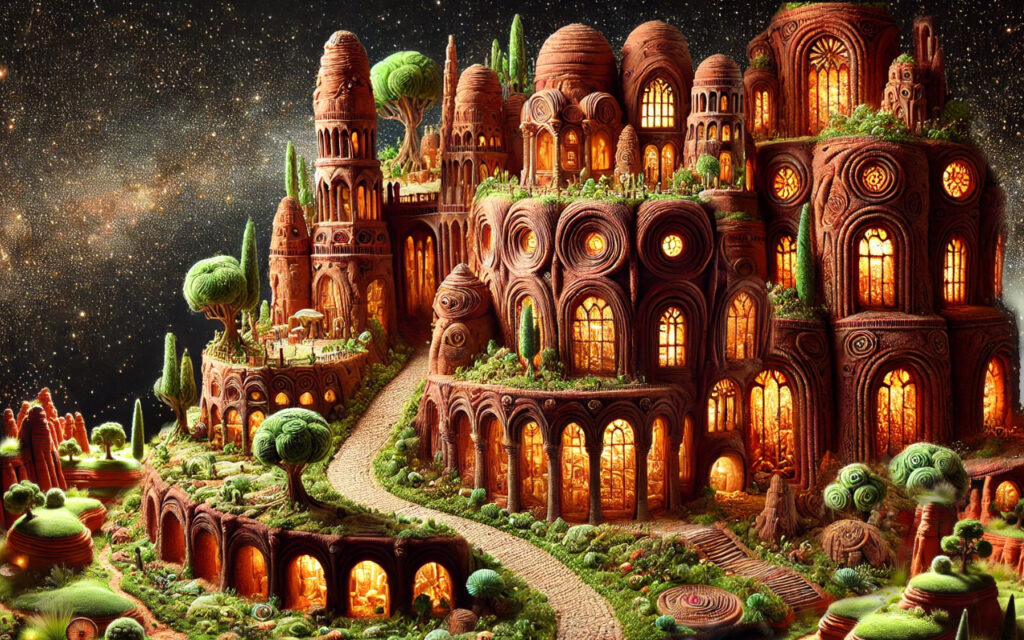
    You wouldn’t guess it to look at them now, but once, both the palace and the chrysling were solid buttes. A massive one, in the palace’s case.

    Ancient stonemasons hollowed that butte from within, carving every window and wall, every staircase and sconce, like a gemstone in reverse.

    The chrysling, too, was sculpted—by wind and rain and the steady hand of time.

    But speaking of time…

    In the chrysling, it doesn’t always behave. 

    When Mathias takes Evelyn to the chrysling in The Fool & the Threads of Time (Book Zero), as she’s marveling over one of those crab-filled pools, she hears a voice. A whisper that sounds an awful lot like her name…

    Bookmark that, dear reader.  Evelyn has just experienced a time slip.

    She won’t realize it until much later—say, in The Magician and the Labyrinth of Yesterdays (Book One, coming 2026)—but you’ll want to remember that moment.

    Because where time slips, other things can slip through, too. 

    A little birdie tells me a companion short story will be arriving with Book One—one that takes full advantage of the chrysling’s more…intimate distortions of time.

    Evelyn finds herself caught between two lifetimes—and between a present-day Matt and his princely past-life self. Both of whom are feeling more than a little possessive. 🌶️🌶️

    Apparently, the hottest new trend in Harandaal isn’t multiple orgasms, it’s multiple lifetimes sex.

    But you know what they say—what happens in the chrysling, stays in the chrysling. 😏


    Get ready with Book Zero, The Fool & the Threads of Time.

  • The Fabled Cave of Mesmer

    The Fabled Cave of Mesmer

    Just a little farther now…

    You can feel it, can’t you—the cool mist in the air? We’re close. 

    The forest path narrows, the moss-covered ravine pressing in. One more turn up ahead…

    There it is.

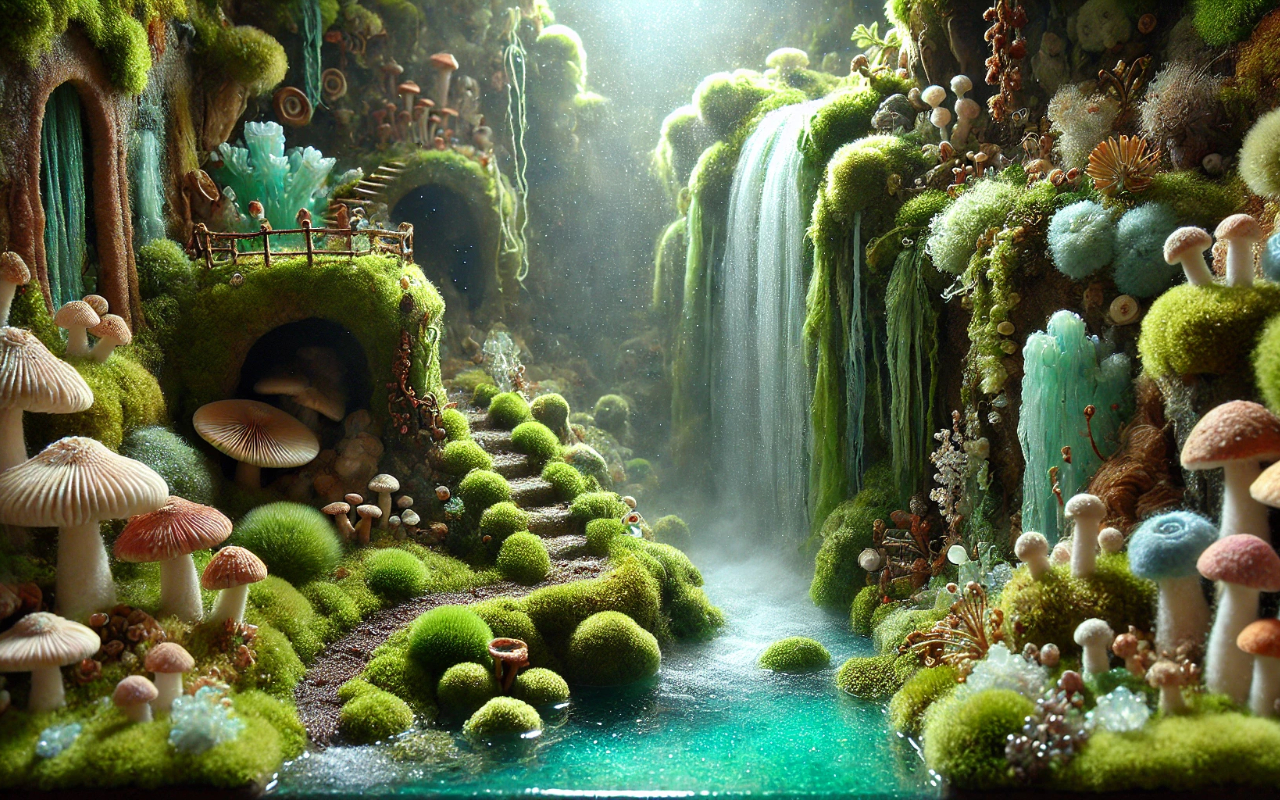
    The Waterfall of Mesmer, like liquid diamond, cascading into a pool so vividly turquoise it could well be a painting. The water foams, eddying around moss-slick boulders before vanishing through a cleft in the cliffside, swallowed by the earth itself.

    But we’re not stopping here.

    See that trail, snaking up the cliffside? Careful now, it’s steep, and the mist makes everything a wee bit treacherous. But just a little higher, now, and I promise—it’s worth the wait.

    The forest is swallowed by the roar of water as you slip behind the waterfall’s curtain. The air is damp, thick with the scent of wet stone and something stranger—floral, but sharp. 

    Lush vines curtain the cliff face, tiny, unfamiliar blossoms crowding every shadowy crevice. A pale purple moth flits from one to the next, a lime-green frog watching it with interest.

    A whole world, hidden behind the waterfall. 

    “Hold this a moment, will you?” 

    You take the lantern as your guide retrieves thumb-sized fire sticks from their pack, the lamp flaring to life. 

    Parting the vines, and there it is: a dark mouth in the rock. The fabled Cave of Mesmer, all too real. But are all the tales true?

    Only one way to find out…

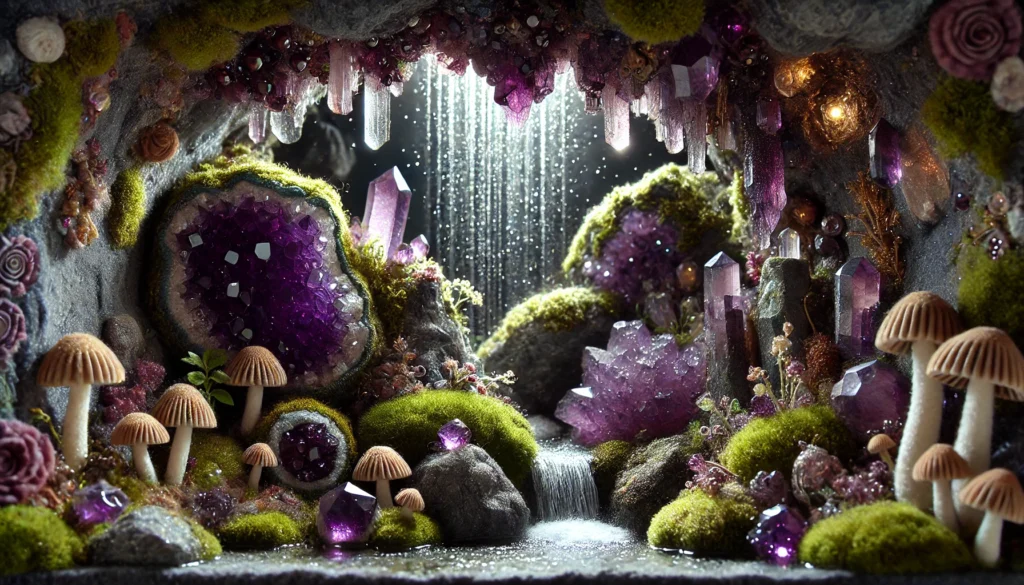
    The passage is narrow, uncomfortably so, the walls glittering with quartz, catching the lantern light like fireflies trapped in stone. Strange carvings spiral across the surfaces, their meanings lost to time.

    But one thing is clear: you’re not the first to walk this path.

    Deeper still and the ceiling arches, enough that you no longer have to stoop. Rolling your shoulders, you see that the ceiling is studded with amethyst. It’s cool and smooth, humming faintly beneath your fingertip.

    And then the tunnel opens.

    A chamber, roughly circular, its perimeter home to a melting forest of stalagmites. Other passageways branch off into darkness, goosebumps prickling your arms. Anything could be waiting back there. 

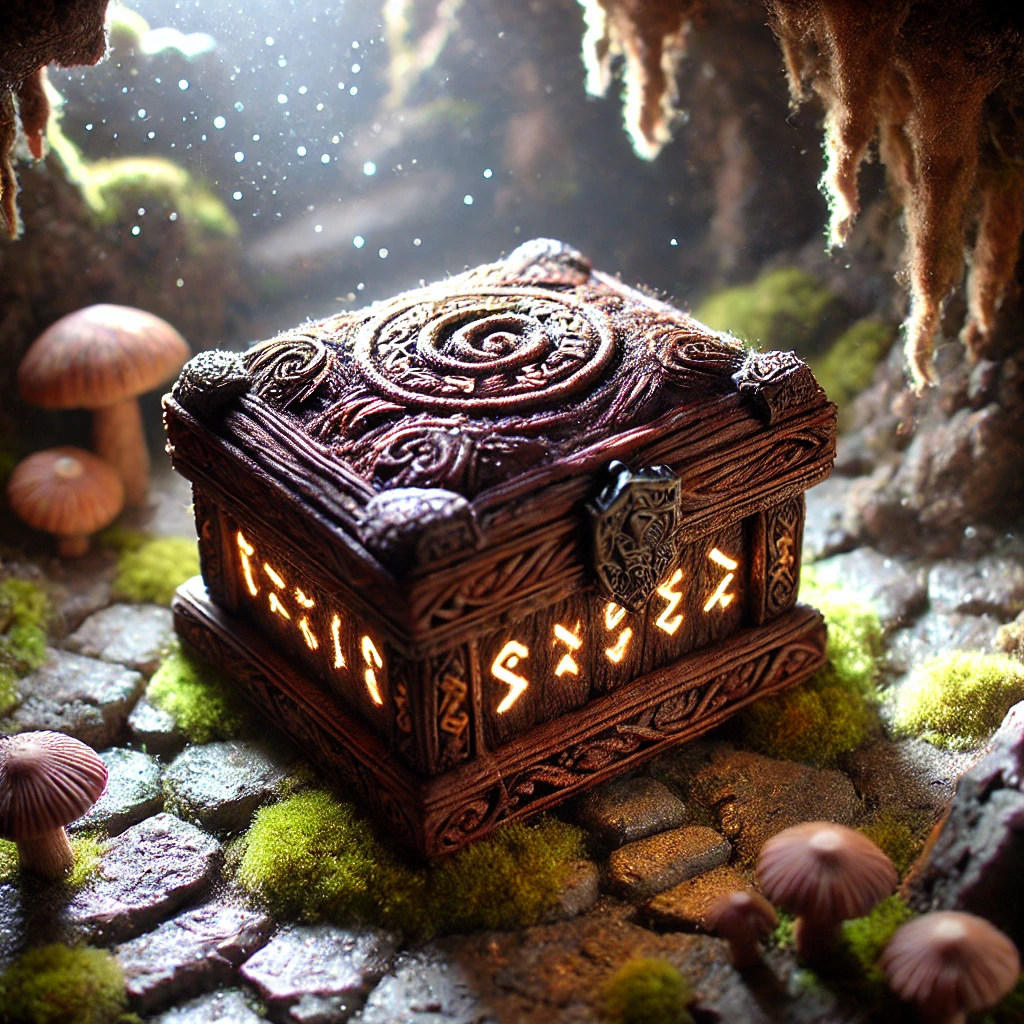
    But your guide is already beckoning you to a shallow cavity in the wall. Swinging the lamp to the opening, you spy a wooden box.

    The lid is carved with symbols matching those on the passageway’s walls. You lift it with care, afraid the rusted hinges might snap clean off. Peering inside, the box is…empty?

    No, not quite. In the corner, nestled on a scrap of cloth lies a small pendant. It looks handmade, a smooth riverstone wrapped in copper wire, green with age, strung on a braid of hemp. 

    “But…this is wrong. Shouldn’t there be a scroll?”

    “Ah, right you are. This was left as a trade by the ones who came before us.”

    “A trade? By who?” Had we truly come all this way for nothing?

    “Eowyth and Mateu.” Your guide closes the box with a wink. “If you want to know what they found—well…you’ll have to ask them yourself.”


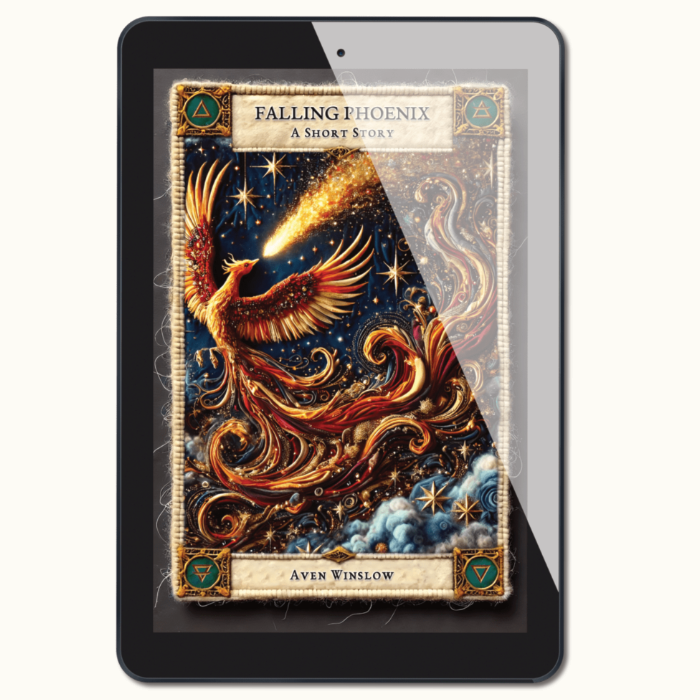
    🔎 Read the short story, Falling Phoenix, to uncover your next clue.

    Heads up: it’s spicy! 🌶️