Today, I added a second cube to Hinton’s higher-dimensional perceptual exercises, and let me tell you, the difficulty increases exponentially. Holding one rotating cube in my mind is more or less manageable at this point; holding two borders on bonkers.
But when it works—when my mind can maintain awareness of both cubes’ rotation—something strange happens. It’s like Hinton said: the cubes feel less like objects and more like coordinates in a field. It’s like a cube isn’t a thing, so much as a specific configuration of relationships.
Which made me think of tarot.
If a cube is less about faces and vertices just sitting there being a cube, and instead, it’s a relational “slice” of the field of reality, this is akin to a tarot card being more than an image printed on card stock.
A tarot card isn’t meaningful in isolation. Meaning arises from the card’s relationship to so many things—for instance, the card’s symbols would be gibberish were it not for an entire web of cultural associations. Even on a prosaic level, what would a picture of a throne mean if thrones didn’t exist in real life?
Not to mention the various meanings the card activates as my psyche—conscious and unconscious—interacts with it. A card’s meaning arises from its position in a complex field of information.
I don’t know what to do with this insight yet, but I can feel something brewing in the back alleys of my brain.
February 9
Welp, tonight was the weirdest night of my life, and I’ve experienced some pretty strange shit in my 28 years on this planet.
I was at the Barton College library, back in the stacks by the theoretical physics section. It was about an hour before closing, and it was just me and the mice in the walls. Lately I’ve been carrying my tarot cards everywhere, hoping inspiration will strike, and I decided to do Hinton’s rotating cube exercise before pulling a card, just for fun.
Woah, nelly.
I shuffled the deck, and I’m not 100% sure that something weird wasn’t already happening at that point. I wasn’t expecting it, so for all I know the web of light was already there, and it just didn’t register.
I’m already getting ahead of myself.
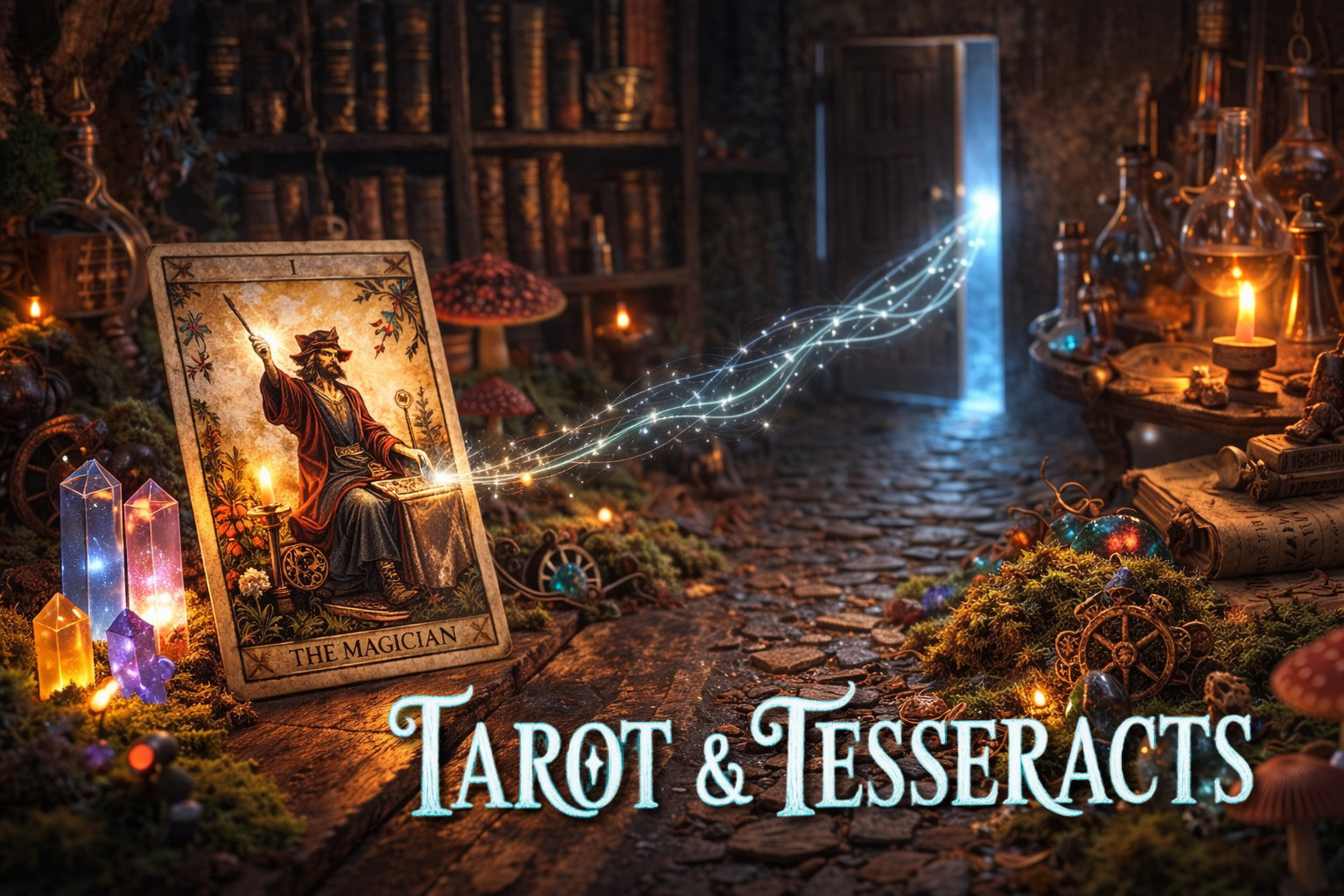
Right. So I shuffled and drew a card: the Magician. Whether or not the “light threads” were already there, all I know is when I laid the card flat on the desk, I could see them: faint, spiderweb tracings of some sort of semi-translucent…liquid? I’m not sure. I dragged my finger through them and they sort of wobbled. More like rippled before they reformed.
There’s definitely a pattern, but it’s not entirely symmetrical like a fishing net, or anything immediately discernible like a spider’s web. But I stared at it for—well, nearly an hour, because the front desk person scared the crap out of me when they came through, flipping off lights. If they were seeing the web of light, too, they’d make a killing at poker—their expression didn’t change one iota, and I was too freaked to ask them.
I slid the card back in the box, and the web faded away.
The second I got home, I tried again. Nothing happened.
My first thought was it had something to do with Barton College. No matter how normie the brochures try to paint that place, it’s straight up Bizarro World. But then I remembered Hinton. I pulled out my colored cubes and worked through the exercise—and then I pulled a card.
The Magician. Again.
And wouldn’t you know, Hinton and all his higher dimensional strangeness delivered. The web was back, and this time, I could discern a clearer pattern. The lines of light were thicker in some areas, almost like individual threads had been braided together, making the web denser in certain areas.
Did it mean something? Was it somehow related to the card I’d drawn? I tried again, this time pulling the Lovers, and sure enough, a different section of the web “densified.” Talk about trippy.
But that’s nothing compared to what happened next.
Last week, we treated the archetypal field as something we infer—a pattern we can read using tools like tarot and the I Ching.
But then we asked: what if you could actually see that pattern?
Margot Takada, a scholar of magic in my upcoming book, The Magician & the Labyrinth of Yesterdays, was experimenting with a series of bizarre perceptual exercises created by real-life mathematician Charles Howard Hinton.
When she added tarot cards to the mix, things got weird—weird enough that I should probably let her tell it…
Research Journal of Margot Takada
January 14
Well, Germaine was right (again). I’m already obsessed with Charles Howard Hinton.
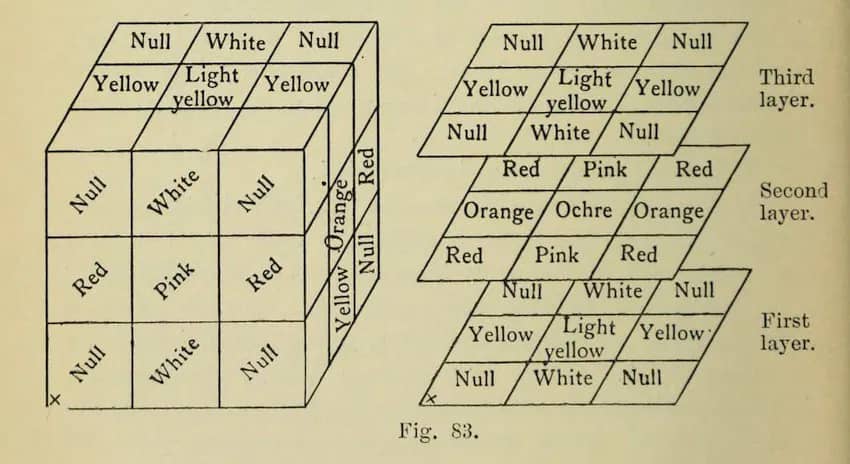
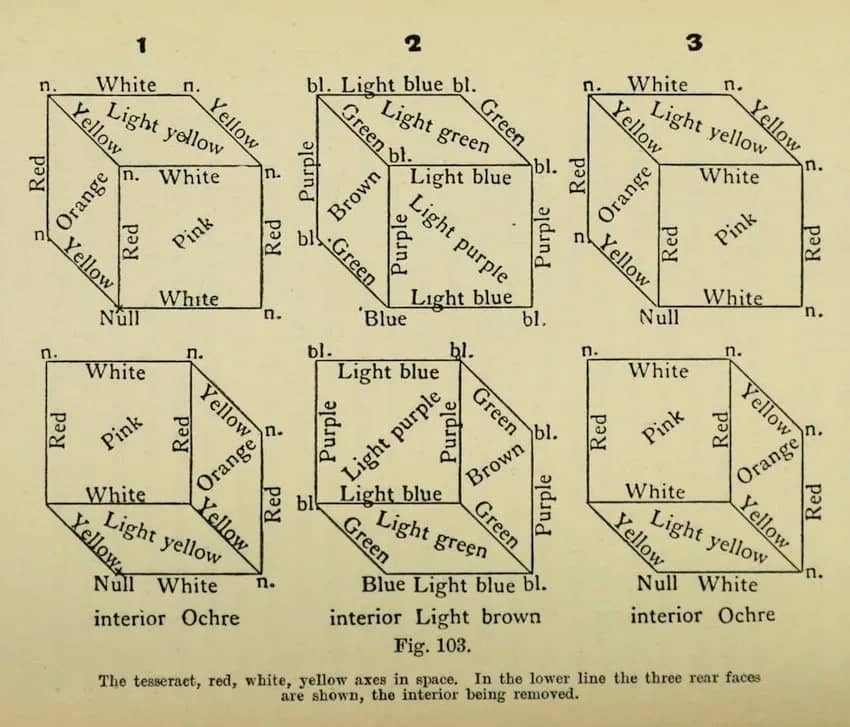
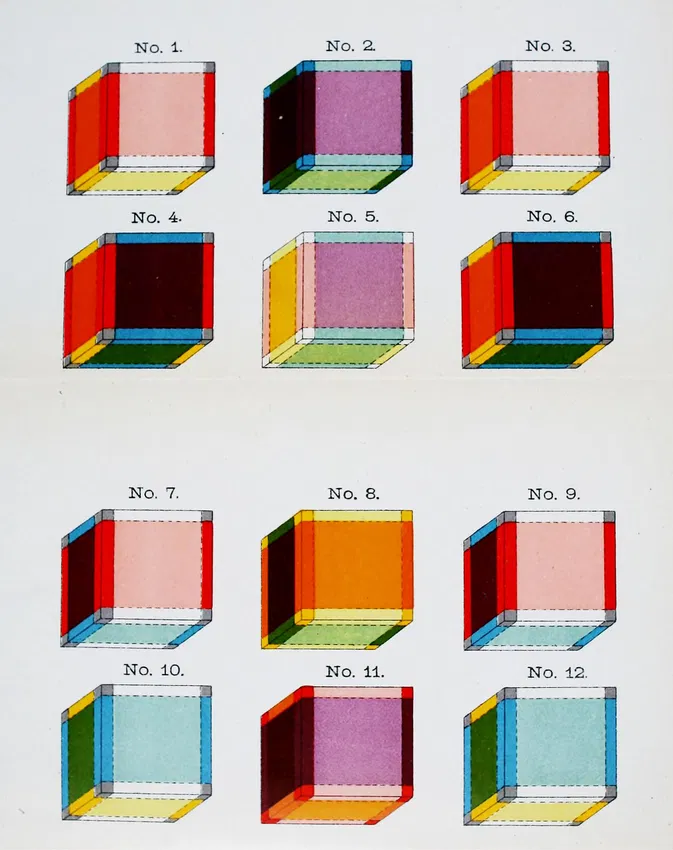
Today I finally finished painting a set of wooden cubes so I can test drive his higher-dimensional perceptual exercises. The premise is pretty simple, even if painting those damn things was anything but. In his book, The Fourth Dimension (1904), Hinton outlines an exceedingly precise color scheme for the cubes.
Seriously, the diagrams alone were enough to make my eyes bleed.
The reason for the different colors is you’re meant to memorize their arrangement. Then, as you rotate the cubes, this allows you to keep track of all of the faces, not just the ones you can see. (Assuming your brain doesn’t explode first.)
What’s the point? It’s pretty clever, actually.
When we look at a cube, we don’t experience all six faces at once. Based on where we’re standing we’ll see a front, the top, and maybe a bit of one side. Our mind fills in the other faces, based on what it knows about cubes.
The key point, though, is that we believe the cube is a predictable chunk of matter. Even though we can’t see the other faces, we assume they’re there, because we know how solid objects operate.
What Hinton’s exercises attempt to do is loosen those assumptions.
When you rotate the cube in your mind and consciously track the hidden faces (because you’ve memorized all those colors, right??), the object stops being just an object and it becomes a system of transformations. Instead of a boring block, the cube becomes a network of relationships.
Hinton believed that once you can experience a cube this way, as something that exceeds any single viewpoint, you’re one step closer to thinking in higher dimensions.
January 18
I’m officially that kid on Christmas morning, ignoring the whole family to play with her new set of blocks. These cubes are taking up every spare moment of my time. No joke, I’m dreaming in goddamn cubes.
I’m also starting to see why Hinton cautioned that higher-dimensional thinking has a way of unmooring your sense of what’s solid. What’s real.
The more I practice rotating the cubes while maintaining an awareness of all the faces I can’t see, the more my mind is able to hold multiple orientations at once. I’m really starting to grok this idea of a cube as a series of relationships, not just a static thing.
And this is just a springboard for the fun stuff, the stuff that would have blown my Wrinkle in Time loving little kid mind. Hell, it’s blowing my mind now.
Hinton designed these exercises to help us visualize what higher dimensions might look like. Here’s the underlying logic:
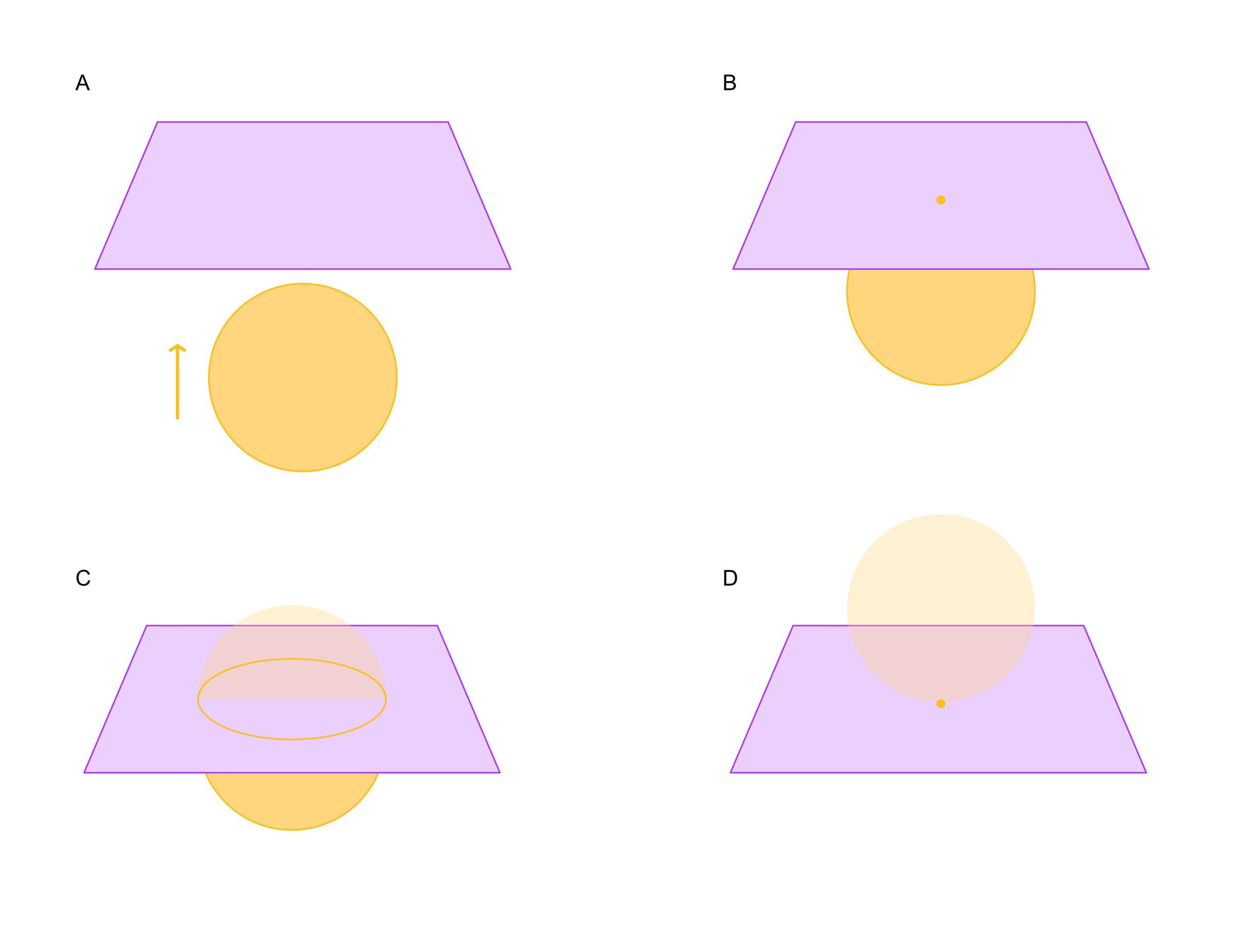
A two-dimensional being (imagine a flat critter living on a sheet of paper) can only perceive length and width. If a three-dimensional sphere passed through its world, the 2D critter wouldn’t be able to see it, because the third dimension is beyond its perceptual purview.
Instead, it would initially see a point. Imagine the sphere floating to touch the underside of the critter’s flat-paper world. Where the sphere kisses the paper, it creates a point.
Then, as the sphere floats a little higher, the point morphs into a circle. The circle expands as the sphere floats higher, until it reaches the sphere’s midpoint (like a belt), at which point it starts shrinking, all the way back to a point. The 2D critter can only experience two-dimensional cross-sections of the three-dimensional sphere.
Hinton is saying that we, with our three-dimensional viewpoint, are in an analogous situation. If a fourth-dimensional object were to pass through our world, we would mistakenly perceive it as a series of 3D cross sections.
This is where the painted cubes come in—but I need to get some shut eye before I dive into that can of worms.
Until then, sweet dreams (of cubes).
January 19
I’m finally ready to unpack the weirdness of tesseracts.
A square is what a cube looks like in two dimensions.
A cube is what that same structure looks like in three.
And a tesseract is what it would look like in four.
Just like the 2D critter’s experience of a sphere passing through its flat world as a point, a series of circles, and then a final point, if a tesseract were to pass through our world, we might see:
A cube.
Then a cube that appears to rotate or otherwise change its orientation.
Then another cube, shifted again.
And so on, changing as the higher-dimensional form moves through our three-dimensional realm.
What looks like a boring ol’ cube to us might really be a cross-section of a higher-dimensional object: a tesseract.
And it’s not just cubes. Anything around us could actually be a partial manifestation of a structure existing in more dimensions than we’re capable of seeing. Pretty trippy, huh?
Turns out, things get a whole lot trippier when you use tarot cards instead of cubes.
Last week, we looked at four ingredients that cluster around a synchronistic event:
An activated archetype.
A mental effect.
Heightened emotion.
A physical event.
We then explored ways to adjust the dials in an attempt to trigger a synchronistic event on purpose: We can influence emotion, we can focus attention, we can work with archetypal imagery, and we can act.
But up to now, we’ve focused mainly on the first three. Today I want to zoom in on the physical event. You might assume this would be the easiest lever to shift—and in many cases, it is.
If you want a job, you apply.
If you want a conversation, you initiate it.
If you want water, you turn on the tap.
The physical world is relatively easy to nudge when it is within your immediate reach. Magic becomes relevant precisely when it isn’t, when the outcome you desire depends on variables beyond your direct control. To borrow last week’s language of fields and activated nodes, taking action alters local conditions—maybe you light up one or two adjacent nodes. Magic attempts to activate nodes that aren’t in direct contact.
So how, historically, have humans attempted to mess with the field?
Enter sympathetic magic.
Across continents and millennia, magical practitioners have relied on a simple axiom: things that resemble one another are linked. Things that have once been in contact remain linked.
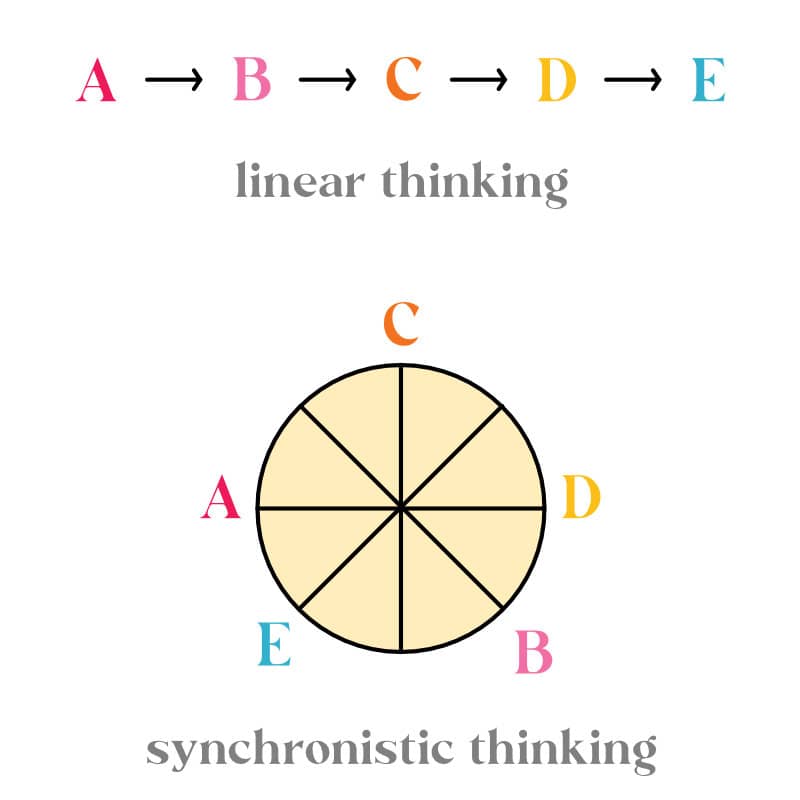
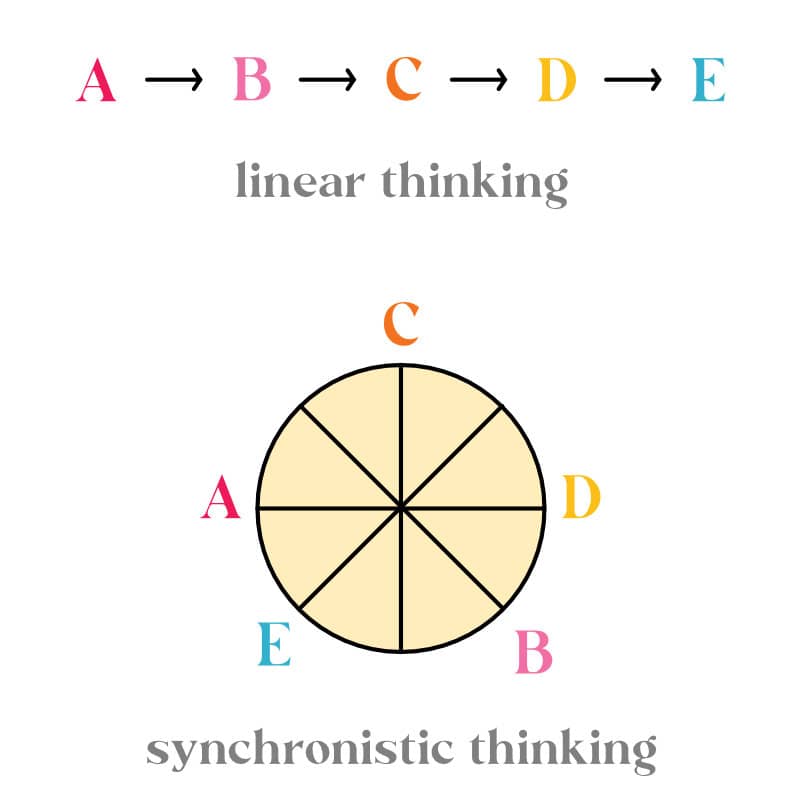
This is Marie-Louise von Franz’s “thinking synchronistically,” in action. Instead of asking, What caused this? we ask, What tends to cluster together?
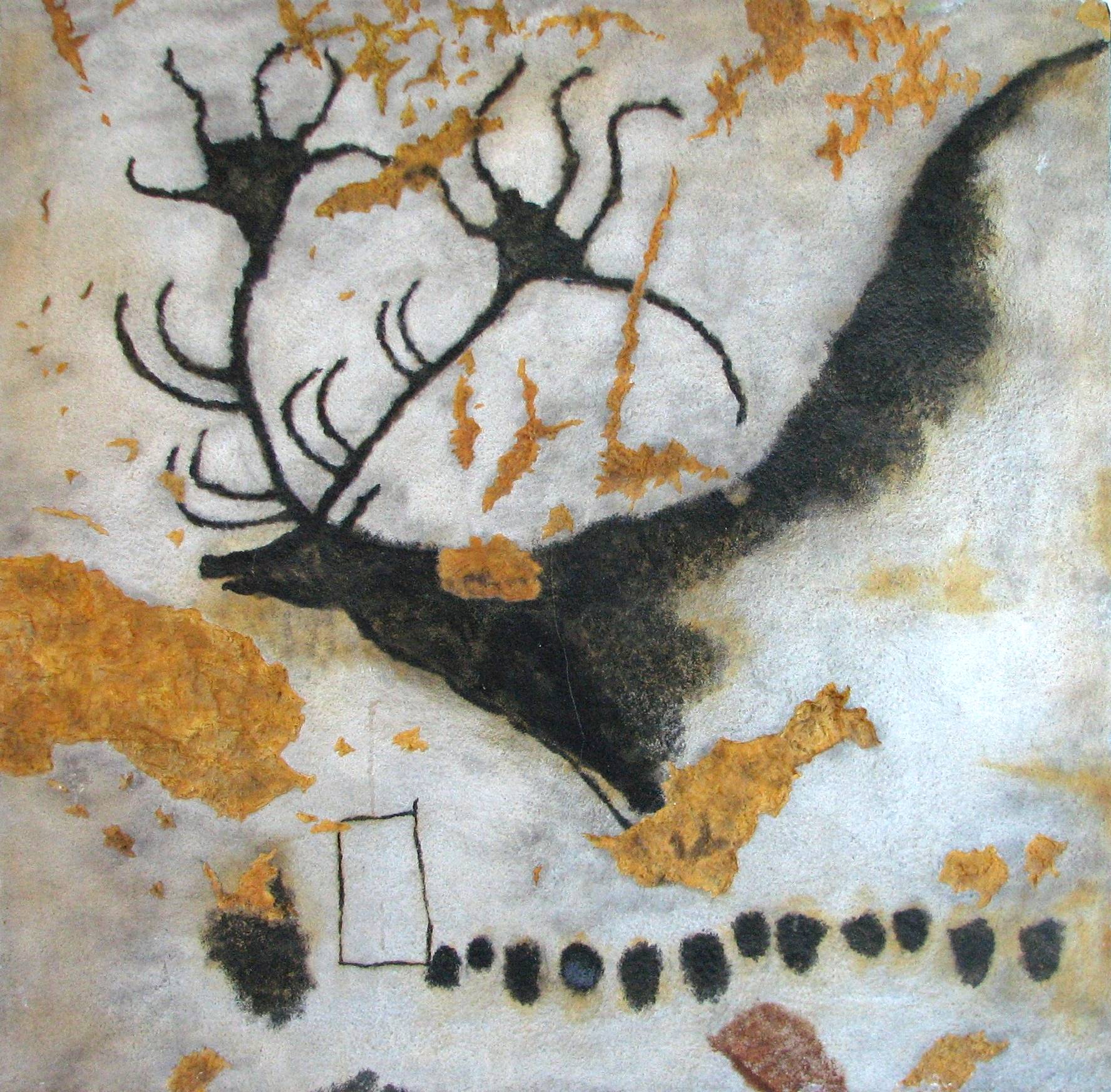
In Magic: A History, archaeologist Chris Gosden surveys examples stretching back to the Ice Age. Among the most famous are the breathtaking paintings in Lascaux Cave and Chauvet Cave.
Scholars have debated whether these images constitute “hunting magic”—ritual attempts to ensure success in the chase. We’ll likely never know what those early artists intended, but what matters for us is the underlying logic, even if it was never consciously articulated: representation was not wholly separate from reality.
The painted bison wasn’t merely an image. It was entangled with the flesh-and-blood animal roaming the landscape, with the migration of herds, with hunger, with survival, with the nourishment of the human community. The cave wall functioned—consciously or otherwise—as a node in a field linking hunters, animals, seasons, and sustenance.
The image was, we might say, an address in the field.
In Middle Kingdom Egypt, enemies’ names were inscribed on clay vessels or figurines and ritually shattered. Breaking the object enacted a hoped-for shift elsewhere in the field. The pottery’s destruction didn’t cause defeat through linear mechanics; it adjusted the relational web in which political and cosmic order were understood to unfold.
Across cultures, locks of hair, fragments of clothing, and personal objects have been used in ritual contexts with the understanding that once two things share relation, that relation persists. Modern physics uses the term entanglement to describe correlations between particles that have interacted, even across distance. The mechanisms and scales differ, but the intuition—that contact establishes relationship—is not alien to contemporary science.
To modern ears, all this can sound like confused causality. Pure superstition. But recall our shift last week from linear chains to field/synchronistic thinking.
If psyche and matter participate in a shared field, then material objects aren’t dead props. They’re condensations of relationship. They occupy positions within that field—positions that encode time, physical coordinates, meaning, and other data.
When a Mesopotamian figurine was buried at the threshold of homes and temples, it didn’t symbolize protection in a decorative, abstract sense. It stabilized a desired configuration in the relational field of the household. It was a physical anchor for an activated archetypal hub (the mental intention of protection) and heightened emotions (desiring protection).
When Paleolithic artists painted bison deep within caves like Lascaux, that image became a stable address within the field linking herd, hunter, hunger, season, and survival.
This is sympathetic magic’s claim: an object isn’t powerful because it resembles something. It’s powerful because it occupies a meaningful position within a web of relations. It is a findable address in the field.
To work sympathetically is not to override physical law. The aim is to activate a specific coordinate by giving heightened emotion, focused attention, and archetypal energy a place to stabilize—the physical “address” encoded in the object.
Another gobsmacking implication of this theory?
*rubs hands together with witchy delight*
An address in the field only makes sense if the field has a recognizable structure. GPS would be useless if the Earth were a blurry schmear—no roads, no intersections, no geography, every coordinate indistinguishable from every other. An address works because the map has architecture.
Roads connect. Neighborhoods exist relative to one another.
The field, like a map, isn’t random, which means the relationships between archetypes are not arbitrary.
A quick refresh: in our field model, archetypes are highly energized nodes in the psychic field, just as particles are excited points in an electrodynamic field. (And further, we’ve been building the argument that these fields—psyche and matter—are one and the same.)
If that field has architecture, then themes cluster. Certain archetypal events tend to unfold in recognizable sequences. As we move through life, with a broad enough view we’ll pick up on recognizable patterns, much like landmarks appearing in a predictable sequence on the drive home from work.
This order is precisely what divination systems aim to decipher.
From the I Ching to the tarot, from runes to cracked turtle shells, divination systems assume that the field is structured and this structure can help us predict what’s likely to occur next. Not in a deterministic fashion—after all, a map doesn’t tell you where you must go. It simply says, if you are here, and you continue heading in this direction, you will end up there. Or, if you are here, and you want to end up there instead, you’ll need to change course.
So far, we’ve been talking about the archetypal field as something we infer, a pattern we learn to read using tools like tarot cards and the I Ching. But what if you could literally see this field, perhaps like a web of light overlaying ordinary reality?
That’s precisely what happens to Margot Takada, a scholar of magic in my upcoming novel The Magician & the Labyrinth of Yesterdays.
Next week, Margot will share how experimenting with the mind-bending exercises of Charles Howard Hinton—a real-life mathematician obsessed with higher dimensions—turned a tarot reading into a startling glimpse of the hidden lattice of reality.
Last week, we climbed the Tree of Life, viewing the same situation—Thursday night book club—from different vantage points. The Tree of Life is a precise arrangement of archetypes, and our ascent was a psychic one, not literal travel.
Today, I want to explore how archetypes are more than mental constructs. They can affect the physical world, and learning how is a powerful tool in our practical magic bag.
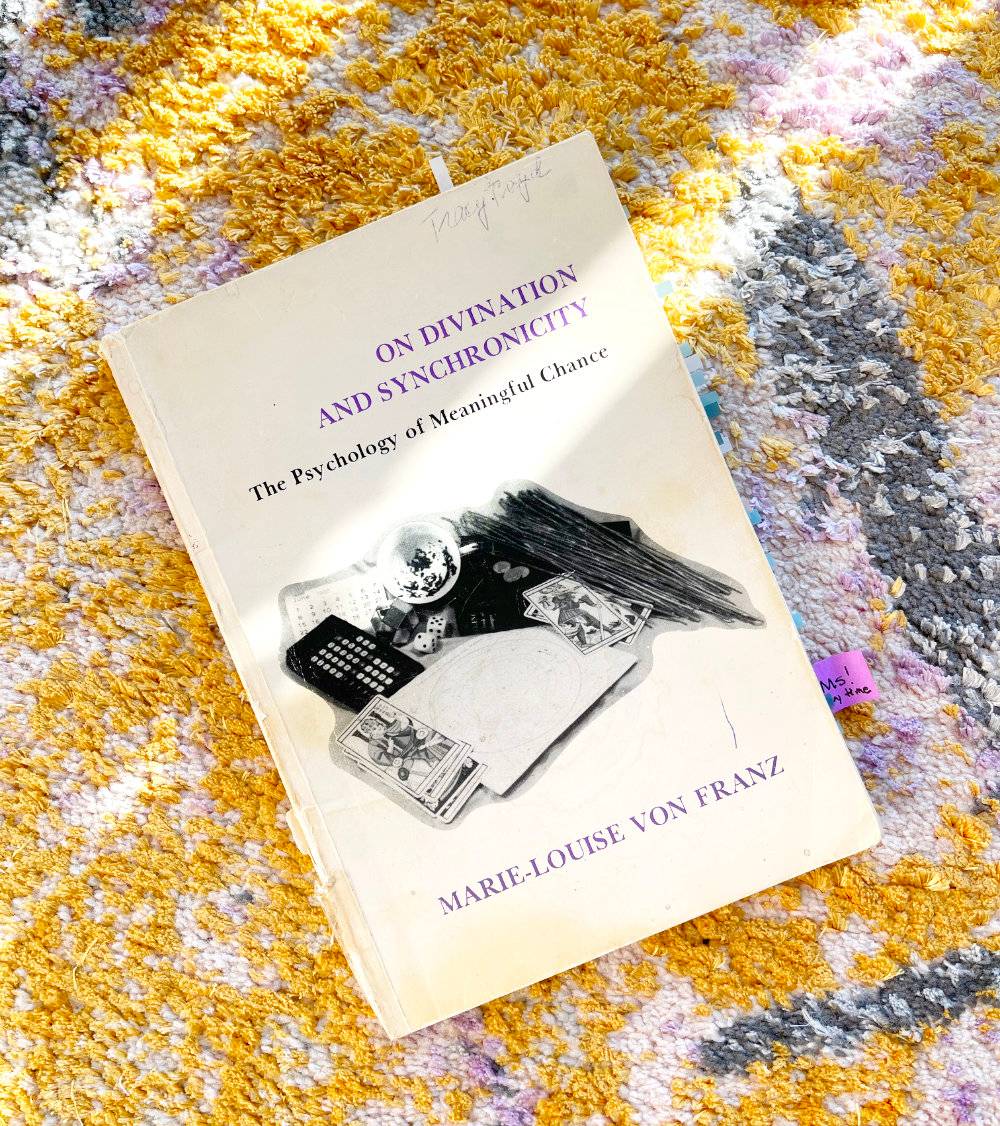
Let’s start with a strange little book by Jung’s colleague, Marie-Louise von Franz, called On Divination and Synchronicity.
Von Franz writes:
“The relationships and the facts of the [I Ching] could be compared with the network of an electric circuit, which penetrates all things. It has the possibility of being lit up but it does not light up unless the person who puts a question has established contact with a definite question. One should therefore not throw an I Ching without first asking, ‘What question do I really have in mind? What do I really want to ask?’ By that one makes contact with one’s unconscious, and asks it to suggest the [solution to] the question.” (p. 58-59)
This mirrors my stance on the tarot: by posing a question before drawing a card, you “light up” the relevant answers in the energetic field that connects your individual psyche, the collective unconscious, and the cards.
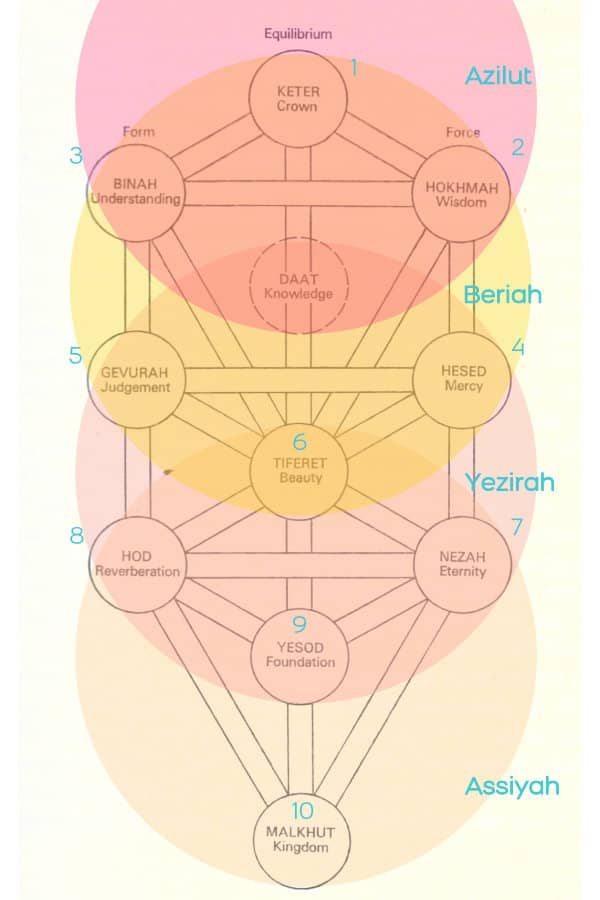
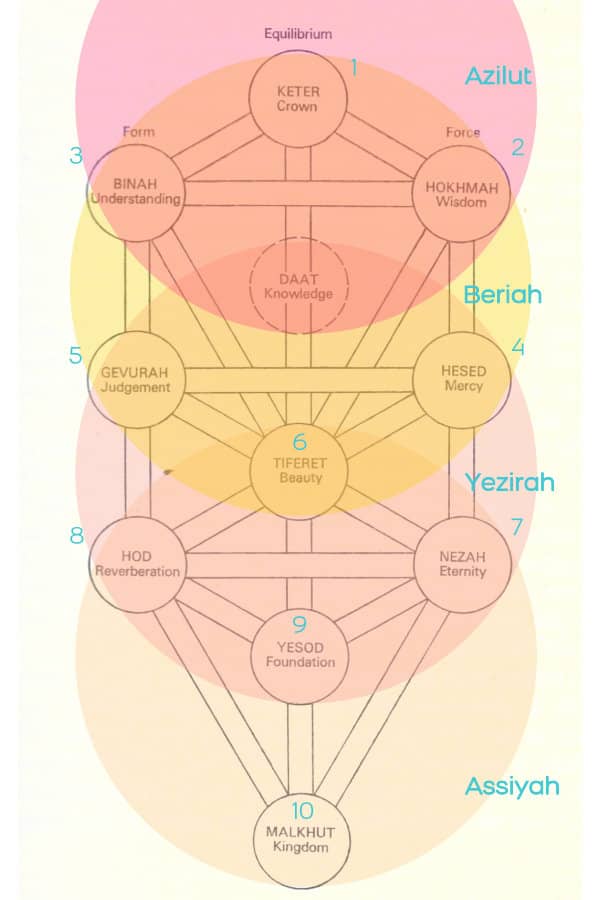
Last week, when we used the Tree of Life to reinterpret book club, we were doing something similar. We posed the scenario as a “question” and watched different sephiroth light up. Netzach illuminated raw emotion at the scene level, Tiphareth illuminated larger patterns at the level of character arc, and Binah illuminated archetypal themes.
Back to von Franz:
“I want to now introduce a new idea, which Jung has not used…the idea or the concept of a field to explore what Jung calls the collective unconscious, a field in which the archetype would be the single activated point. [Theoretical physicist, John Archibald] Wheeler, for instance, defines matter as an electro-dynamic field in which the particles are the excited points. Now I propose…that the collective unconscious is a field of psychic energy, the excited points of which are archetypes.” (p. 61)
This is fascinating. Here, archetypes are described as excited points of energy in a field—in this case, the field of the collective unconscious—just as matter is described as excited points in an electrodynamic field.
But what if those fields were actually the same?
This is what Jung’s theory of synchronicity claims.
Synchronicity describes a meaningful coincidence—an inner psychic event and an outer physical event aligning in a way that feels charged with significance, yet cannot be explained through ordinary cause and effect. The famous example involves one of Jung’s patients recounting a dream of a scarab beetle, only to be interrupted by a scarab-like beetle tapping at the window pane.
Jung wasn’t suggesting that the patient’s mind summoned or created the beetle. Instead, he proposed that both the mental effect (the dream) and the outer event (the window-tapping beetle) arise from a shared underlying pattern—an activated archetype strong enough to organize energy on both sides of the mind/matter divide.
More precisely, he posited the existence of a unified field—an unus mundus—in which psyche and matter aren’t nearly as separate as they seem.
If we combine this with von Franz’s suggestion that archetypes are excited points in the psychic field, we arrive at a compelling possibility: archetypes are excited points in a field that is both psychic and physical—the field in which synchronicity occurs.
Now, here’s where my thinking departs from Jung. He would certainly accuse me of magical thinking—and he’d be right. I just happen to believe that magic is real. 😉
Remember, for Jung, the mind does not create synchronistic events. The underlying archetype generates both the mental effect and the outer world event. But as a magical practitioner, this begs the question: what if the mind could participate in this process more intentionally?
Jung gives us another juicy clue.
He observed, time and time again, that whenever a synchronicity occurs, heightened emotions are present. A magical point of view might say that heightened emotions cause the synchronicity. In fact, Jung quotes a 13th-century magical text by pseudo-Albertus Magnus, De mirabilibus mundi, that makes precisely this claim—though Jung presents the passage in order to dispute it.
In my witchy estimation, however, pseudo-Albertus offers a compelling argument:
“When therefore the soul of man falls into a great excess of any passion, it can be proved by experiment that [the excess] binds things [magically] and alters them in the way it wants, and for a long time I did not believe it, but…I found that the emotionality of the human soul is the chief cause of these things…Thus it is the soul who desires a thing more intensely, who makes things more effective…Everything [the soul] does with that aim in view possesses motive power and efficacy for what the soul desires.” (CW 8, para. 859)
So we know that during a synchronistic event, four things tend to cluster together:
• An activated archetype
• A mental effect
• A physical event
• Heightened emotions
The question is: do they need to occur in a particular order?
If we think synchronistically, as von Franz suggests, the order may matter less than the clustering together. She writes:
“Synchronistic thinking…is thinking in fields, so to speak…The question is not why has this come about, or what factor caused this effect, but what likes to happen together in a meaningful way in the same moment…What tends to happen together in time?” (p. 8; emphasis mine)
So if the order is less important, and we’re thinking in fields rather than tumbling dominos, then we’re no longer asking what causes what. We’re asking which variables we have the power to influence.
Of course, magic already makes a claim here:
That you can change your internal state and affect the outer world. But I’m perennially interested in the how. Instead of a theoretical physicist, you might call me a theoretical witchicist. I want to understand how magic works, and this field-based model feels like one plausible explanation.
We can raise emotional energy. We can generate a focused mental effect. We can attempt to activate archetypal imagery.
We might not be able to orchestrate a synchronistic dream on command, but we can consciously amplify intention (the mental effect). This is precisely what we do when drafting a spellcasting intention: we focus awareness and raise energy to empower a thought.
That’s two factors successfully dialed up—what about the archetypal activation?
This is tricky, because, by definition, archetypes are unconscious. The archetypes discussed in pop psychology and much magical discourse (things like the Great Mother or the Magician) are actually archetypal images; they’re not the archetypes themselves.
This isn’t just semantics.
Going back to our field model in which archetypes are activated nodes in the field, an archetypal image is like a flickering candle compared to the solar flare of the underlying archetype. We can ignite archetypal images fairly easily—perhaps by placing the Magician tarot card or a sculpture of the Great Mother on our altar and meditating on those images—but this is a far cry from firing up the deeper archetype.
For that, we need ritual technology.
Techniques like chanting, drumming, and meditating, or tools like sigils and other efficacious symbols that bypass the limitations of the conscious mind, have a better shot at penetrating those deeper layers.
There’s no guarantee that fiddling with any of these dials will result in the outer world change/physical event we’re aiming for, but this is a viable framework for creating optimal magical conditions.
Magic + Complexes
Throughout this Creative Season, we’ve described psychological complexes as hubs within the psyche, and you might have noticed the parallels with our four synchronistic-magical ingredients.
At the core of every complex is an archetype, which lights up when the complex is activated, thus coloring our perception of ourselves and the world around us.
Mental effects and heightened emotions are two hallmarks of an activated complex, as we’ve seen in the book club scenario. You’re more likely to think your fellow book clubbers are excluding you when the complex is lit up (mental effect), and you’ll feel anxious, competitive, and self-conscious as a result (heightened emotions). These changes precipitate in the outer world, too, because the complex alters how you behave (physical event).
Magically, by tweaking the levels of heightened emotions and mental effects, and using ritual tech to activate an archetype, we’re essentially building a complex. Only this time, we’re choosing which ingredients go in the cauldron.
Add a Pinch of Black Hole Energy
Remember, too, that if a complex gets powerful enough it behaves like a black hole. Every possible path leads to the complex’s foregone conclusion. Instead of adaptively choosing how to respond based on the situation at hand, the complex churns out habitual responses, often established in childhood.
When we’re under the spell of an unwanted complex, this blows. But if we’re trying to set up our own magical “complex,” this very same mechanism becomes a superpower, making it more likely that events will lead to our desired outcome.
This mirrors Theorem 18 in Aleister Crowley’s Magick in Theory and Practice:
“[The magician] may attract to himself any force of the Universe by making himself a fit receptacle for it, establishing a connection with it, and arranging conditions so that its nature compels it to flow toward him.” (xviii; emphasis mine)
Crowley’s example is digging a well. You choose a suitable location, prevent leakage, and work with physical laws governing water flow. You don’t dig at the peak of a desert mountain and demand that water appear. You optimize conditions. Magic, in this sense, is optimization within a structured field.
You may have noticed that I’ve barely touched on the fourth ingredient in our archetypal activation soup: the physical event.
Typically, that’s what we’re aiming for—a change in the external world. So we tinker with the other variables, like an algebra problem, hoping to influence the physical factor.
But there’s another way to tweak the physical-event dial. It’s called sympathetic magic—and that’s where we’ll pick up next week.
Last week, we ended with a question. If the psyche contains multiple organizing hubs—if the ego itself is but one complex among others—then perhaps the task is not the Sisyphean one of eliminating a complex, but switching which hub our psychic energy is gathering around.
Let’s return to our Thursday night book club example. From inside the activated complex, the evening organized itself around one conclusion: “If I’m not exceptional, I’m not safe.”
Seen through the complex’s goggles, every detail became “evidence.” Tia recounting a memorized passage like a veteran of the Shakespearean stage. Brent’s easy use of tongue-tangling terminology. Lana’s cryptic smile. All of it rolled downhill toward the same conclusion.
Now, instead of trying to annihilate that conclusion in head-to-head combat (“just overwrite those limiting beliefs, bro!”), let’s walk off the battlefield.
Let’s change vantage points using the Tree of Life.
Think of each sephira not as mystical realms (though they might be that as well), but as distinct modes of organizing experience—just like complexes.
We’ll try on Netzach first.
Netzach corresponds to instinct, desire, and emotional immediacy…
It’s too damn hot in here. The espresso machine shrieks, punctuating the conversation with a banshee’s wail. Your chai is volcanically hot, but you keep lifting it to your lips so you have something to do with your hands.
Brent tilts back, elbow hooked over the chair. “Classic example of unreliable focalization,” he drawls, and everyone nods, your head bobbing right along, convinced everyone spots you for the phony you are.
A bead of sweat slips down your ribs. And then there’s a pause, and in you dive, words spilling out faster than the speed of thought.
You hear yourself drawing parallels to Madame Bovary, correcting someone’s reading of the cracked teacup symbolism. Is that really you, prattling on like a pompous ass?
You’re no longer a reader among readers. You are a defendant making a case.
This is one experience of Netzach: Immediate. Charged. You can feel the survival-level tension in the room—a tension that begins to shift when we view our fictional story fromthe perch of Tiphareth…
Tiphareth’s bird’s-eye view lifts us from isolated scene to character arc.
Here we see the pattern behind the pattern. Brent’s comment is no longer the whole story, but the trigger. A footnote in a bigger arc. From here, it’s easier to spot how quickly the main character—you—steps in with stories of worth and belonging.
Maybe Brent is trying to flex his intellectual prowess. ¯\_(ツ)_/¯ The deeper arc isn’t really about Brent’s character, though, which you can’t control; it’s about yours. The question shifts from Why is he making me feel this way? to Why does this pattern feel so familiar?
The espresso machine continue to wail, you still don’t understand everything Brent’s saying, but something inside you has more room to breathe. You can choose to release the pressure to be in the know and ask a question instead. Or you might sit back and chill until you have something to share.
More importantly, you can choose not to build your identity on intelligence as belonging. The “antagonist” shrinks. The true protagonist comes into focus.
And then, if we dare to climb higher still, the story shifts again.
From the vantage of Binah, we’re no longer watching a character wrestle with an old wound. We’re watching a theme unfold.
Now the question isn’t merely about your personal history with grades and praise, nor Brent’s tendency to flex in public. It’s about a pattern older than either of you: The desire to be recognized as competent. To earn your keep. The fear of being cast out of the tribe.
This scene has unfolded in monasteries and marriages, Parisian salons and political rallies. The book club isn’t charged because of your personal failings—it’s archetypal. It reveals recurring themes in our collective human story.
In fiction, theme is not that tidy thesis statement you bludgeoned essays with in elementary school, complete with three supporting points, double-spaced, Times New Roman. Theme is the author’s working hypothesis about how one is meant to live. It poses questions that the story then explores, things like:
Can belonging be granted or is it an inside job?
Who gets to take up space?
Is belonging more important than authenticity?
From the height of Binah, your humble Thursday night book club participates in this larger inquiry. From this altitude, the café is no longer a courtroom. It’s a chapter in an age-old story about belonging.
When the archetypal center shifts, meaning shifts. And when meaning shifts, behavior becomes less automatic. The black hole’s gravitational pull weakens—not because the complex has vanished, but because it’s no longer the only center of gravity.
Do Try This at Home
If you’re struggling with a conflict or question—at work, in a relationship, in your creative life—try a simple experiment.
Describe the situation from the level of emotion. Let it be reactive, immediate, personal. Don’t worry about sounding judgmental AF. Let ’er rip.
Bring your awareness to the “you” that exists within the limits of your body—feel the beating of your heart, the movement of your breath, the thoughts swirling “in” your head. Then, subtly shift your awareness right between your shoulder blades. Can you feel it gathering there? Maybe you notice the texture of your shirt against your skin.
Push that awareness further back, about a foot, like you’re stepping behind yourself. Notice the subtle detachment that arises. If you’re not feeling it, energetically step back another foot, “seeing” the back of your head.
Now, describe the situation again, this time imagining yourself as a character in a novel, and this situation is simply one scene designed to illustrate a larger character arc. What might that arc be? What is it arcing toward? If this character were to learn a valuable lesson by the book’s end, what is that lesson?
Finally, imagine your awareness lifting up, up, up to rest on the roof of your house, looking down at you sitting in your chair, writing about this situation. If you were to take that character’s lesson and extract an insight that others might use to live a full life, what would that be? How does this lesson relate to our shared human journey?
By shifting your perspective, you’ve traveled the Tree of Life, activating different levels of consciousness. In other words, you’ve just performed a potent act of magic, my friend.
Next week, we’ll look at how this process could be used to create changes, not only in the mind, but in the physical world.
Last week, we sat in on a Thursday night book club, ending with the question: If a complex can severely narrow your perception—if it can bend every path to the same conclusion—are you trapped inside it?
Jung’s answer is more complicated than “just change how you think!”
A complex isn’t a psychological glitch; it’s an organizational hub within the psyche. Without such hubs, the psyche would be an undifferentiated blob. Without structure, there’d be no way for psychic energy to gather and move, and those “movements” are what we experience as life itself: thoughts and feelings, inspiration and ideas, creative impulses, philosophical reflections, awe, dread, longing.
Complexes make experience possible.
Pop psychology misses this entirely when it reduces complexes to “daddy issues” or limiting beliefs. A complex isn’t merely a wound; it’s an organizational center.
To unpack this, we need to understand how Jung viewed complexes, starting with one that we all have: the ego.
Yep. In a Jungian framework, the ego itself is a complex. But the “I” you experience as continuous and coherent is not the whole of the psyche. It’s one organized cluster of memory, affect, and beliefs among others. It functions as a center of gravity for waking consciousness—but, as we saw in our book club example, it’s not the only one.
When another gravitational center activates—for instance, one organized around “If I’m not exceptional, I’m disposable”—our psychic movements (thoughts, feelings, interpretations) organize around that center instead. Everything funnels through it, and neutral cues acquire a specific charge. Ambiguous smiles become assessments of our worth, innocuous comments morph into passive-aggressive threats.
Jung adds another crucial piece, one especially important for magical practitioners.
At the heart of every complex lies something deeper than personal history. Complexes constellate around archetypal patterns—fundamental elements that recur across human life.
Let’s go back to Thrusday night book club for a minute.
On a personal level, the activated complex sounds something like: “If I’m not exceptional, I’m not safe.” In therapy, you might trace it back to childhood. The athletic superstar sibling who left you to corner the market on intellect unless you wanted to fade into the wallpaper. The day you brought home a B+ and your dad’s proud smile flickered—just for a second.
Huh. Come to think of it, his expression looked a lot like Lana’s at book club. 🤔
That personal belief is simultaneously plugged into something older, something shared by humanity.
Belonging and exile. Hierarchy and status. Recognition and invisibility.
Your biography gives the archetypal pattern a particular flavor, but the pattern itself isn’t private property. It recurs across families, workplaces, mythologies, and cultures. A complex always knits the personal and the collective together.
So far so good? Now, let’s widen the lens.
If the ego is one complex among many—one center of gravity within a larger system—then the psyche is not organized around a single point. It’s polycentric. Multiple hubs coexist, each capable of gathering experience around itself.
When the “If I’m not exceptional, I’m disposable” complex activated, Thursday night book club became a battleground. One node in the psychic field seized control.
But what if the same evening could organize itself around another pattern?
Not around hierarchy, but around connection.
Not around status, but around curiosity.
Not around safety, but around growth.
For that, we would need a different archetype, one that could serve as a different organizational hub within the psyche. Handily enough, esoteric systems have been providing us with rich archetypal systems for millennia, and one of my personal favorites is the Qabalistic Tree of Life.
Here we have a network of archetypal nodes, connected by archetypal paths. It’s an archetypal buffet! Instead of attempting the impossible task of eliminating a complex, the Tree suggests a different move: repositioning.
Through which archetype am I currently viewing this experience? And what might it look like from another POV? Instead of seeing book club through the lens of “If I’m not exceptional, I’m disposable,” what might it look like from the vantage of Netzach? Or Tiphereth?
That, my magical friend, is where we’ll pick up next week.
Welcome to a crisp new Creative Season, fresh off the Twin Flames press!
Our theme? As per the usual, we’ll be getting weird, exploring hidden connections between tarot and tesseracts, sympathetic magic and black holes, and more.
But first, we need to pay a visit to an unsuspecting book club…
When you saw the flyer at the local café—Cappucinos and Contemporary Fiction, First Thursday of the Month—you told yourself 2026 was the year you’d stop lurking online. You’d sign up for face-to-face conversations with actual humans.
So you buy the book, you dutifully complete the reading, and you show up, your copy bristling with sticky tabs.
You can’t miss them—they’ve pushed a few tables together—and while you wait for your chai latté, you take inventory from the corner of your eye.
Eight people. No one you know.
Although you recognize one of them, a literature professor from the local university. What was her name? You attended her talk at that indie bookstore. She’s articulate, funny, and seems supernaturally at ease in front of a crowd.
This is good—great, even! It’s exactly why you came. You’re hungry for rigorous discussion and reasons to change out of your sweatpants. You might even meet a new friend or two.
After brief intros, the conversation kicks off casually enough. Someone mentions the novel’s treatment of memory, and the professor—Lana—offers a quick aside about narrative temporality, referencing an author you haven’t read.
You take a sip of your latté, shifting in your chair, trying to release that subtle, familiar tightening. Your knees press; you try to relax. Maybe you should chime in. Are you being too quiet?
Tia quotes an entire passage from memory without even glancing at her copy.
“Classic example of unreliable focalization,” Brent adds, everyone nodding in unison.
Lana taps her chin. “It’s interesting how the narrative withholds interiority here. We’re close to the protagonist, but never quite inside her,” she says, before referencing a novel by W.G. Sebald you’ve only ever meant to read.
Sweat trickles down your ribcage. You need to contribute something meatier than your inane comment about how “the ending felt ambiguous.”
There’s a brief lull, and now, suddenly, you’re talking.
You reference a New Yorker interview with the author. You outline a structural parallel to Madame Bovary. You correct someone’s interpretation of the cracked teacup as a symbol of fragility, suggesting instead that it represents social constraint, heat crawling up your throat. Now that you’ve said it aloud, you’re not entirely sure that’s what they were arguing in the first place.
You can feel yourself droning on, but to peter off now, before you’ve made your point—that’s way worse. What’s your point, again?
On the walk to your car, the narrative is already calcifying. You sounded like a douchey blowhard. It was obvious you hadn’t really understood the author’s intent.
You replay Lana’s expression during your embarrassing little diatribe. Was that a flickering smile of pity? Contempt?
You remember nothing of the drive home, but as you’re brushing your teeth you pull out your phone and cancel your order for next month’s book club pick.
Woah—hold the phone. What just happened here?
No one excluded you, not really. No one challenged your intelligence or suggested you didn’t belong. And yet, somehow, that’s exactly how it felt.
A breezy, confident tone, one too many unfamiliar references, an ambiguous smile—these elements activated something with the power to transform a Thursday night book club into a much older drama.
Jung called these charged clusters of memory, emotion, and belief complexes.
A complex isn’t merely a thought like “I’m not smart enough.” It’s an organized network of associations gathered around a fundamental—and often unconscious—expectation of how the world works. Once activated, it reorganizes perception, spotlighting certain details and filtering out others. It supplies a ready-made narrative that eclipses competing facts.
From inside a complex, you might not notice the takeover—frequently we don’t. You could feel more alert, convinced that you’re seeing what’s really going on. But something fascinating is happening under the surface: your interpretive landscape is bending around a hyper-charged center.
Approaching the (psychic) event horizon
Physics provides us with a metaphor that’s uncanny in its parallels: a black hole. So let’s shrug into our lab coats and nerd out for a sec.
A black hole forms when a ginormous amount of mass collapses into a very small region of space. In Einstein’s model of gravity, mass doesn’t “pull” objects the way a magnet gathers iron shavings.
It bends the fabric of spacetime itself.
The more mass you compress into one place, the more extreme that bending becomes.
Imagine a hammock. If you place a bowling ball in the center, the fabric sags. The more weight you add to the hammock, the deeper the sag. If you set a marble on the hammock, you can probably guess where it’s heading, right? Straight into the sag.
At the start of this little experiment, a marble might escape if you gave it enough speed to roll down into the sag and up the other side. But once the dip becomes steep enough, no matter how hard you roll, every path slopes back toward the saggy center.
In a black hole, that point of no return is called the event horizon. Once something crosses it, there’s no way back. Every possible path leads inward.
And unfortunately, there isn’t a neon sign at the boundary, in case you change your mind. From close up, nothing appears to change, but structurally, the landscape has radically altered. The range of possible futures has narrowed to one.
Psychologically, a complex functions in a similar way.
When a core belief like “If I’m not exceptional, I’m disposable” becomes charged enough, experience curves around its psychic mass.
And when the complex is activated, a comment, a tone of voice, a glance—everything rolls downhill toward the same conclusion: “If I’m not exceptional, I’m disposable.”
From inside the complex, no other thoughts, feelings, or actions seem available. Your interpretive space has narrowed. And just as a black hole grows by gathering more mass, a complex grows by gathering more confirmation. Each time energy is added to that story, the curve deepens.
In Jung’s experience, we can’t eliminate complexes; they’re structural features of the psyche. So is it hopeless? Do we simply let all our marbles roll downhill?
What if the goal isn’t to eliminate psychic gravity—but to harness it? And what if doing so supercharged our magic?
Welcome to the final installment of All the Writing Shit I’ve Learned Since My First Novel! Today is a bit of a junk-drawer roundup. So, without further ado…
#1 Don’t Be a Big Ol’ Meanie to Yourself
Learning to be a good steward of my energy—and adapting my work processes to fit my needs, rather than cramming my sparkly unicorn-shaped peg into a square hole—has been one of my biggest lessons. And, frankly, it’s still ongoing.
To put it mildly, I haven’t always been great at listening to my body and spirit when it comes to work-life balance. I have a tendency to push, push, push, adhering to rigid to-do lists at the expense of my health. But 2025 was a year of slooooowing down and paying attention—something I plan to continue into 2026.
One very practical application of this shift? I stop each writing session while I still feel energized. If you read a lot of craft books, you’ve probably encountered Hemingway’s advice:
“The best way is to always stop when you are going good and when you know what will happen next. If you do that every day when you are writing a novel you will never be stuck.”
Ernest Hemingway on Writing
Some writers stop in the middle of a sentence. Others leave off before the final paragraph of a chapter. Both approaches create an easy on-ramp the next day: finish the sentence, polish the paragraph. For me, it’s less about where I stop and more about how I feel when I do.
In the past, total exhaustion was my signal to quit. Until I reached that frazzled, frustrated point of depletion, stopping felt lazy. This is like driving your car until you run out of gas on the side of the highway every single time. Not only is it wildly inefficient, it’s stressful, demoralizing, and—when we’re talking about a human rather than a car—punishing and cruel.
Not cool, Past Me.
✍️ Now, I leave energy in the tank. And as Hemingway suggested, I make sure I know exactly where I’m picking up the next day. If I’m revising, I’ll highlight the next item in my revision checklist. If I have a thought about how I want to approach an upcoming scene, I’ll leave myself a comment in Scrivener before closing up shop.
These small adjustments make it a billion times more likely that I’ll be excited to get back to work tomorrow.
#2 Cook Up a Juicy Premise
One of the unexpectedly delightful parts of writing The Magician & the Labyrinth of Yesterdays (Twin Flames: Book One) has been the element of fanfic.
The book is a parallel timeline to The Fool & the Threads of Time (Twin Flames: Book Zero), and this time, Ev Knox has finally published her debut novel.
She’s floored when it becomes a runaway success—such a success, in fact, that the internet’s boyfriend, Matt Byrne, is cast as the lead in the film adaptation. Matt is the type of famous that has fans obsessively dissecting every social media post for clues about his fiercely guarded private life—especially his dating life—while producing reams upon reams of fanfic about him and his on-screen characters.
After Ev meets Matt on set and finds him to be funny, sweet, and distractingly hot, she “stumbles” into the world of Matt Byrne fanfic. (Just a bit of harmless internet stalking!)
Translation: not only did I get to invent fake movies for Matt to star in, I also got to come up with spicy fanfic premises based on those movies. Fake fanfic about a made-up character starring in made-up films. Deliciously meta. 🤤
For one scene, I actually needed to write an excerpt of this fanfic, and oooowee, was that ever fun. So fun, in fact, I’ll be fleshing it out into a novella called Never Answer After Dark at some point.
💡 Here’s what I noticed: some fanfic premises had sparkle, baked in from the start. I could explain them to a friend in a sentence or two, and had to actively resist getting sidetracked writing the whole damn thing.
Contrast this with my experience explaining The Fool & the Threads of Time. It spans multiple lifetimes, so some complexity is inevitable, but I now recognize that the premise itself is also a bit sprawling.
With Never Answer After Dark, I know exactly who the characters are, what the central conflict is, and what’s at stake if they fail—the three building blocks of a strong premise.
With The Magician & the Labyrinth of Yesterdays, I got much, much closer to cooking up a juicy premise, but you better believe that with the next book, I’ll be spending even more time refining the premise at the outlining stage.
A strong premise doesn’t just make a book easier to market, so the right readers instantly know, oh, this is so totally for me, it also makes the book easier to write. And hey, I’ll happily take both!
#3 Notice When You’re Getting Lost in Busy Work
One of the best things about writing—we’re usually working alone, doing things however we damn well please—can also be one of the worst things about writing. There’s no little writing angel perched on our shoulder, ready with a loving pinch when we’re frittering away time on bullshit. 👼🏾
Sometimes we think we’re being productive, but to quote Tyler Durden in Fight Club, we’re just “polishing the brass on the Titanic.”
This cropped up for me toward the end of Draft 4 of The Magician & the Labyrinth of Yesterdays. I’d just taken two weeks off during the height of my tiny food busy season before diving back in, ready to continue with my revision checklist.
Because I’d been addressing a specific subsection of the manuscript (the group dynamics), I’d tackled things out of order. Now I was back at Chapter 1, ready to move through the manuscript from beginning to end. Even though this was not the stage for a careful line edit, I found myself obsessing over word choices and fiddling with superficials.
What tipped me off was a familiar feeling of dissatisfaction at the end of my writing session, and I’ve learned to pay attention to that! Within ten minutes of sitting with it, the issue became clear:
Two weeks away from the manuscript, combined with two drafts in a row focused on targeted revisions, meant it had been months since I’d done a full read-through. Those focused passes were absolutely necessary, but I’d reached a point where my sense of the whole had grown fuzzy. Without that big-picture orientation, my revisions were reactive and cosmetic rather than strategic.
It felt like a massive win to realize this after a single day, instead of grinding forward for weeks, making changes that didn’t meaningfully improve the book, just so I could tell myself I’d been working.
💡 Sometimes the most productive thing you can do is recognize that you’re no longer doing the work you think you’re doing and change course. Learning your own tells makes that much easier. Do you feel grouchy and dissatisfied? Do your thoughts feel slippery, like you can’t quite get a handle on what you’re doing or why? Do you find yourself procrastinating?
You may not have a harp-playing angel perched on your shoulder, but your body, mind, and spirit are continually offering feedback. They’ll let you know when you’re forcing something that needs space, clinging to a rigid method that doesn’t fit you (or this particular project), or when you simply need to step away and rest.
The challenge often isn’t getting the signals. It’s listening to them and choosing to honor what you hear.
✍️ Thank you for hanging out with me as I waded through my lessons learned! I hope this Creative Season has been as helpful for you as it has been for me.
And now…I’m off to finish revising The Magician & the Labyrinth of Yesterdays! I’ll see you next time, for a brand new Creative Season. 💖
Last week, I promised to break down my approach to revising the messy climax sequence in The Magician & the Labyrinth of Yesterdays, so let’s get into it…
Timing is Key
💡 First, it’s important to say what I didn’t do: I didn’t attempt this revision after the first draft, or even the third.
Despite meticulous outlining, there’s always an element of surprise once I start writing. The first couple of drafts are about getting the story onto the page and stabilizing the plot. They’re exploratory by nature, even when I know where I’m headed.
With The Magician, by Draft 4, something important had shifted. The characters’ progression through the climax sequence was mapped, at least in a physical sense. Everyone was showing up in the right place, at the right time, more or less doing the right things. I wasn’t likely to make radical structural changes at that point, which made it the right moment to drill down into specifics.
💡 Just as importantly, I finally had the mental bandwidth to tackle this work. These climax revisions were a subset of the larger group-dynamics glow-up we talked about last time, and trying to do all of that earlier would have been a recipe for burnout.
Attempting to revise your story from too many angles at once is a reliable way to trigger overwhelm and procrastination. If revising feels like hell, narrowing your focus can make all the difference!
Clear goals make it easier to sit your butt in the chair because you know exactly what you’re meant to tackle next, rather than scrolling through your manuscript with the vague intent of “revising.” Without a plan, it’s far too easy to lose yourself in line-level tweaks when larger plot or character-arc issues need attention first.
Choosing a Draft Focus
So how do you decide what to focus on in a particular draft?
The frustrating but honest answer is: it depends—on you, on the project, and on where you are in the process. Not every book will follow the same progression.
For me, I usually start to sense the focus of the next draft about halfway through the current one. In this case, while working through Draft 3, I noticed that too many of the side characters felt flat. That flatness showed up most clearly in the climax—the first time they’re all on page together—where the interactions felt cookie-cutter.
✍️ Rather than trying to address that during Draft 3, when I already had plenty of structural changes on my plate, I created a Draft 4 checklist. Whenever I spotted a revision related to side characters or group dynamics, I added it to my list and organized those notes by scene and character.
This did two things: it kept me from getting sidetracked mid-draft, and it meant I entered Draft 4 with a clear, contained focus.
Group Dynamic Plan
Last week, I walked through how I built my group-dynamics outline: mapping both the arc of thegroup as a whole and the individual character arcs within it.
I combined that outline with the checklist I’d been compiling during Draft 3, which gave me a master plan for my next draft: scene-by-scene, character-by-character, focused entirely on group dynamics.
At that point, the question became less what do I need to fix? and more where do I start? 🤔
Why I Started at the End
Every project is different, but in this book, the side characters don’t appear together as a group until the climax. Because of that, it felt far more manageable to revise the climax sequence first and then tackle the rest of the book. By hammering out where the group ends up, I could clearly see what needed to be earned earlier.
For example, knowing that Adrian eventually needs to relinquish control and trust other people made it obvious that I needed to show him grasping for control—and fearing trust—earlier in the story.
Your brain could work very differently from mine, and revising out of order might sound like a nightmare to you. Adjust as needed!
The real takeaway here isn’t start at the end, but rather: notice when your usual approach is creating unnecessary friction. I usually prefer working linearly, but in this case, insisting on that order was generating too much mental static. Once I adjusted my approach, those roadblocks turned into tumbling dominoes—one solution revealing the next.
Breaking Down the Climax
My climax sequence consists of 10 scenes. Simply telling myself “revise the climax” was far too blobby of a task. So I broke it down.
✍️ Working backward again, I started by revising Climax Scene 10 using my outline checklist. From there, I expected to move on to Scene 9, then Scene 8, but diving into Scene 9 felt like slamming into a brick wall.
Once I paused and examined the resistance, the problem became clear: the climax alternates between action scenes and reaction scenes. Action scenes carry forward momentum—events, decisions, consequences. Reaction scenes process that momentum, emotionally and strategically, and my brain simply didn’t want to switch gears mid-revision.
So I didn’t.
✍️ Instead, I worked backward through only the action scenes on my first pass. This small adjustment made the process feel intuitive and energizing instead of sloggy. Once the action backbone of the climax felt solid, I returned to the reaction scenes, this time revising from the beginning of the sequence to the end.
My point in sharing such nitpicky details is to illustrate how you can combine a clear plan—my scene-by-scene checklist—and adapt when you meet resistance—huh, I actually need to start at the end—rather than letting things grind to a halt if they’re not working the way you expected.
Expanding Beyond the Climax
With the climax revised, I zoomed back out to the rest of the book—again, in a deliberately constrained way. Remember, Draft 4 was solely about group dynamics, and I used my checklist to guide the work. I didn’t get sidetracked by line edits, nor did I dive into other issues if they arose. Those were added to my Draft 5 checklist!
✍️ Starting at Chapter 1, I revised each character’s arc leading up to the climax, ensuring their individual goals and conflicts were clearly established before they converged.
Once that groundwork was in place, I returned to the climax one final time to add any ripple effects—small details that now felt earned because the foundation was now established.
Do Try This at Home
When a scene or sequence feels impossible to revise, it might be because the problem is too big for your brain to comfortably hold. Books are complicated little beasties!
Clear focus. Smaller tasks. Willingness to adjust when you hit resistance.
These are the tools that turn a tangled ball of yarn into a puzzle your writerly brain actually enjoys solving. If you’re staring down a revision that feels overwhelming, my hope is that this gives you permission to shrink the problem until forward motion becomes possible again.
Next week, we’ll wrap up this series on All the Writing Shit I’ve Learned Since My First Novel with a few more thoughts on outlining, revising, and bringing the spark back into your work.
Last week, I named one of the key archetypes animating my work: people coming together. Today, I want to show you what it looked like to actually build that on the page.
After all, just because people coming together opens the floodgates for me doesn’t mean I’m automatically translating that depth of emotion into my story. There are scenes in my first novel, The Fool & the Threads of Time, I’d now revise, knowing what I know about building group dynamics—but that’s a task for another day!
✂️ Today, I want to show you how I divided this problem into manageable chunks, so I wasn’t trying to juggle a circus tent of details all at once.
My exact process might not work for you, but the underlying principle still applies: once you identify the archetype you want to channel through your writing, you can break the work into doable, focused tasks.
Coming up with a Game Plan
Given that my chosen archetype was people coming together, I began by researching what other smart people already knew about group dynamics. This led me to improv theater, anthropology, ritual behavior, and a framework called Tuckman’s stages of group formation (among other cool stuff).
I’d just finished Draft Three of The Magician & the Labyrinth of Yesterdays, and based on my research, I created a Draft Four outline focused entirely on group dynamics. Importantly, I didn’t aim to fix anything else in this draft.
I wasn’t polishing the haunting subplot and fixing the opening chapter and tightening Ev’s character arc.
💡 Draft Four was about group dynamics—full stop. This constraint kept me from getting overwhelmed and throwing in the towel.
If you find yourself spinning, it may be time to narrow your focus. Trying to revise everything at once is a reliable way to do nothing—or to redo scattered efforts later, which can be pretty demoralizing.
Mapping the Arc of the Group
I approached the outline in two phases: mapping the arc of the group as a whole, and mapping the arcs of individual characters within it.
✍️ Using Tuckman’s stages—forming, storming, norming, performing, and adjourning—I mapped the emotional trajectory of the group across the story, relative to the main plot beats. This immediately solved a recurring problem: scenes where characters were technically present, but nothing progressed relationally.
Once I started asking, What stage is the group in right now?, the scene-level choices became clearer. I didn’t force scenes to match the stages mechanically, but holding them in mind helped me figure out which seeds needed to be planted where and kept me from rushing emotional payoffs the story hadn’t earned.
This became especially important when building the climax sequence, which we’ll talk about next week.
Defining Roles Without Erasing Difference
Once I’d mapped the group’s arc, it was time to define each character’s role within it. Some of this work existed in earlier outlines or was already on the page, but studying group dynamics pushed me to go further, especially around contrast and conflict.
It made little sense to have multiple characters performing the same function, like several people diffusing tension with humor, but it’s not always easy to spot this overlap in your own story. You get attached to the characters’ personalities, overlooking that they’re functionally redundant.
I also knew—based on why the people coming together archetype hits so hard for me, personally—that unity without difference would drain the archetype of its numinous quality. To keep the magic alive, I had to build a group powered by contrasting personalities and conflict, showing why the characters chose to work together.
✍️ To make my job easier, Iassigned Enneagram types as a shorthand for how each character would respond under stress. This helped me map each character’s arc in relation to the group.
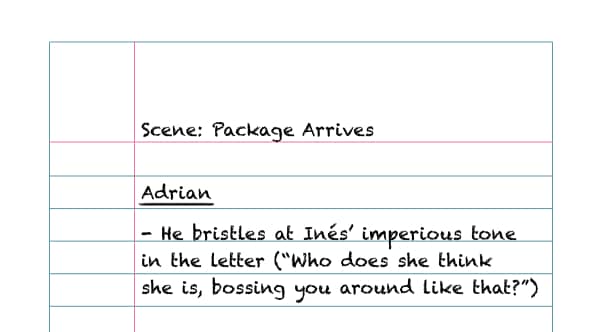
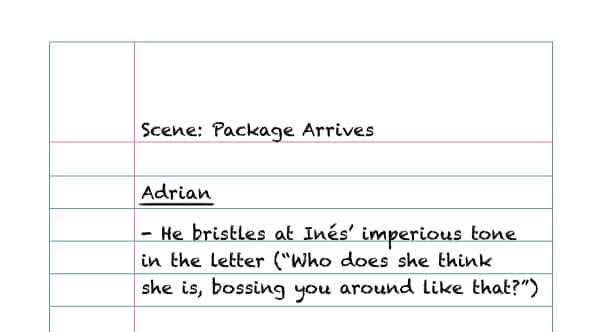
For example, in The Magician & the Labyrinth of Yesterdays, Adrian is an Enneagram 8. Early in his arc, his reflex is to shut down vulnerability and take control, which puts him in direct conflict with Inés.
As an Enneagram 7, she’s oriented toward vision and possibility; she wants to steer the group because she’s already living a few steps ahead, impatient with anything that feels like stagnation or constraint.
Over time, they learn how to use those same instincts in service of the group. Adrian’s impulse to take control evolves into an ability to steady the group under pressure, while Inés’ vision and forward momentum helps them push through fear that might otherwise stall their quest.
And crucially, when individual strategies break down, this creates space for someone else to step in. When Inés spirals, it’s Margot, whom Inés has dismissed as a hopeless nerd, who brings her back to the present. Those moments build trust and strengthen the group’s bonds—in other words, they channel that people coming together energy I’m after.
Keeping Track of Who’s Doing What
One of my biggest practical concerns with a large group was accidentally dropping threads, and in doing so, missing opportunities to earn the emotional impact of people coming together.
✍️ So, I did something unglamorous but effective: I listed every scene by character, creating a checklist of revisions specific to that character’s arc within the scene.
Even if a character only had a line or two, those lines needed to count. They needed to advance the character’s individual arc alongside that of the group, bringing to life a person with their own goals, hopes, and fears—someone who exists independently of the protagonist.
This isn’t just about avoiding cardboard cutouts.
It’s about making sure that when the group finally does come together, it feels earned. When a character steps up in a critical moment, the reader shouldn’t be thinking, Oh right, that person exists.
They should experience the swelling recognition of seeing someone they know choose differently, feeling, in their bones, that this is the moment the character has been growing toward.
It’s the person who’s always handled things solo—the fixer, the one who never wants to be a burden—realizing they can’t brute-force their way through this one. The plan is unraveling. Time is running out. And instead of pushing harder…they stop. They take a breath. And they finally admit, I can’t do this alone.
Someone leans in, noticing the tremor in their hand, and steadies the map before helping to find a new escape route. Someone else flips through the grimoire and finds the spell that changes everything. Another person doesn’t say anything at all; they simply move closer, anchoring with a quiet hand on a shoulder.
The character doesn’t become weaker for asking; they become part of something larger. And that—that shift from isolation to interdependence—is what turns on the people coming together waterworks for me, every single time. 😭
Untangling a Knotty Climax
Next time, I want to show you how I tackled revising a climax sequence that initially felt impossible to hold in my head—especially with the whole group in play—and how I transformed it into a puzzle I actually enjoyed solving, one piece at a time.
If you’re wrestling with scenes that feel too messy to revise, this one’s for you.