Tag: writing craft

  • Romancing the Couch Gag

    Romancing the Couch Gag

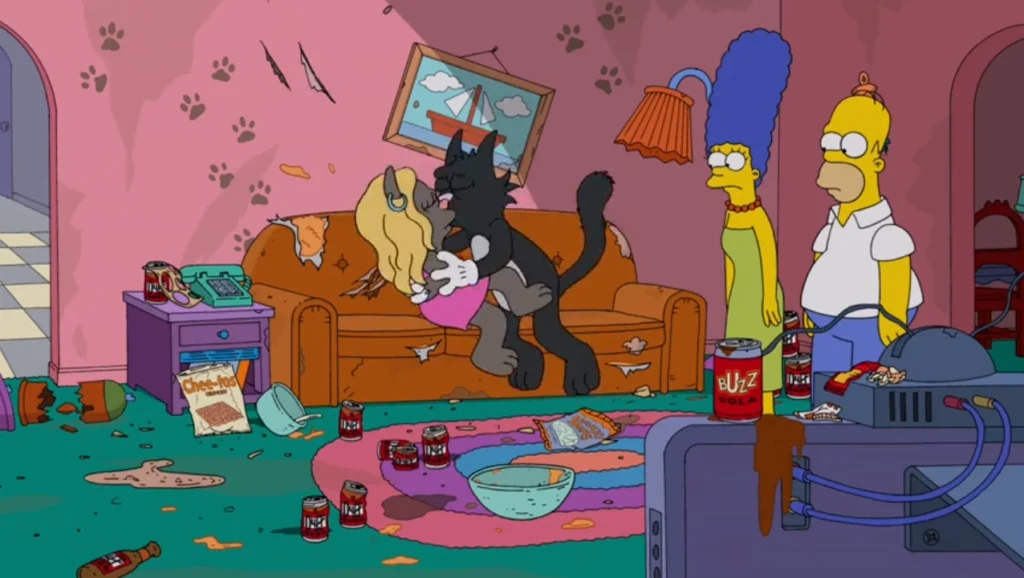
    Growing up, my favorite part of The Simpsons was the intro. At that familiar theme song, I’d race into the living room, dying to know how they’d riff on the piling-on-the-couch gag this week. 
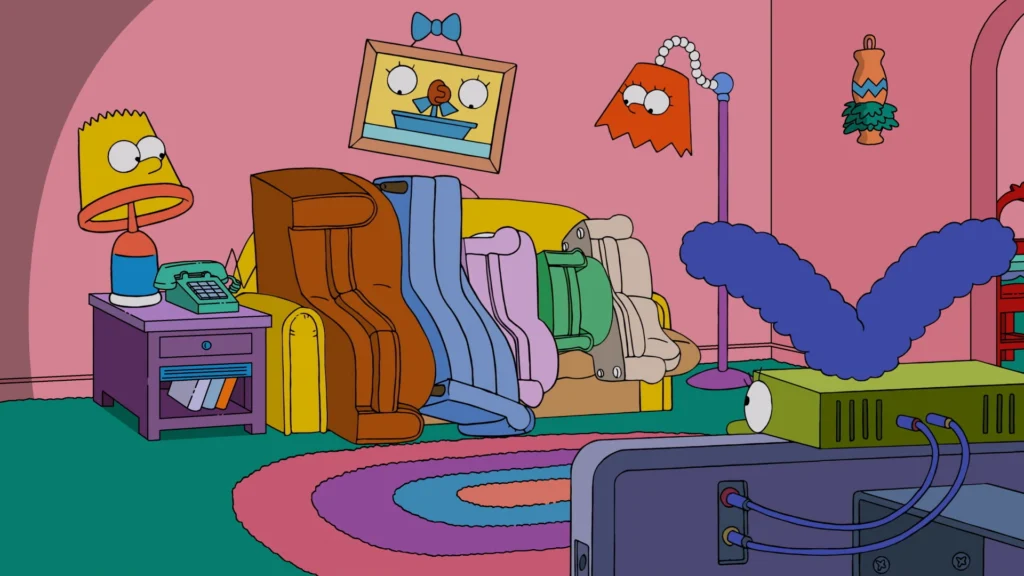
    That childhood fascination was a strong predictor of my grown-up creative work. The mash-up of the familiar + the unexpected turned out to be the catnip my brain craves. 

    I wasn’t conscious of this influence when, holed up in an Oklahoma City hotel room in 2022, I started writing what would become (after many, many iterations) The Fool & the Threads of Time

    But a book series about past lives is, at its core, a story of remixing. Same souls, different contexts.

    It’s the romance-novel version of the couch gag.
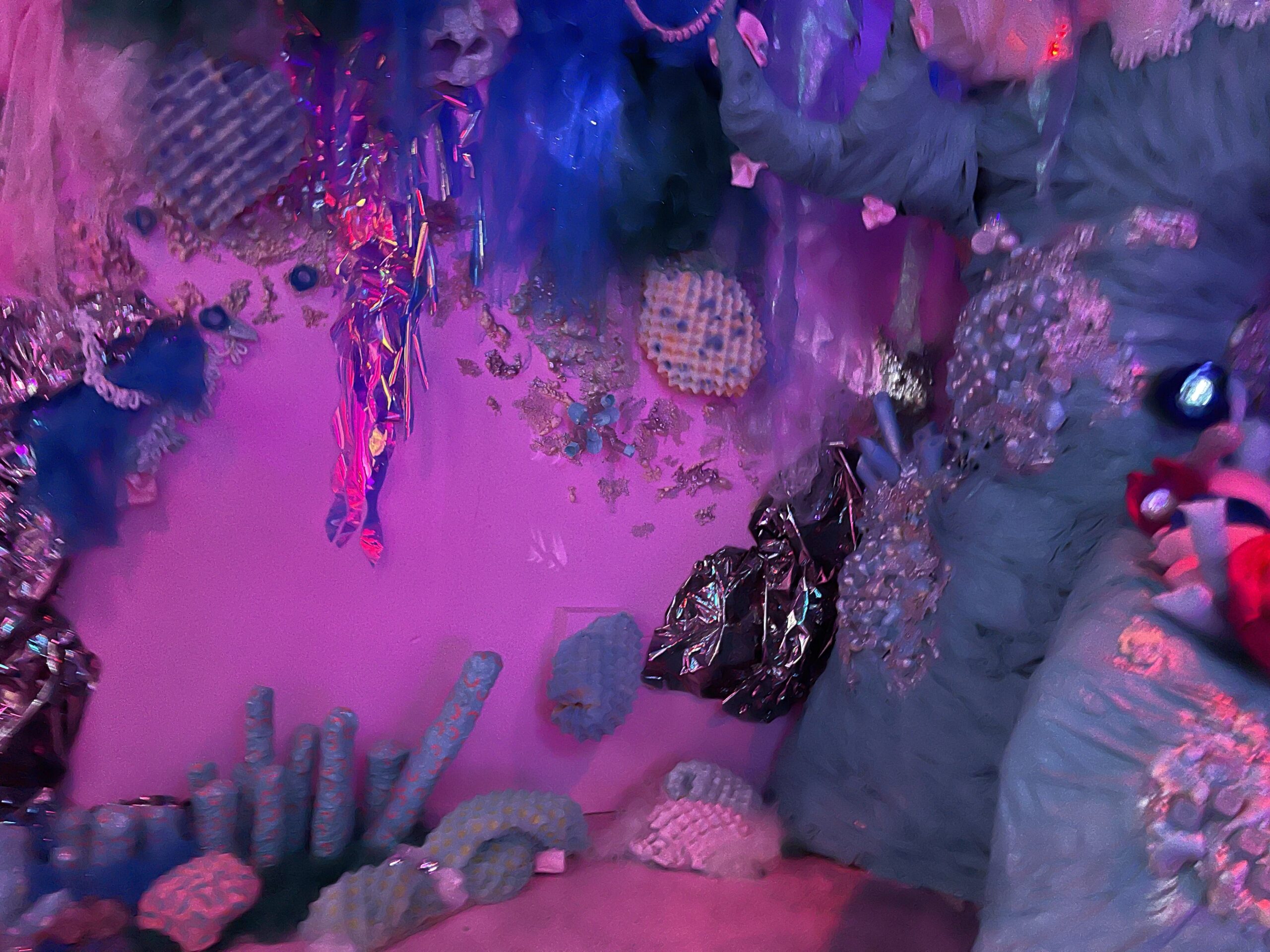
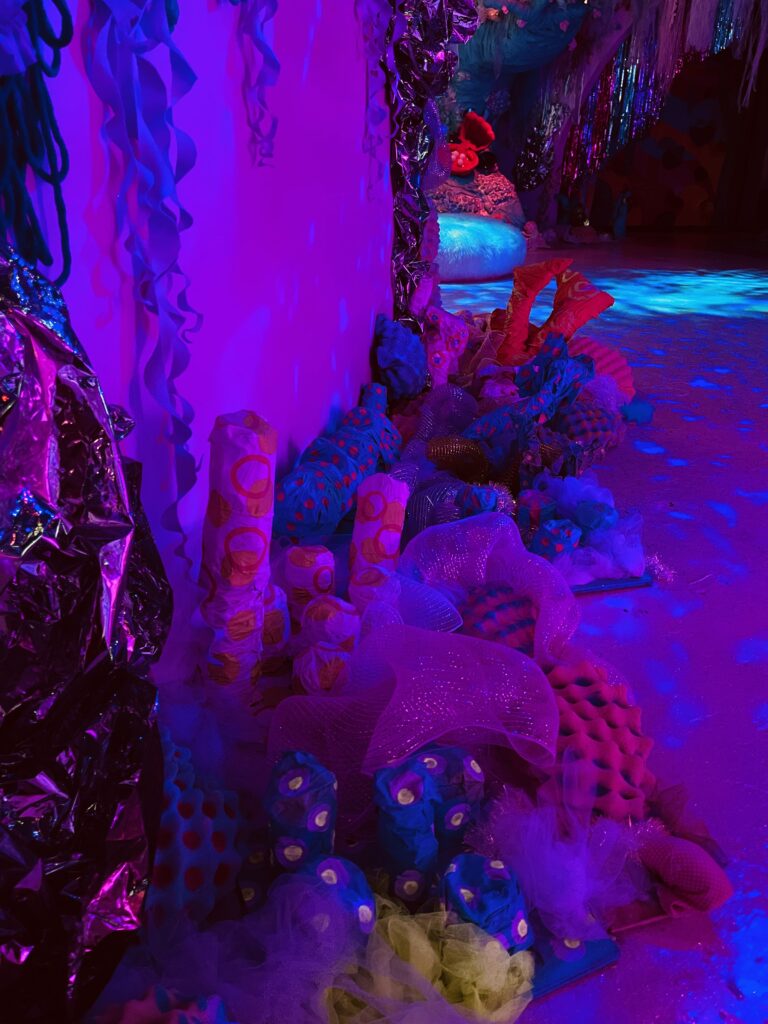
    Speaking of remixing…it was only in writing this essay that I remembered my favorite part of that Oklahoma City trip—going to Factory Obscura: MixTape, an interactive art space that had me dreaming in yarn, glitter, and tulle for weeks.

    I got to wander through a multi-room coral reef created entirely from textiles, an influence you’ll be able to spot in The Magician & the Labyrinth of Yesterdays (releasing in 2026).
    The Fragmentary Land of Memory

    Have you read Carmen Maria Machado’s memoir, In the Dream House?

    It utterly blew me away—both for Machado’s gut-wrenching honesty in recounting her experience of domestic abuse, and for the brilliant way she used narrative structure to reflect the fragmentation of memory and trauma. 

    While the story was roughly chronological, each chapter was told through the lens of a different narrative trope—for instance, “Dream House as Lesbian Cult Classic” or “Dream House as Inciting Incident.”

    That approach—using story structure to shape and reveal meaning—left a lasting impression on me. It illuminates a (sometimes uncomfortable) truth about the messiness of reality: There is no single way to understand a thing.

    A Tale of Two Tarot Readings

    I used to be a professional tarot reader, and in the 1,000-plus readings I did over the years, I will never forget two readings in particular. 
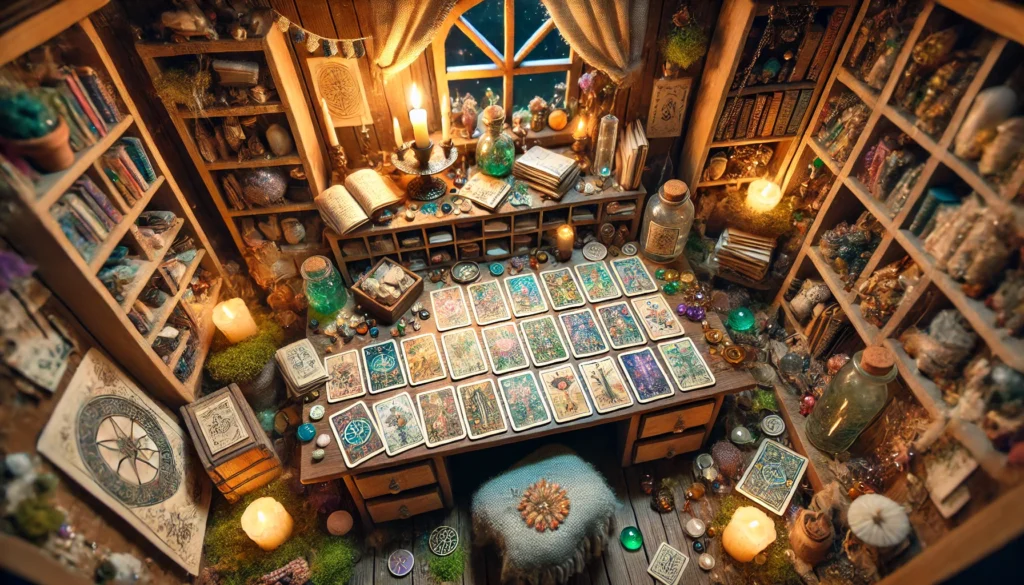
    Two new clients, booking roughly a week apart. At the center of both spreads was the Hierophant, but given how many readings I did every week, I didn’t think much of it. 

    Until I neared the end of the second reading, that is. 

    Neither client had mentioned the other’s name, so I hadn’t known that they knew each other, that they were, in fact, getting readings on the very same situation. 

    The spread was a startlingly clear map of first-person POV.

    There was the Hierophant at the center (the core theme), and a unique constellation of cards radiating outward. What one person saw as useful structure and clarity, the other experienced as dogma and control.

    Each of them was carrying a story that felt irrefutably true, but those truths were shaped by where they were standing.


    Next time, I’ll show you how this tarot-style framing shows up in my creative process—how changing the question, or the lens, can lead to dead ends…or open the door to mysterious new worlds

    See you soon.

  • I have a magical secret.

    I have a magical secret.

    Psst…did you know that I inserted a special type of magical character into my books?

    In an earlier post, I talked about the magic circle, which is the temporary boundary witches cast to create a container for their work. A space beyond space, a time beyond time. A place where the strange and the sacred can unfold…with guardrails.

    📖 Stories ripple beyond our control. They land in other people’s minds, they exist in the world, and sometimes they start to grow lives of their own.

    Grant Morrison is a comic book writer and occultist, and they’ve spoken openly about how elements of The Invisibles—characters, plotlines—began leaking off the page and into their life.

    They’re not alone.

    I recently met a fellow witch who confessed…

    …they were afraid to keep writing, because things they’d penned were happening off-page—and a little too often to be coincidence. So far, it was all good stuff…but what if that changed?

    🪄 To me, writing a book is like an extended spellworking. I’m putting so much of my intention, energy, and will into the project that it can’t help but be a magical act.

    But I knew, right from the start, that I’d need to put my characters through hell to tell the stories I wanted to tell (and to keep from boring you, dear reader, half to death).

    How to prevent unwanted magical bleedthrough beyond the book?

    Well, this is an ongoing experiment, but here’s what I did…

    I created a character inside theTwin Flames Series​, a character linked to me via a magic ritual. I call this my Cameo Character, and they have very limited page time—i.e., they’re not dashing down dark alleys, arm wrestling monsters.

    I then created a special notebook emblazoned with magic sigils. Sigils are my absolute favorite magical tool, because they work eerily well.

    Within the confines of the sigilized notebook, I write my Cameo Character’s story—the things I want to experience in my life (in other words, I’m casting a spell).

    Part of the experiment is this: when other people read the book, encountering my Cameo Character, does the magic get a boost? ¯\_(ツ)_/¯

    You better believe I’ll be tracking any strange occurrences in my grimoire!

    Want to meet my Cameo Character? They’re hidden in plain sight in the pages ofThe Fool & the Threads of Time.

    Thanks for wandering through the Crooked Door with me.

    Until next time, my friend.

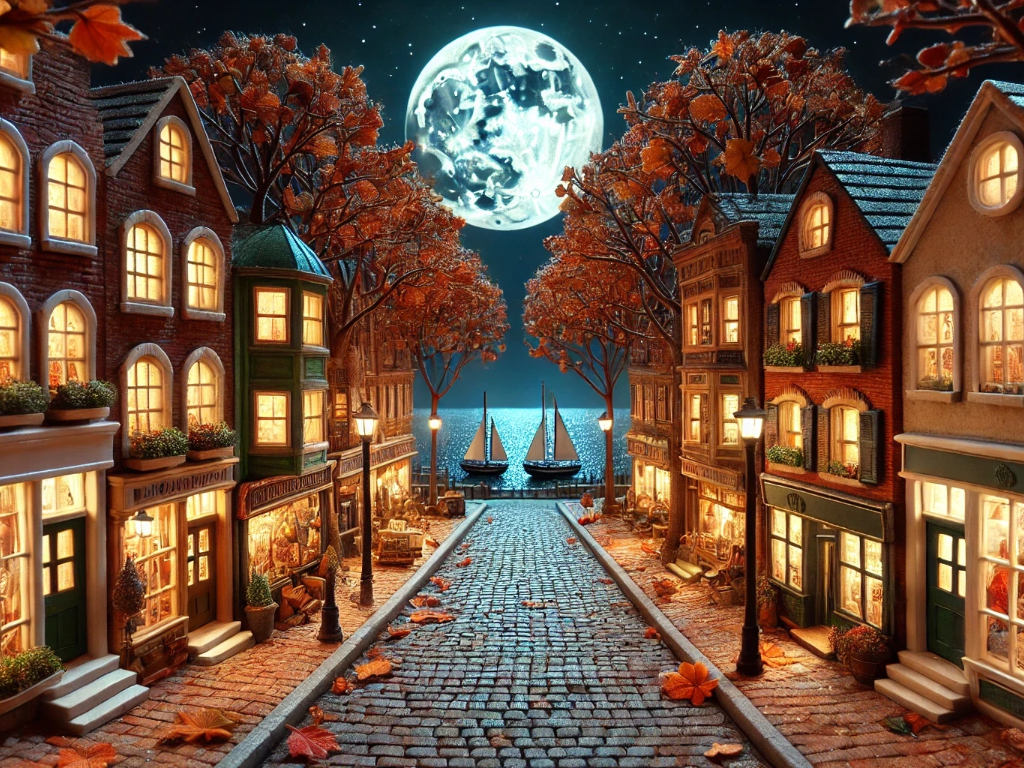
    P.S. Step inside Quayside, the enchanted coastal town inThe Fool & the Threads of Time

  • The real reason I use a pen name

    The real reason I use a pen name

    The internet makes introductions weird.

    We’ve gotten so used to clicking, scrolling, and baring all with virtual strangers that most of us barely question it anymore.

    Meanwhile, Big Tech lines their pockets with ad revenue earned from our free labor—the endless stream of content we create, consume, and trade for connection.

    Point being, when it comes to introducing myself, I like to be intentional about it. Do I go by Melissa or my pen name, Aven Winslow? You might wonder—what the hell does it matter?

    But the answer carries a seed of magic.

    (as do most things in my world)

    As a witch, when I cast a spell or perform a ritual, I often begin by casting a circle, an energetic boundary that creates a temporary space beyond space, a time beyond time, where all things are possible.

    🪄 I want to be intentional about what I include in my magical working, because this boosts the chance that I’ll get what I’m asking for, and not something wildly different.

    It’s like making soup: If you throw ingredients in a pot while blindfolded, you could end up with…well, anything. That’s a very different situation than purposely assembling the ingredients for minestrone or clam chowder.

    To continue our soupy metaphor, it’s also much harder to gather those ingredients without a container—in this case, a pot. Can you imagine making soup with everything dumped on the counter? Far from ending up with lunch, you’ll just have a mess to clean (on an empty stomach, no less).

    With magic, raising energy is more effective and less draining on the witch if that energy has a place to gather until you’re ready to use it.

    And, like soup, it’s less likely to make a mess—meaning, you won’t have excess energy ping-ponging about, powering who knows what.

    ☠️ Occultist Dion Fortune, in her book The Mystical Qabalah, wrote that many instances of “bad luck” could perhaps be attributed to this free-floating energy.

    What does this have to do with introducing myself?

    Well, no matter which name I use—Melissa or Aven—I’m still creating a persona, a magic circle that I inhabit when I’m online.

    We all do this, both offline and on. 🥸 We adopt personas—the interface between our inner world and the noisy world ‘out there.’

    C.G. Jung, who you’ll hear about a lot in my world, recognized that the persona could be both a help and a hindrance. We need a way to interact with others that smooths some of the inevitable hiccups of living in society with other humans.

    I mean, good god, can you imagine if the mail carrier dropped off some packages, but also divulged the sexy dream they had last night? In great detail? ThanksButNoThanks.

    I mean, more power to the mail carrier and their spicy nighttime escapades, but that’s probably best shared with someone they know well, not some rando like me who just wants their mail before retreating into their hermit cave.

    🎭 Personas have gotten a bad rap, commonly associated with being “inauthentic,” which presupposes that it’s better or “natural” or supportive of people’s health to make absolutely everything we think, feel, and do available for public consumption.

    And if we don’t overshare, we must be hiding something nefarious, something that could get us “canceled.”

    And to be sure, some people do hide nefarious things!

    But in my humble, witchy opinion, the solution isn’t mandating that everyone surrender their privacy.

    I don’t know about you, but I want to limit how much corporations get to colonize and profit off of my time, attention, and life experiences.

    Where personas can trip us up…

    …is when we mistake them for the sum totality of who we are. Personas typically contain the aspects of ourselves that society has deemed “acceptable,” and they’re a mere sliver of our gloriously messy, capital-S Self.

    I like to view my persona(s)—yes, we all have multiple personas, like outfits 👖 that we wear with friends versus co-workers and so forth—as magic circles.

    I am not the magic circle. The magic circle is a temporary container for my sprawling, wild, uncontainable Me-ness, but this circle-casting allows me to step into our shared space as Aven Winslow, with intention.

    That’s the reason I use a pen name.

    Aven Winslow isn’t a mask to hide behind—it’s a magic circle of its own.

    On a practical level, it also helps keep the worlds I create clear.

    If you’ve read ​my magical nonfiction​ under Melissa Tipton, that doesn’t automatically mean you’ll be into my ​super spicy romantasy​—and having separate magic circles (er, pen names) makes it easier for everyone.

    Through a Crooked Door (this email you’re reading being one installment) is part field journal + grimoire, and part rebellion against the algorithms trying to bulldoze us all.

    I’ll share aspects of my life that are relevant to my writing, like…

    ✨ My studies in occultism, Jungian psychology, politics, writing craft, etc., and how they relate to my books.

    ✨ My creative process—and often, how that dovetails with my magical practice. (Tarot and spells and rituals, oh my!)

    ✨ Juicy details about my characters, their world, and its lore and magical systems.

    This space is more than a digital soup pot of ones and zeros. It’s a circle where magic happens.

    If that sounds like your kind of place—welcome. 👋 I’ll see you on the other side of the Crooked Door.

    🚪Next time, I’ll be back with a story about fate, free will, and the hidden forces that shape us—both through the lens of my books and in everyday life.

    Until then, thanks for wandering this way, my friend.