Ever wonder where stories go once we imagine them? Not just on paper or glowing on a screen. I mean…beyond that.
Back in the day, I devoured Fables, the comic series by Bill Willingham. The idea that fairy tale characters exist, tucked away in modern cities and remote forests, always gave me goosebumps, because it touches on a belief of mine.
The boundary between fiction and reality? It’s never as solid as we pretend.
The more I wandered through psychology, magic, and occult studies, the more I realized: those hidden corners? They’re real. Maybe not “real” like the chair you’re sitting in, but real in the way dreams, archetypes, and stories are real.
That space is what some call the astral, a subtle layer of reality.
And look, I get it—the word astral can sound a little floaty if you’re not used to it.
But think about it: even when someone closes a book, that world doesn’t disappear. It still exists—in your mind, in the minds of others who’ve wandered through that fictional landscape, in that shared, intangible space we all contribute to, whether we realize it or not.
That collective, immaterial space is the astral.
It’s just that, in a steady process of disenchanting the world, humans have convinced ourselves that the only “real” that counts is the material one.
C.G. Jung urged us to treat psychic contents as real—not because they exist physically, but because they ripple through our emotions, our choices, our relationships, impacting, not only our lives, but the world around us in profound ways.
And isn’t that, in its own way, a form of real-ness?
📺 If you watched Twin Peaks, Season 3, you might remember Dougie Jones—the eerily subdued version of Cooper, living an ordinary suburban life while the real Cooper was…elsewhere.
Dougie (well, there were eventually two Dougies, but the same principle applies) was a tulpa—concentrated thought energy imbued with materiality, molded by intention and sustained by belief, until he existed independently of whoever first imagined him.
The concept of a tulpa comes from Indian and Tibetan Buddhist traditions, where it refers to an emanation or manifested form, often created through advanced meditative or mystical practice. And then Western occult traditions, like Theosophy, ran with the idea, naming it a “thoughtform.”
Every time someone imagines something, it leaves a mark on the astral.
And the more people engage with that thing, the stronger—and more detailed—that imprint becomes.
For instance, a cause starts as an idea, maybe one person dreaming of change, of a different future. That dream gets shared. It catches in someone else’s mind. And someone else’s.
Soon, people are rallying behind it. Organizing. Speaking out. Creating art, symbols, movements. And even though it started as an intangible idea, it changes physical reality. Policies shift. Communities form. The world bends, even slightly, in a new direction.
That’s the astral, feeding back into the visible world.
Fictional worlds work the same way.
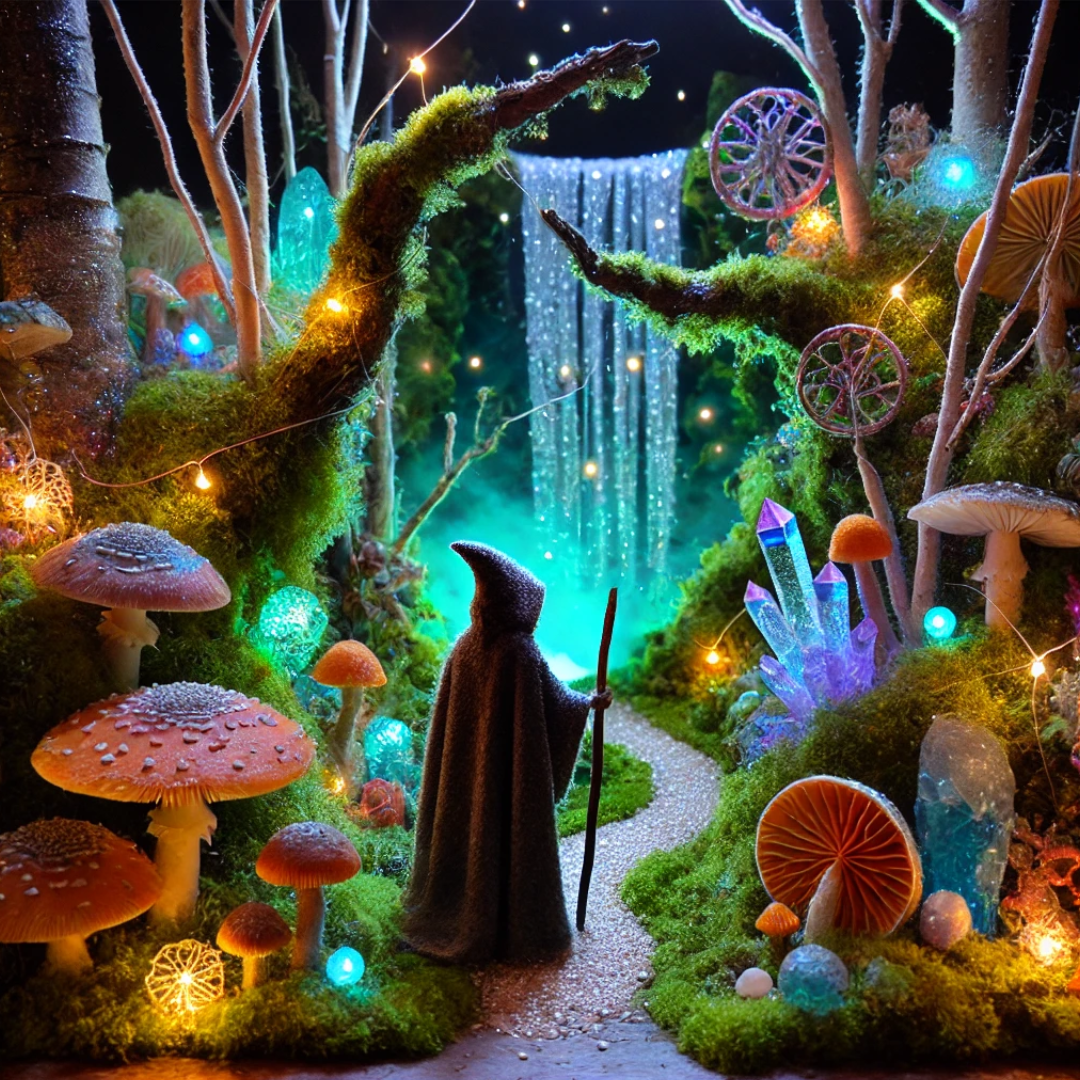
The Twin Flames universe exists now, on the astral. The more readers wander through it, wonder about it, co-create with it in their own imagination, the more vivid and real it becomes.
And it makes me wonder: as the astral Twin Flames becomes more fleshed out, will it get easier for me to write about?
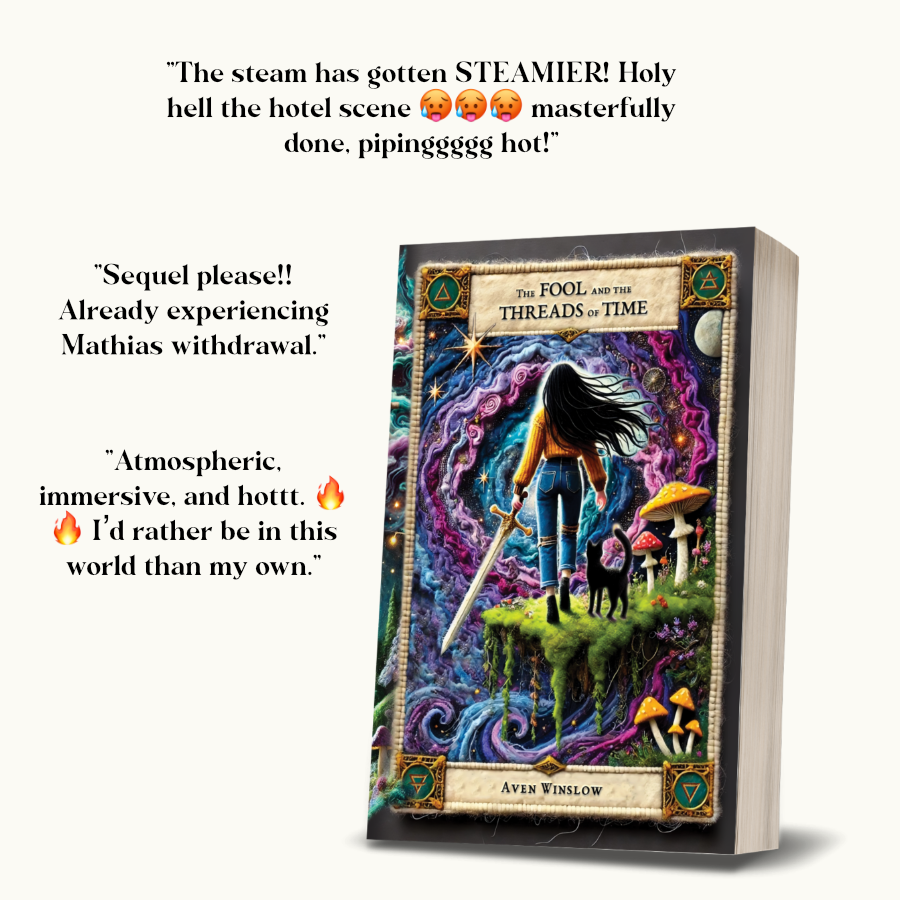
For example, in Book Zero: The Fool & the Threads of Time, and in Book One: The Magician & the Labyrinth of Yesterdays, you’ll encounter a place called the chrysling.
🧐 As more people explore the chrysling, will my imagination have access to more details? Will that part of the world adopt a new level of vibrancy and depth? And if I translate that onto the page…and people read that version…will the cycle continue?
I don’t know for sure. But I do know it’s delightfully brain-bendy to contemplate!
I’ll let you in on a secret:
I inserted a very special character into my books. Not quite a tulpa…but close.
Next time, we’ll peek behind the curtain, and I’ll tell you why.