Tag: spicy romantasy

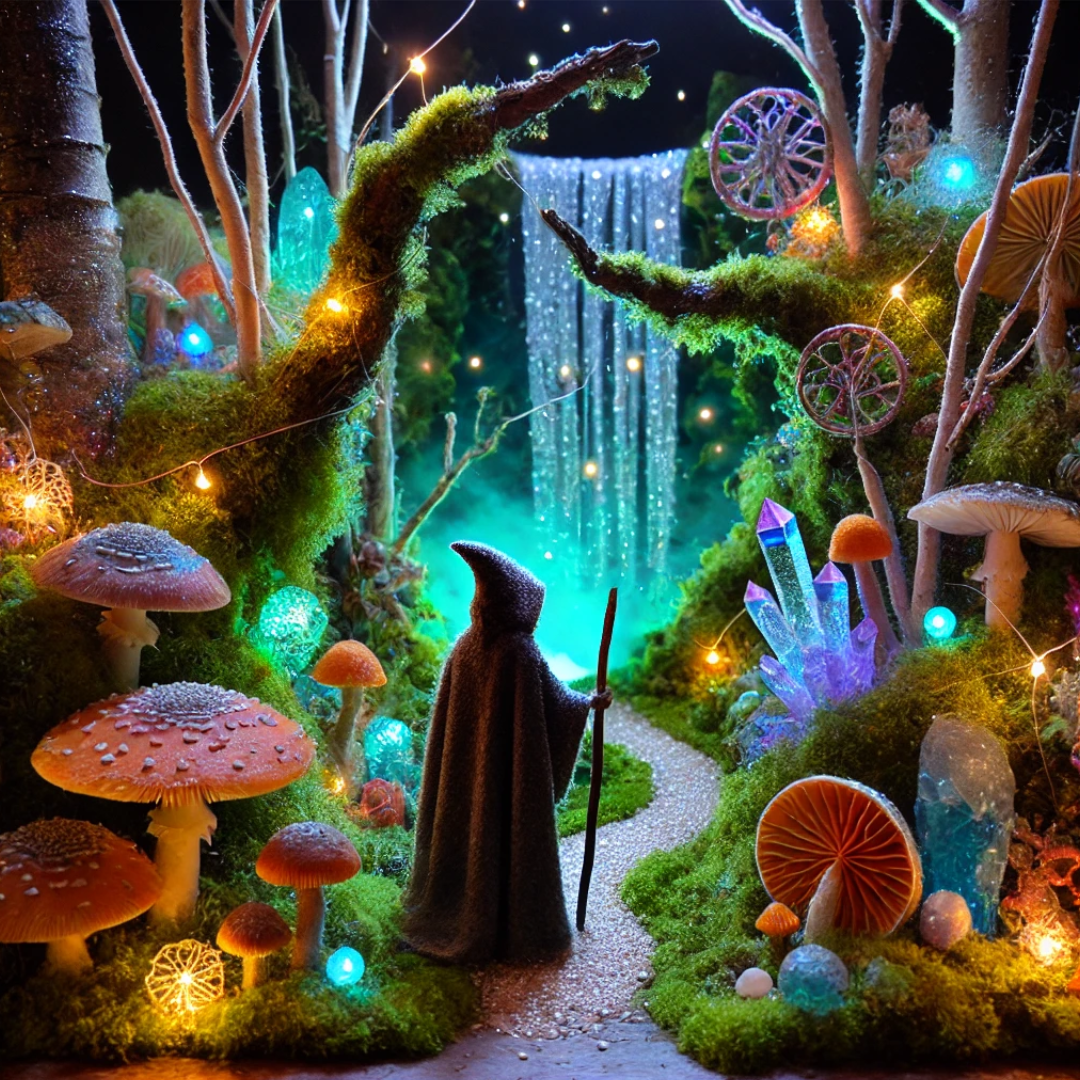
  • What if your imagination was a place?

    What if your imagination was a place?

    Ever wonder where stories go once we imagine them? Not just on paper or glowing on a screen. I mean…beyond that.

    Back in the day, I devoured Fables, the comic series by Bill Willingham. The idea that fairy tale characters exist, tucked away in modern cities and remote forests, always gave me goosebumps, because it touches on a belief of mine.

    The boundary between fiction and reality? It’s never as solid as we pretend.

    The more I wandered through psychology, magic, and occult studies, the more I realized: those hidden corners? They’re real. Maybe not “real” like the chair you’re sitting in, but real in the way dreams, archetypes, and stories are real.

    That space is what some call the astral, a subtle layer of reality.

    And look, I get it—the word astral can sound a little floaty if you’re not used to it.

    But think about it: even when someone closes a book, that world doesn’t disappear. It still exists—in your mind, in the minds of others who’ve wandered through that fictional landscape, in that shared, intangible space we all contribute to, whether we realize it or not.

    That collective, immaterial space is the astral.

    It’s just that, in a steady process of disenchanting the world, humans have convinced ourselves that the only “real” that counts is the material one.

    C.G. Jung urged us to treat psychic contents as real—not because they exist physically, but because they ripple through our emotions, our choices, our relationships, impacting, not only our lives, but the world around us in profound ways.

    And isn’t that, in its own way, a form of real-ness?

    📺 If you watched Twin Peaks, Season 3, you might remember Dougie Jones—the eerily subdued version of Cooper, living an ordinary suburban life while the real Cooper was…elsewhere.

    Dougie (well, there were eventually two Dougies, but the same principle applies) was a tulpa—concentrated thought energy imbued with materiality, molded by intention and sustained by belief, until he existed independently of whoever first imagined him.

    The concept of a tulpa comes from Indian and Tibetan Buddhist traditions, where it refers to an emanation or manifested form, often created through advanced meditative or mystical practice. And then Western occult traditions, like Theosophy, ran with the idea, naming it a “thoughtform.”

    Every time someone imagines something, it leaves a mark on the astral.

    And the more people engage with that thing, the stronger—and more detailed—that imprint becomes.

    For instance, a cause starts as an idea, maybe one person dreaming of change, of a different future. That dream gets shared. It catches in someone else’s mind. And someone else’s.

    Soon, people are rallying behind it. Organizing. Speaking out. Creating art, symbols, movements. And even though it started as an intangible idea, it changes physical reality. Policies shift. Communities form. The world bends, even slightly, in a new direction.

    That’s the astral, feeding back into the visible world.

    Fictional worlds work the same way.

    ​The Twin Flames universe​ exists now, on the astral. The more readers wander through it, wonder about it, co-create with it in their own imagination, the more vivid and real it becomes.

    And it makes me wonder: as the astral Twin Flames becomes more fleshed out, will it get easier for me to write about?

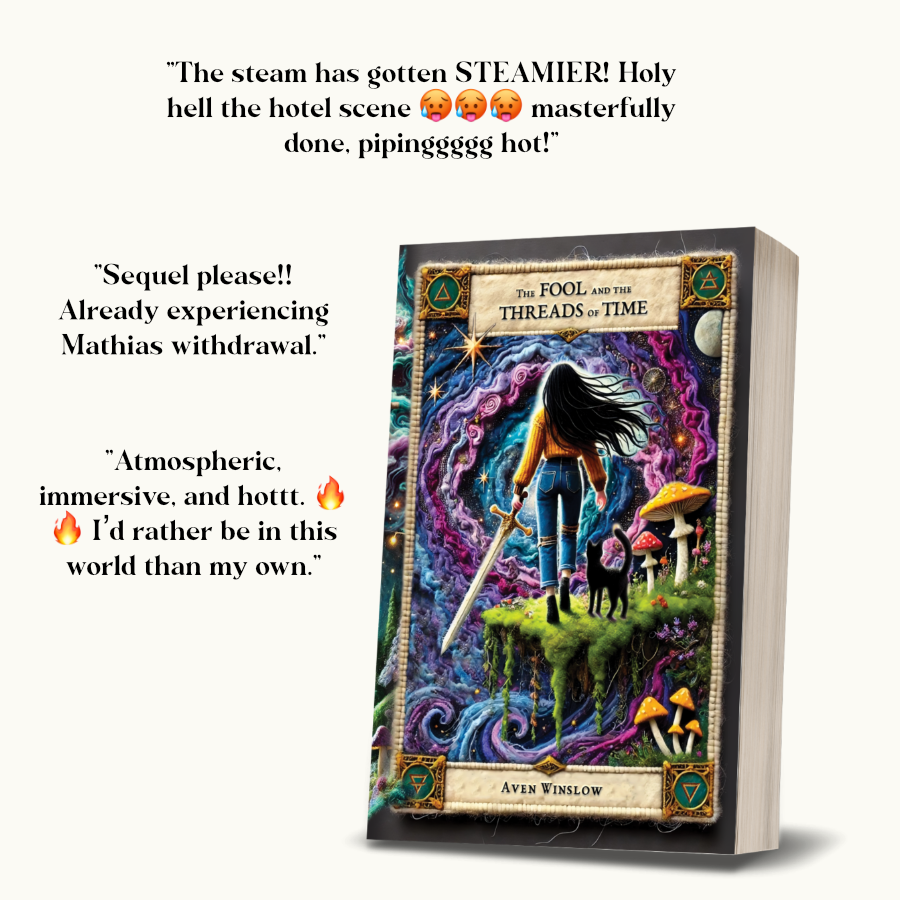
    For example, in Book Zero: The Fool & the Threads of Time, and in Book One: The Magician & the Labyrinth of Yesterdays, you’ll encounter a place called the chrysling.

    🧐 As more people explore the chrysling, will my imagination have access to more details? Will that part of the world adopt a new level of vibrancy and depth? And if I translate that onto the page…and people read that version…will the cycle continue?

    I don’t know for sure. But I do know it’s delightfully brain-bendy to contemplate!

    I’ll let you in on a secret:

    I inserted a very special character into my books. Not quite a tulpa…but close.

    Next time, we’ll peek behind the curtain, and I’ll tell you why.
  • Is fate real?

    Is fate real?

    Ever had one of those moments where you cram your foot in your mouth or make a rash decision, only to wonder later…what got into me?

    We like to believe we’re fully in control of ourselves. It’s comforting to think that.

    But C.G. Jung pointed out a catch—the more convinced we are of our total control, the deeper, the inkier, the shadows in our unconscious become. Deny their existence, and they slip further underground, where they gain more power to shape our lives without our say so.

    😶‍🌫️ Jung called these hidden patterns complexes. But forget the pop-culture version of that word—a complex isn’t just “daddy issues.” It’s an emotionally charged cluster of ideas, feelings, and images, like a psychic splinter lodged beneath the surface.

    (Complexes are also potent energy generators that can be used in magic, but that’s a topic for another space. Curious? Check out my guide,All the Feels: The Inner Architecture of Spellwork.)

    Complexes often carry intense archetypal energy, those universal patterns we all know in our bones: love, betrayal, the hero, the shadow. When constellated (Jung’s term for “activated”), a complex floods our system with affect—emotional energy that can temporarily override our conscious will.

    It can feel inevitable. It can feel like fate.

    I am who I am. Life just is what it is. That’s how I’ve always been.

    But sometimes? It’s really a fragment of ourselves we’ve refused to examine, steering the wheel from the shadows.

    As Jung famously warned, “Until you make the unconscious conscious, it will rule your life and you will call it fate.”

    And yet, even though we can never be fully conscious of ourselves, we’re still responsible for what we do. That’s the maddening, magical paradox at the heart of being human.

    It’s also one of the obsessions behind my Twin Flames series.

    🔮 You might have noticed I’m weaving tarot symbolism into these stories.The Fool & the Threads of Time is Book Zero for a reason—the Fool card in the tarot is numbered zero, representing the beginning of a journey, full of possibility and risk.

    But this isn’t just an aesthetic choice. For me, the tarot is a map—a guide to the process of waking up inside our unconscious patterns. A way to recognize when archetypal forces flood our system… and when we might, just might, reclaim our choice.

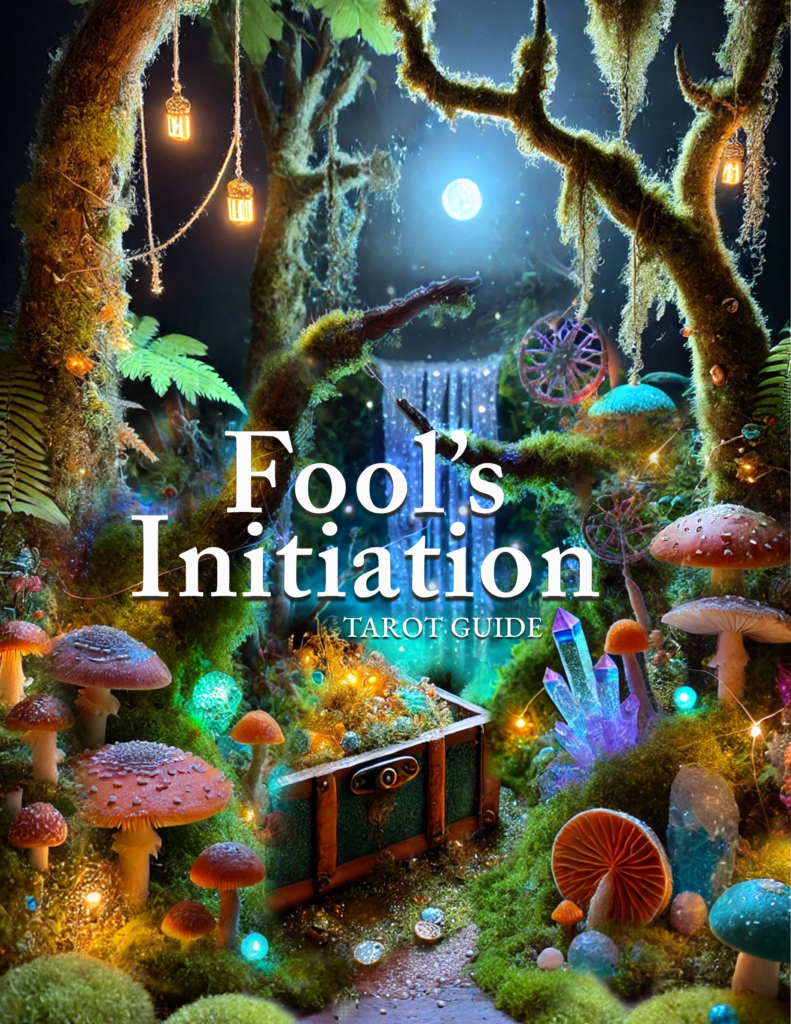
    click the image to get the free guide!

    My characters wrestle with fate. With shadow—both their own, and the shadows cast by the many villains you’ll meet along the way. But they also wrestle with free will—the exhilarating, terrifying work of making conscious choices when it would be easier to sleepwalk through life.

    And holy hell, isn’t the siren call everywhere?

    Endless scroll. Clickbait. The commodification of our attention, carefully engineered to keep us numb, distracted, compliant…and profitable. 😵‍💫

    But story? Story invites us to wake up.

    Here at Through a Crooked Door, and within my books, you’ll find that I keep returning to those hidden intersections—fate + free will, shadow + light, truth + illusion.

    Because the boundary betwixt opposites is blurrier than most people think.

    (Something I live every day as a nonbinary person.)

    Take the “line” between imagination and reality.

    What if the worlds we imagine exist beyond the page?

    And what if they grow stronger the more people think about them?

    Next time, we’ll take a trip to the astral—a place where every story leaves its mark.

  • The real reason I use a pen name

    The real reason I use a pen name

    The internet makes introductions weird.

    We’ve gotten so used to clicking, scrolling, and baring all with virtual strangers that most of us barely question it anymore.

    Meanwhile, Big Tech lines their pockets with ad revenue earned from our free labor—the endless stream of content we create, consume, and trade for connection.

    Point being, when it comes to introducing myself, I like to be intentional about it. Do I go by Melissa or my pen name, Aven Winslow? You might wonder—what the hell does it matter?

    But the answer carries a seed of magic.

    (as do most things in my world)

    As a witch, when I cast a spell or perform a ritual, I often begin by casting a circle, an energetic boundary that creates a temporary space beyond space, a time beyond time, where all things are possible.

    🪄 I want to be intentional about what I include in my magical working, because this boosts the chance that I’ll get what I’m asking for, and not something wildly different.

    It’s like making soup: If you throw ingredients in a pot while blindfolded, you could end up with…well, anything. That’s a very different situation than purposely assembling the ingredients for minestrone or clam chowder.

    To continue our soupy metaphor, it’s also much harder to gather those ingredients without a container—in this case, a pot. Can you imagine making soup with everything dumped on the counter? Far from ending up with lunch, you’ll just have a mess to clean (on an empty stomach, no less).

    With magic, raising energy is more effective and less draining on the witch if that energy has a place to gather until you’re ready to use it.

    And, like soup, it’s less likely to make a mess—meaning, you won’t have excess energy ping-ponging about, powering who knows what.

    ☠️ Occultist Dion Fortune, in her book The Mystical Qabalah, wrote that many instances of “bad luck” could perhaps be attributed to this free-floating energy.

    What does this have to do with introducing myself?

    Well, no matter which name I use—Melissa or Aven—I’m still creating a persona, a magic circle that I inhabit when I’m online.

    We all do this, both offline and on. 🥸 We adopt personas—the interface between our inner world and the noisy world ‘out there.’

    C.G. Jung, who you’ll hear about a lot in my world, recognized that the persona could be both a help and a hindrance. We need a way to interact with others that smooths some of the inevitable hiccups of living in society with other humans.

    I mean, good god, can you imagine if the mail carrier dropped off some packages, but also divulged the sexy dream they had last night? In great detail? ThanksButNoThanks.

    I mean, more power to the mail carrier and their spicy nighttime escapades, but that’s probably best shared with someone they know well, not some rando like me who just wants their mail before retreating into their hermit cave.

    🎭 Personas have gotten a bad rap, commonly associated with being “inauthentic,” which presupposes that it’s better or “natural” or supportive of people’s health to make absolutely everything we think, feel, and do available for public consumption.

    And if we don’t overshare, we must be hiding something nefarious, something that could get us “canceled.”

    And to be sure, some people do hide nefarious things!

    But in my humble, witchy opinion, the solution isn’t mandating that everyone surrender their privacy.

    I don’t know about you, but I want to limit how much corporations get to colonize and profit off of my time, attention, and life experiences.

    Where personas can trip us up…

    …is when we mistake them for the sum totality of who we are. Personas typically contain the aspects of ourselves that society has deemed “acceptable,” and they’re a mere sliver of our gloriously messy, capital-S Self.

    I like to view my persona(s)—yes, we all have multiple personas, like outfits 👖 that we wear with friends versus co-workers and so forth—as magic circles.

    I am not the magic circle. The magic circle is a temporary container for my sprawling, wild, uncontainable Me-ness, but this circle-casting allows me to step into our shared space as Aven Winslow, with intention.

    That’s the reason I use a pen name.

    Aven Winslow isn’t a mask to hide behind—it’s a magic circle of its own.

    On a practical level, it also helps keep the worlds I create clear.

    If you’ve read ​my magical nonfiction​ under Melissa Tipton, that doesn’t automatically mean you’ll be into my ​super spicy romantasy​—and having separate magic circles (er, pen names) makes it easier for everyone.

    Through a Crooked Door (this email you’re reading being one installment) is part field journal + grimoire, and part rebellion against the algorithms trying to bulldoze us all.

    I’ll share aspects of my life that are relevant to my writing, like…

    ✨ My studies in occultism, Jungian psychology, politics, writing craft, etc., and how they relate to my books.

    ✨ My creative process—and often, how that dovetails with my magical practice. (Tarot and spells and rituals, oh my!)

    ✨ Juicy details about my characters, their world, and its lore and magical systems.

    This space is more than a digital soup pot of ones and zeros. It’s a circle where magic happens.

    If that sounds like your kind of place—welcome. 👋 I’ll see you on the other side of the Crooked Door.

    🚪Next time, I’ll be back with a story about fate, free will, and the hidden forces that shape us—both through the lens of my books and in everyday life.

    Until then, thanks for wandering this way, my friend.