Category: Writing + Creativity

  • A Surprise Stash of Smexy Paintings

    A Surprise Stash of Smexy Paintings

    Last week​, while poring over Dr. Ashcroft’s journal entries and the spectroscopy scans of the River Styx mural, I learned why the cloaked figure found in the Styx underpainting caused such a stir.

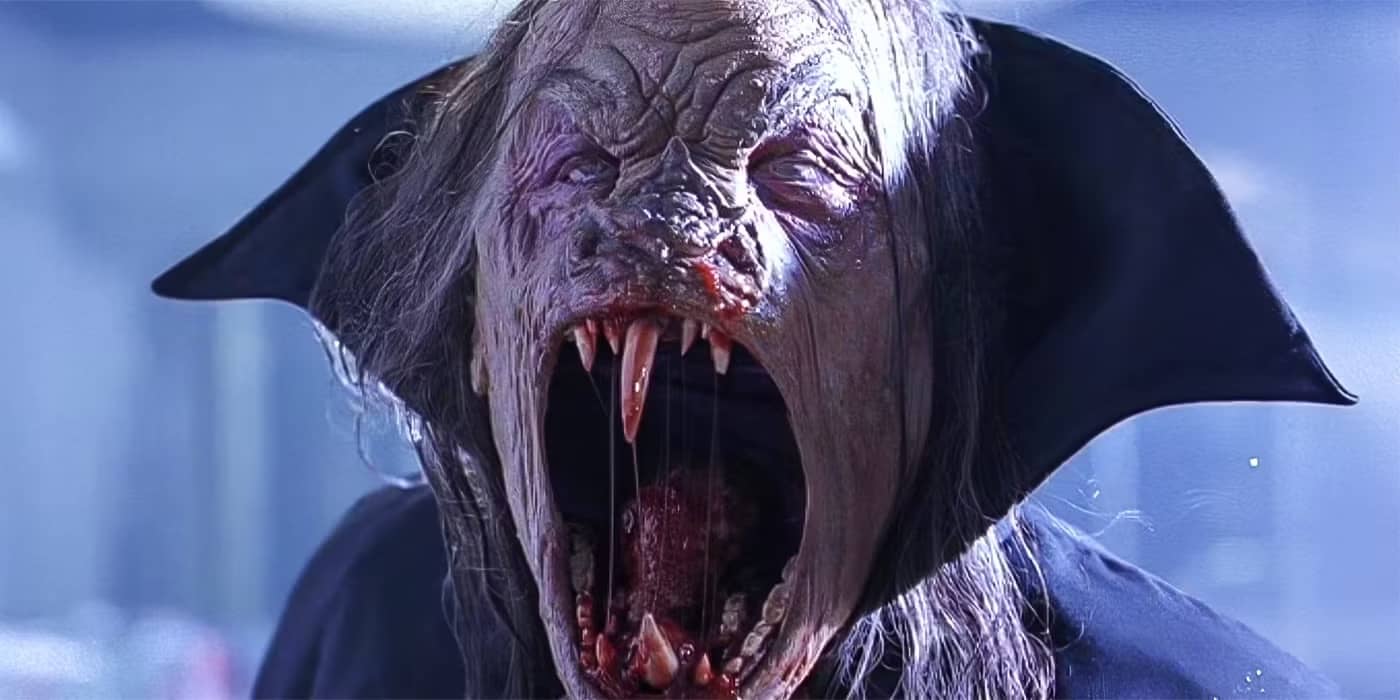
    For starters, Dr. Halstead and Dr. Veyra were right—it was creepy. Tall and thin with stretched proportions that weren’t entirely human. Not to mention the glowing eyes.

    But it was the cloaked figure’s appearance in another set of paintings that catapulted it to fame—or infamy?

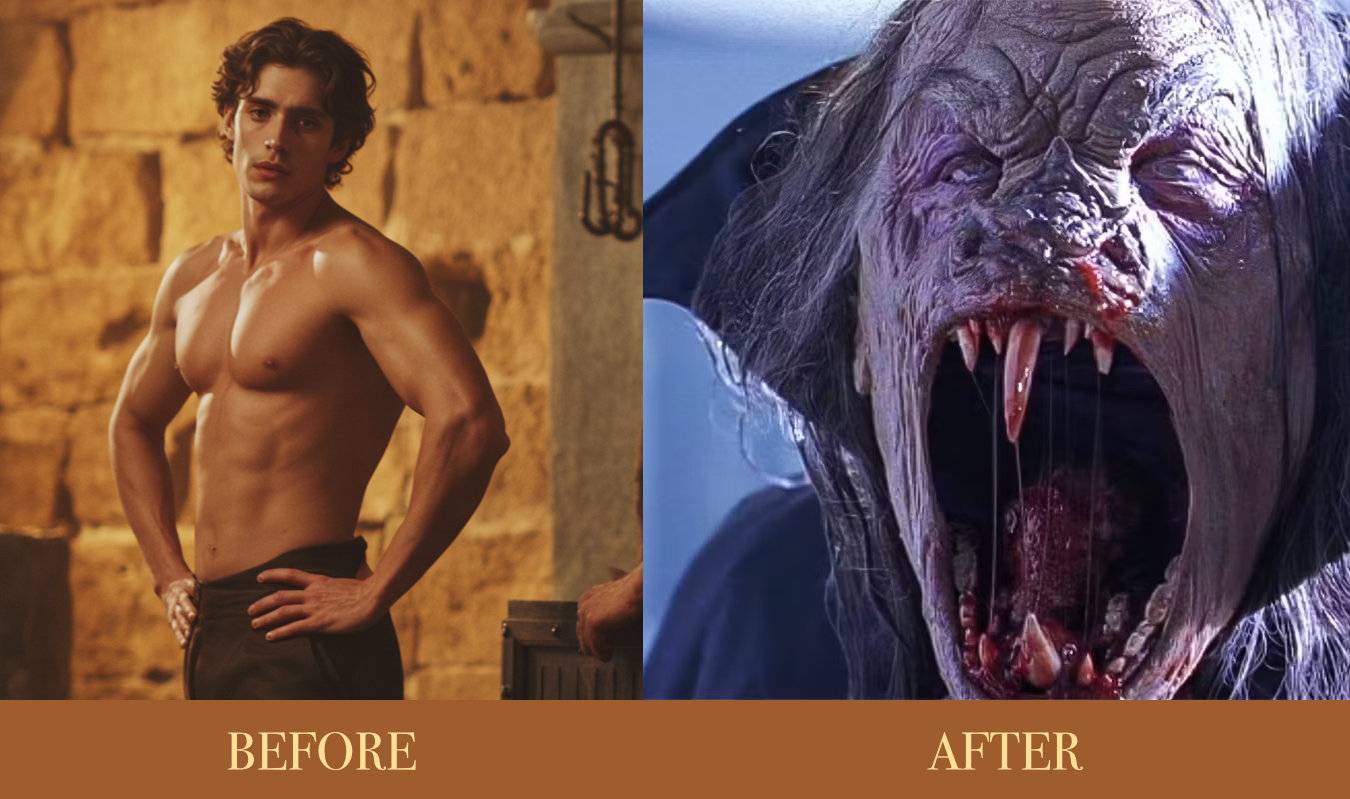
    For this, we need to look at Dr. Ashcroft’s inventory of a set of paintings that she found in Finneas Thorne’s study. She listed a total of seven works, all of them painted by Finneas himself. All seven depicted him with the cloaked figure, and in every painting the two of them were…How shall we say? They were totally boinking.

    Dr. Ashcroft phrased it a bit more delicately. From her notes:

    Figure: male, nude, seated. Cloaked figure positioned astride. Composition anatomically improbable though executed with notable skill.

    Recurring motif: elongated cloaked form entwined with subject. Facial expression: ambiguous—oscillating between resistance and abandon.

    There was also a mention of certain “proportions elongated beyond natural measure,” which cracked me up. Probably not a surprise that this room isn’t on the Harrowfell tour.

    Photo of Finneas Thorne’s study, artfully taken to crop out the wall of p$rn

    It wasn’t long before the docents and the local newspaper coined a name for the cloaked figure—The Dark Lover. Though at the time, none of them knew it was hiding beneath the River Styx mural.

    From The Dunsmere Gazette, May 12, 1932:

    “It has come to light that the late Mr. Finneas Thorne devoted a chamber of his ancestral home to paintings of the most scandalous and indecorous variety. Said canvases, which we decline to describe in detail out of respect for our readers, depict the young master in congress with a figure of grotesque and infernal mien. This ‘room of sin’ is an affront not only to propriety but to the good name of the Thorne family, once held in such esteem for their industrious contributions to the coal trade. We strongly urge that these abominations be covered, if not consigned to the flames.”

    Thankfully, the paintings were not consigned to the flames. But they do raise the question: was Finneas painting his fantasies or recording something that actually happened? I wasn’t able to find definitive proof, but I have to imagine that the discovery of these smexy images only fueled the rumors that Finneas dabbled in sex magic.

    It’s also strange that he was willing to cover one entire wall of his study with him and the Dark Lover going at it, but hid the other painting beneath the River Styx mural. Sadly, unless Finneas’ ghost truly is haunting Harrowfell and he sits for a séance interview, we’ll probably never know.

    Dr. Ashcroft was right about something else.

    You might recall that she was unable to go deeper into the concentric circular halls when she was investigating the murals. The crumbling stone she glimpsed through the fallen beams made her wonder whether Finneas had installed an artificial cave at Harrowfell’s heart.

    Within her lifetime, the castle was restored, and that suspicion proved true: a grotto lay at the center, guarded by the Styx. But its purpose—decorative or something darker—remains as shadowed as the Dark Lover itself.

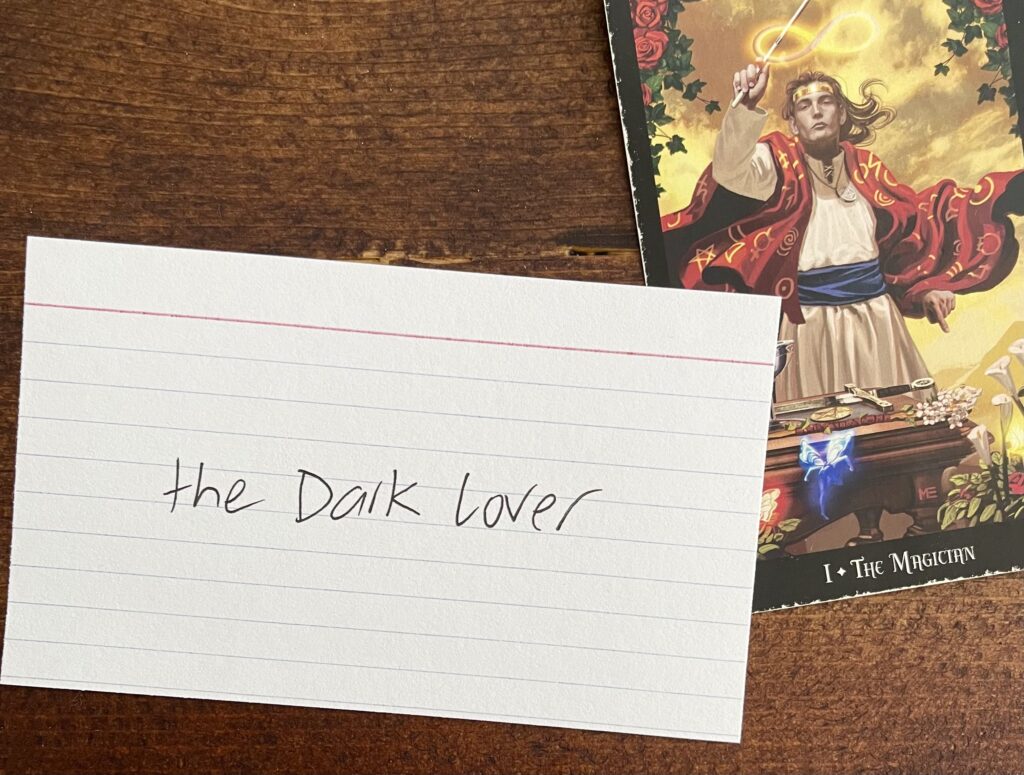
    And that brings us back to me, closing Dr. Ashcroft’s journal, sitting at my dining room table where this whole journey began. My notes and tarot cards are everywhere, index cards in messy stacks. Except now there’s one card that wasn’t there nine weeks ago, a single line scrawled across it.

    That’s the thing about stories—they have a way of sneaking out of the archives, bleeding into the in-between, daring you to follow.

    Which is exactly what Ev Knox will confront in The Magician and the Labyrinth of Yesterdays. Ev is an author, too, and she thinks she knows the boundary between fiction and reality. But Harrowfell Hall—and the figures lurking in its shadows—have other plans.

    If you want to know who (and what) the Dark Lover is, why Finneas disappeared, and what really happened that night when Levi “Lucky” Callahan’s luck finally ran out, you’ll have to follow Ev into the labyrinth.

    The book is slated to release on the Spring Equinox (2026), which means it’s time for me to get back to writing. The next draft isn’t going to write itself!

    I’ll see you next time, when we launch into a brand new Creative Season.

  • Just in Time for Spooky Season

    Just in Time for Spooky Season

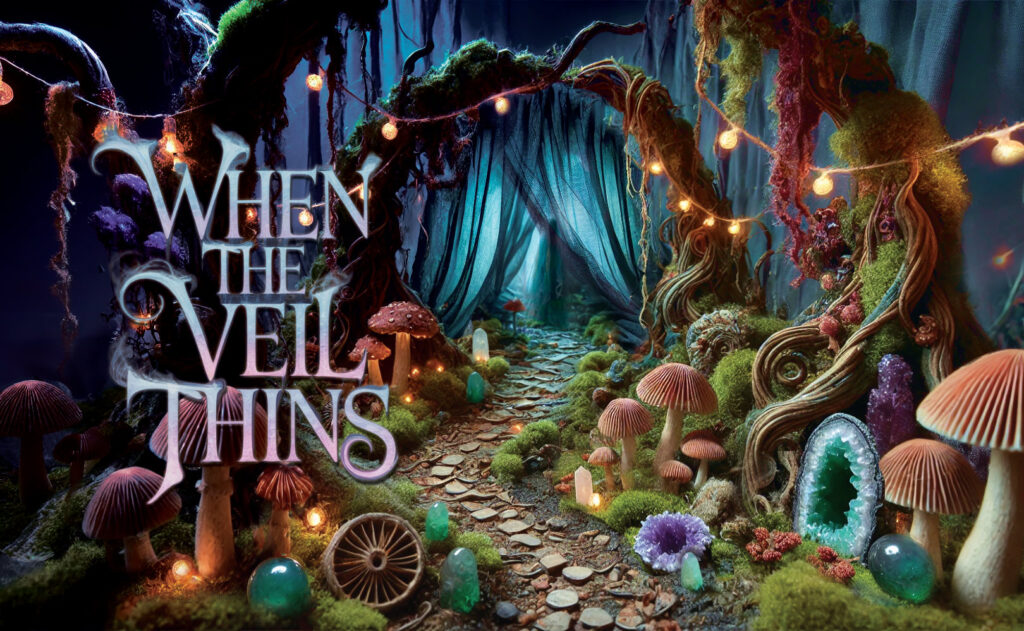
    Psst…it’s time for a brand new Creative Season! 

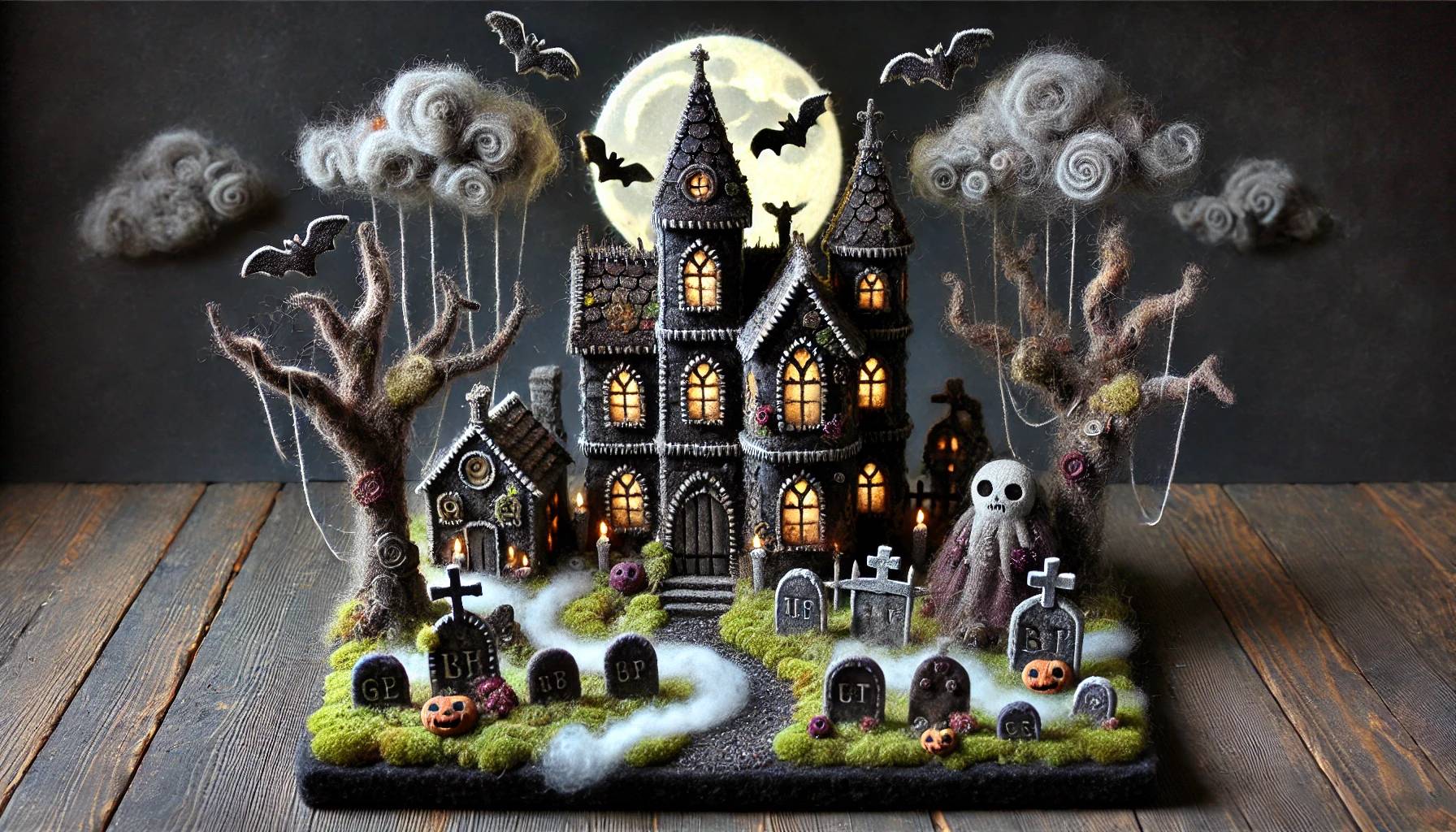
    We’re stepping out of the dreamy haze of Languorous Summer, with its enchanted waterfalls and mossy caves, and slipping into something darker and stranger.

    Say hello to our new theme…

    Two threads will guide our way:

    First, we’ll explore the shifting boundary between fact and fiction—something my character Ev Knox will be forced to confront head-on in The Magician and the Labyrinth of Yesterdays (coming Spring Equinox 2026).

    Second, we’ll see what happens when the veil does more than just blur—when it frays and tears, letting things slip through (not all of them friendly).

    We’ll start by peeling back the veil on my own writing journey.

    Like Ev, I didn’t know what was waiting on the other side when I first sat down to write this story—only that once I did, there was no going back.

    🥳 The Fool and the Threads of Time (Twin Flames, Book 0) was born on February 22, according to the handy timestamp.

    I remember where I was, too: holed up in an Oklahoma City hotel room while my husband was trapped in a conference room for a week-long class.

    For months my spirit guides had been nudging me to write a romance novel. (Yep, guides exist in my worldview, and they’re immensely helpful, if sometimes annoying in their persistence.)

    At the time, I couldn’t have picked a more absurd project. I wasn’t a romance reader, and I wasn’t a fiction writer.

    What could possibly go wrong? 🧐

    But my guides wouldn’t let it drop, so I turned that Oklahoma week into an impromptu writing retreat.

    Holy cow, was that first draft a blast to write.

    It was also very, very bad, and I say that with love. (Seriously, no one will ever be allowed to read it.) Pretty much the only thing I carried into subsequent drafts was Ev’s first name.

    That was the start of a three-year process.

    I wish I’d kept track of how many drafts I went through, but it was at least thirty.

    Somewhere around draft five or six, a series arc slowly emerged. The book had a gaggle of friends, it seemed, and they wanted to be invited to the party, too. A few drafts later, I spread out a set of index cards and mapped out the entire arc.

    Round about year two, I realized if I ever wanted to finish the damn book, I desperately needed an outline. So I finally built a reverse outline—cue the parting of clouds and angelic choruses.

    Oh, it was glorious! Instead of drowning in endless rewrites, I could hammer out the kinks in outline form, saving my energy for the actual writing. The outline transformed an unwieldy mess into a puzzle that was actually fun to solve. Who knew??

    In hindsight, I’m grateful for those chaos years, because I learned a hundred things that don’t work for me and how to support the way my brain likes to craft stories.

    Ideas aren’t my problem—if anything, I have too many, and without an outline, every draft gets progressively kitchen sink-ier until the whole house is underwater.

    By the time I finished Book 0, the series arc had undergone extensive remodeling, and I knew I needed to scrap the original and begin again.

    Which brings us back to the tarot…

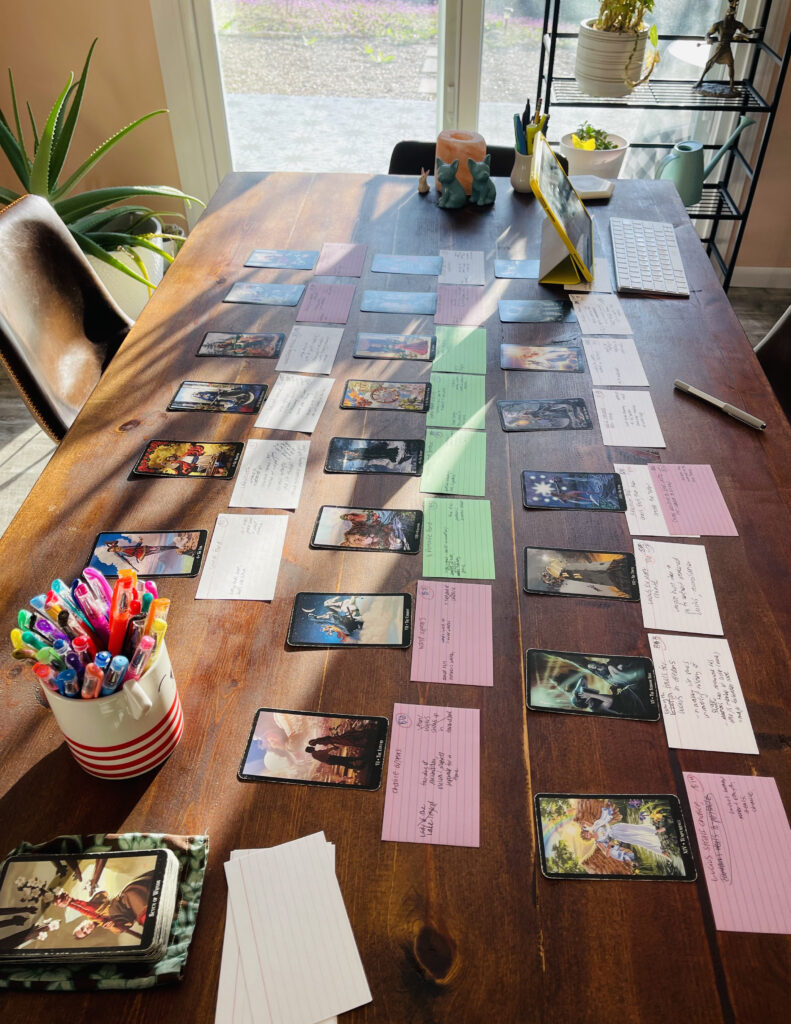
    Laying out the Major Arcana across my dining room table, I paired each card with the plot points I’d mapped out.

    (The cards stayed there for a week, while we ate meals standing in the kitchen—sorry, husband!) 

    My favorite part of outlining?

    That moment when, in my mind’s eye, it shifts from scribbly index cards to a living web, each point connected to another, and another, until the whole thing vibrates with potential.

    That’s when I know I’ve captured enough detail to move on.

    I’ve also noticed a pattern in how my creative energy flows. In the early drafts of a book, 90% of my energy hums inside that book’s world. The other 10% flits about the series universe, seeding ideas for short stories, companion novellas, or future arcs.

    But as I near the finish line, that free-floating energy starts orbiting the next book—plot downloads, snippets of dialogue, flashes of character arcs. The ratio shifts until suddenly I’m living 90% in the next story.

    It’s like a relay race: one book hands the baton to the next.

    And some books—like The Hermit (Book 9) and The Star (Book 17)—are especially magnetic. My imagination keeps returning to them, almost obsessively. It’s been fun breaking down why this is, so I can slather more of that magic sauce onto every book.

    A major ingredient of the sauce…

    …is creating a world I actually want to live in for the better part of a year.

    This could include a story that grips me so much I start dreaming about it, characters with problems juicy enough to low-key stress me out (in a fun way!), or a setting that oozes a particular mood.

    Which brings me to Harrowfell Hall. 

    I love me some gothic novels where the setting is a character in its own right. A place brimming with dark secrets that you have to pry out of its cold, dead hands, only to wish you’d never gone digging in the first place.  

    I already knew the basic (romantic) premise of my next book,The Magician and the Labyrinth of Yesterdays:

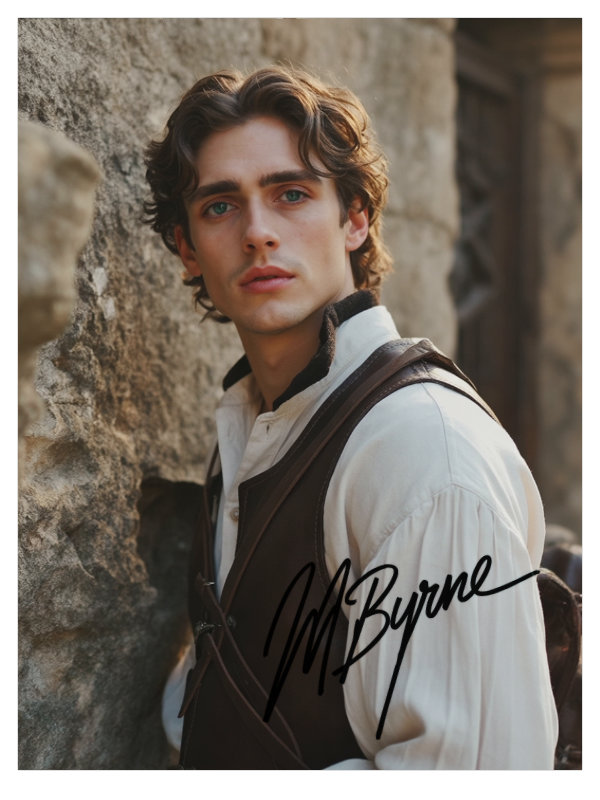
    Ev Knox’s debut novel is an overnight sensation, and Matt Byrne—the internet’s smoking hot boyfriend—gets cast as the love interest in the film adaptation. 

    I also knew I’d be thrusting Ev, a professional introvert, into the chaotic world of the film set, but I didn’t have a clue where that would be. Definitely not a soundstage. (Yawn.)

    Hmm…how about a secluded castle built in the late 1700s by an eccentric heir to a coal-mining fortune who dabbled in occultism and—if the rumors are true—sex magic?

    Now we’re getting warmer. Forget “only one bed.” Only one haunted castle, baby! 👻

    And stepping outside? Not much safer. You see, Harrowfell is tucked deep in the woods where hikers keep vanishing. And Margot Takada, local expert on Harrowfell’s hauntings, claims to have found bizarrely oversized hoofprints disappearing into the trees. 

    Naturally, that means only one thing.

    Ev is stuck inside Harrowfell with Matt Byrne, doing her level best to remember she has a boyfriend back home and that it should not matter if her celebrity crush is even hotter (and sweeter) in person. 

    Easier said than done when Matt—famous for guarding his love life like a state secret—suddenly acts like the only thing he wants to keep all to himself…is her. 🥵

    Okay, now that is a story I can live in for a year, and I’ve barely told you anything about the haunting yet! 

    Next time, we’ll peel back the veil and explore the grounds of Harrowfell.

  • A Witch’s Guide to Creative Flow

    A Witch’s Guide to Creative Flow

    Today, I want to take you behind the curtain of something I call Creative Seasons—a way of structuring my writing life + business that just plain works for my brain. Maybe it’ll spark some ideas for your creative process, too!

    If I had to sum up what I was doing before? Easy. “Absolutely was not working” and “sucking the joy out of life” pretty much covers it.

    I’d found a way to get the actual book-writing done, which was no small feat.

    But when it came to marketing those books? Let’s just say a great many tasks were perennially shuffled to next week’s to-do list. And then the next. And—well, you get it.

    The Sneaky Power of Theme

    Creative Seasons introduced two things I didn’t realize I was missing:

    Setting aside time for deep work (to borrow Cal Newport’s term), and tapping into my obsession with creative remixing.

    Trying to sprinkle marketing tasks throughout my week basically guaranteed they wouldn’t get done.

    Either I was too tired after sculpting tiny food (my current day job) or drafting my next book, or I’d do the marketing first and then be too tired to do my day job—which wasn’t really an option, since, you know…bills.

    Hence: another week, another list of untouched marketing tasks.

    With Creative Seasons, I now set aside one full week to do nothing but marketing. Yes, I still fill tiny food orders in the morning, but knowing that the rest of the day is fully reserved for one thing, and one thing only, shifted my POV in ways I hadn’t expected.

    For starters, it’s way easier for me to get into the zone.

    And when I’m in the zone? Wowza. It’s like sprinkling fairy dust on my to-do list!

    Instead of, “Ugh, I have to market my books,” it becomes, “Wait—I get to make cool books, and then I get to make more cool stuff to spread the word??!”

    It’s amazing how dimming distractions can dial up the level of satisfaction I get from a task, even ones that, in the past, I considered to be majorly boooring.

    There’s a Magical Reason, Too

    Do you remember when I compared my pen name to a magic circle—a space where “Author Me” can show up distinctly from “Personal Me”?

    There’s something similar at play with these week-long marketing boot camps.

    The week becomes a magic circle of its own. Within the circle, I focus on a very specific intention and let everything else fall away. And just like in ritual, that container allows energy to gather. It concentrates. And, like most magic…it surprises.

    Not only am I finally doing my marketing (a small miracle), the simple act of focusing has sparked unexpected story breakthroughs.

    For example, while creating this colorful grid of series clues, I hashed out an important subplot in The Magician & the Labyrinth of Yesterdays—a thread that will ripple forward into the yet-untitled book tied to the Wheel of Fortune card.

    I can feel it as I work: Marinating in a focused mindset, even with something “dull” like marketing, weaves those creative threads together, and one leads to the next, leads to the next…

    A Bored Witch Causes Trouble

    Which brings me to the second feature of Creative Seasons: Remixing familiar themes to create something fresh. (Remember my love of The Simpsons’ ever-changing couch gag? This is the witchy version.)

    In a nutshell, I set aside one marketing week per quarter, and each quarter gets a yummy new theme for my brain to chew on. 

    My love of remixing used to cause problems in my businesses, because every so often I’d get the itch to revamp my branding. Again. And again. (And again.)

    Not great if you’re wanting to build brand recognition. But without the refresh I’d start feeling antsy and bored. 

    Themed quarters to the rescue!!

    Now, instead of tearing everything down and starting over, I get to channel that revamp energy into a rotating aesthetic—new imagery, colors, symbols, and seasonal moods.

    Brain = happy. Business = (a little more) stable. Win-win.

    This quarter’s theme?

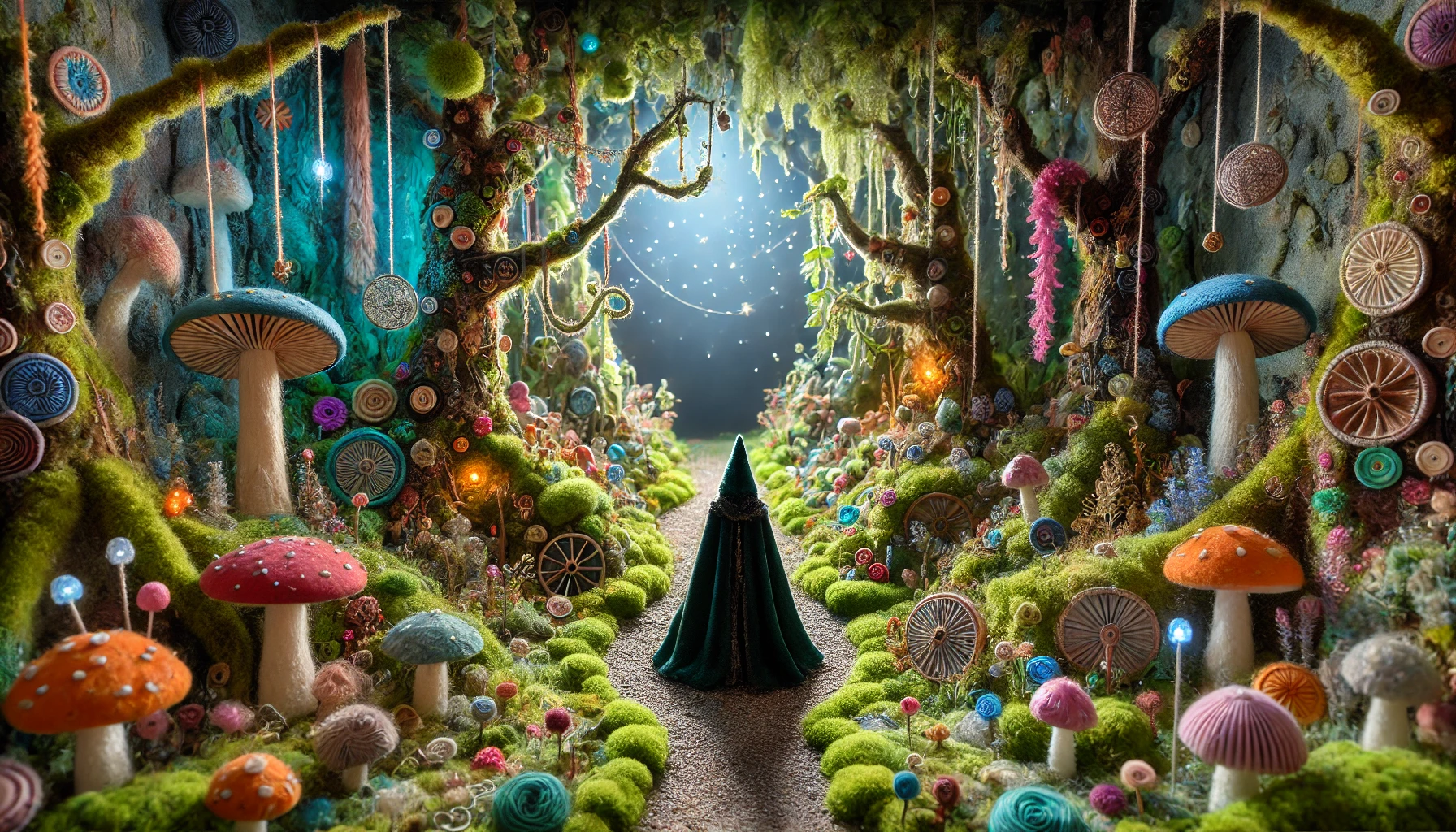
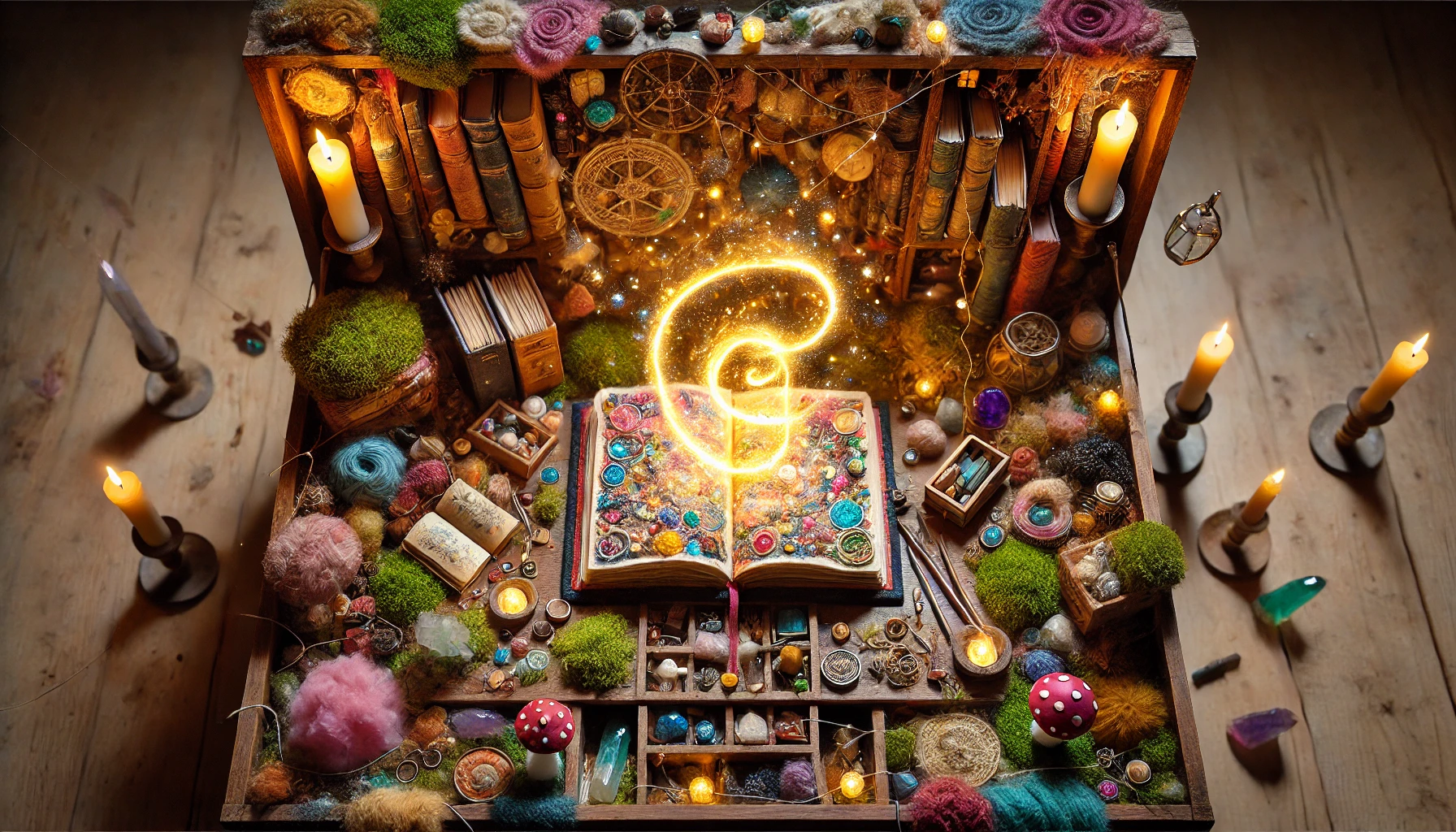
    In the coming weeks, we’ll explore the world of Twin Flames through this dreamy, midsummer lens. Think golden-hour walks in the woods or curling up with a good book to the backdrop of a summer storm. 

    If you’ve read The Fool & the Threads of Time, you might remember those little shrines, deep in the meer—and those empty place settings left for the Hidden Company. 

    (And if not? No reading homework required to enjoy what’s to come.)

    We’ll slip into the summer woods, looking for those shrines—looking for clues.

    Who are the Hidden Company? And why do the Harandeans still leave offerings, even though most believe they’re nothing but children’s tales? 

    Oh, and that shimmering in the distance, just visible above the canopy? That’s the Waterfall of Mesmer. Some say its waters conceal caves, and if the legends are true, one of those caves houses a very peculiar guest…

    We’ll explore all this and more in the weeks to come. 

    Welcome to Languorous Summer.

  • Romancing the Couch Gag

    Romancing the Couch Gag

    Growing up, my favorite part of The Simpsons was the intro. At that familiar theme song, I’d race into the living room, dying to know how they’d riff on the piling-on-the-couch gag this week. 

    That childhood fascination was a strong predictor of my grown-up creative work. The mash-up of the familiar + the unexpected turned out to be the catnip my brain craves. 

    I wasn’t conscious of this influence when, holed up in an Oklahoma City hotel room in 2022, I started writing what would become (after many, many iterations) The Fool & the Threads of Time

    But a book series about past lives is, at its core, a story of remixing. Same souls, different contexts.

    It’s the romance-novel version of the couch gag.

    Speaking of remixing…it was only in writing this essay that I remembered my favorite part of that Oklahoma City trip—going to Factory Obscura: MixTape, an interactive art space that had me dreaming in yarn, glitter, and tulle for weeks.

    I got to wander through a multi-room coral reef created entirely from textiles, an influence you’ll be able to spot in The Magician & the Labyrinth of Yesterdays (releasing in 2026).

    The Fragmentary Land of Memory

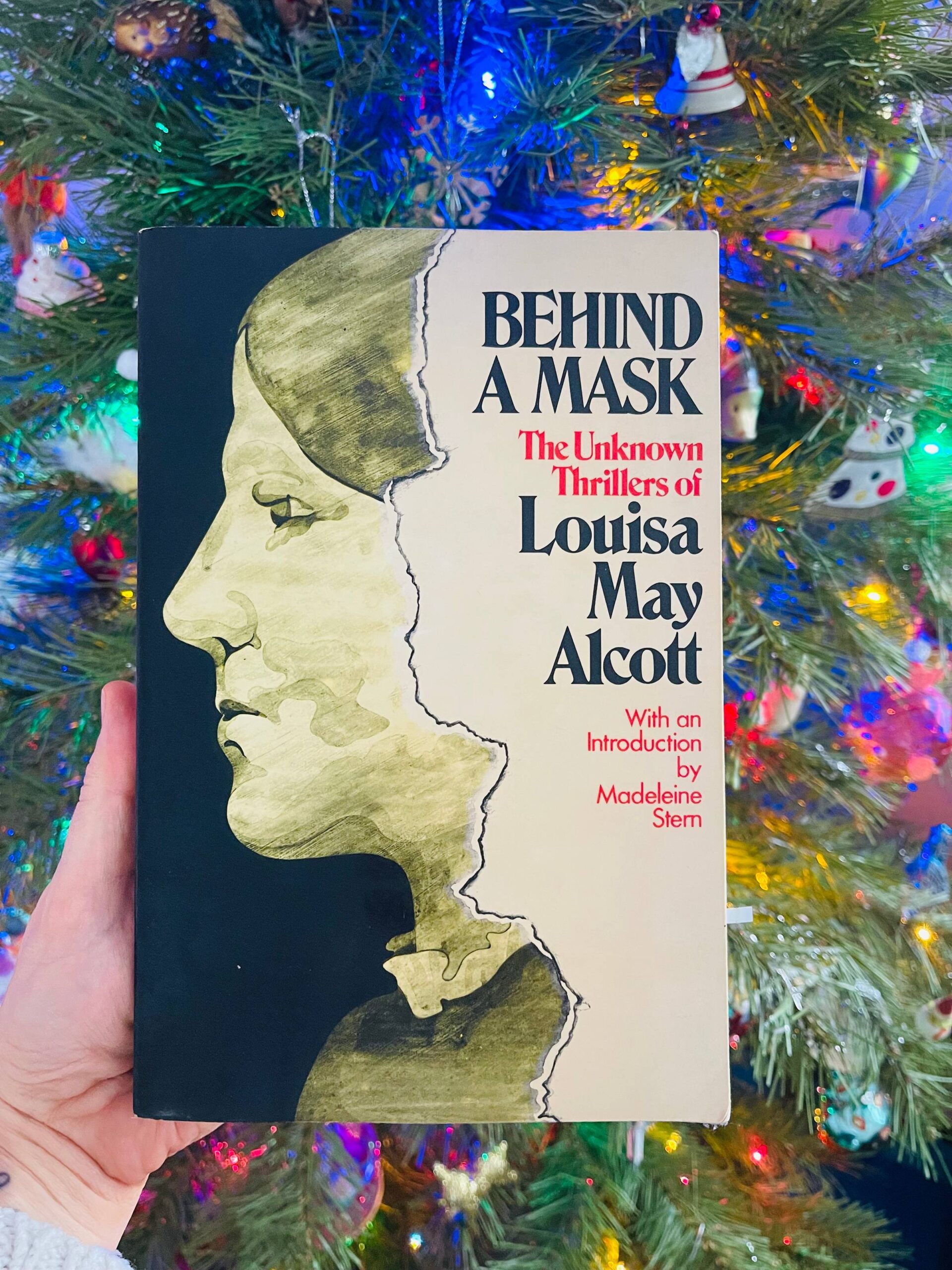
    Have you read Carmen Maria Machado’s memoir, In the Dream House?

    It utterly blew me away—both for Machado’s gut-wrenching honesty in recounting her experience of domestic abuse, and for the brilliant way she used narrative structure to reflect the fragmentation of memory and trauma. 

    While the story was roughly chronological, each chapter was told through the lens of a different narrative trope—for instance, “Dream House as Lesbian Cult Classic” or “Dream House as Inciting Incident.”

    That approach—using story structure to shape and reveal meaning—left a lasting impression on me. It illuminates a (sometimes uncomfortable) truth about the messiness of reality: There is no single way to understand a thing.

    A Tale of Two Tarot Readings

    I used to be a professional tarot reader, and in the 1,000-plus readings I did over the years, I will never forget two readings in particular. 

    Two new clients, booking roughly a week apart. At the center of both spreads was the Hierophant, but given how many readings I did every week, I didn’t think much of it. 

    Until I neared the end of the second reading, that is. 

    Neither client had mentioned the other’s name, so I hadn’t known that they knew each other, that they were, in fact, getting readings on the very same situation. 

    The spread was a startlingly clear map of first-person POV.

    There was the Hierophant at the center (the core theme), and a unique constellation of cards radiating outward. What one person saw as useful structure and clarity, the other experienced as dogma and control.

    Each of them was carrying a story that felt irrefutably true, but those truths were shaped by where they were standing.


    Next time, I’ll show you how this tarot-style framing shows up in my creative process—how changing the question, or the lens, can lead to dead ends…or open the door to mysterious new worlds

    See you soon.