The following is an excerpt from Beyond the Hedge, the blog of folklorist and time-slip researcher Margot Takada.Used with permission.
Last month, I received an unexpected email from Dr. Mira Halstead, curator at the Barton Museum of Antiquities. She’d gotten her hands on a strange manuscript—The Secret Garden of the Stars—which may have originated in the lost kingdom of Harandaal.
Regular readers will know that when I say “lost,” I don’t mean simply lost in the annals of history. Yep, we’re talking lost timelines, folks—a Beyond the Hedge specialty.
My research points to the possibility that Harandaal truly did exist—just not in the river of time you and I are swimming in.
If that’s true, then there’s another timeline out there in which Harandaal was as real as Athens. It’s only from our alternate vantage point that we’ve demoted it to the mythical status of Atlantis.
But back to Dr. Halstead.
I get a lot of weird messages, but rarely do they include high-res scans of an ancient manuscript. Obviously, I was hooked.
Dr. Halstead has been awesome enough to post all the scanned pages on the Barton Museum website. The manuscript appears to be part field guide to the Star Garden’s flora and fauna, and part astrological treatise.
How cool is that??
I’ve spent the past few weeks cross-referencing the star patterns, and in Harandaal, summer was divided into three distinct constellations, each said to shape the fate—and personality—of those born under its influence.
Sound familiar? Yep, even across timelines, the ancient Harandeans developed a relationship to the night sky that echoes our own. Pretty beautiful, isn’t it?
The Harandean Night Sky
Of course, their constellations weren’t identical to ours. The Harandeans saw in the stars:
The Star Phoenix, who rises in early summer, with a bold, passionate energy.
The Crowned Stag, who reigns in midsummer, with a loyal, protective vibe.
The Ember Moth, who flickers on late summer nights, drawn to bittersweet endings.
As a fun experiment (and because I know you all love this stuff as much as I do), I’ve adapted this ancient system into a short quiz based on personality patterns.
When you’re done, you’ll get a fun forecast based on your Harandean star sign!
It’s speculative, of course—but aren’t most things worth doing?
From: Dr. Mira Halstead m.halstead@bartonmuseum.org To: Prof. Elias Merrow e.merrow@lyndengrove.edu Subject: Have you ever heard of this place??
Elias,
I know it’s summer and you’re supposedly on sabbatical, but something just landed on my desk and I need your brain.
A donor left us an uncatalogued manuscript—vellum folios, hand-stitched binding, phoenix-red wax seal. No provenance paperwork, naturally. We’re tentatively dating it to the 11th or 12th century, but the ink composition is…odd. The lab says it contains trace elements they “can’t identify using current standards.” Not encouraging.
The title page reads: The Secret Garden of the Stars A royal account of the flora of the Star Garden
The illustration is bizarrely charming—anthropomorphic flowers holding hands, a smug little fox in the margins—but the text is what really got me. The Star Garden is described as the royal sanctuary of the Bryndiel family, rulers of a place called Harandaal.
I’ve run it through every geographic and mythographic index I can think of, and I’m turning up squat.
Have you ever come across these names? Harandaal? Bryndiel??
Oh, and did I mention the final pages are sealed shut, because of course. We’ve looped in Niko from Conservation, and apparently, the seal is made with some kind of resinous compound that resists both heat and solvent. Very dramatic.
Let me know what you think. I’m attaching a photo of the title page, but I can scan a few folios if you want a better look.
Mira
From: Dr. Mira Halstead m.halstead@bartonmuseum.org To: Prof. Elias Merrow e.merrow@lyndengrove.edu Subject: RE: RE: Have you ever heard of this place??
Seriously, Elias, you have got to tell me these things sooner.
Also, I’m tagging along the next time you take your daughters to Harrowfell Hall—I had no idea you were a haunted castle enthusiast.
I checked out the blog you mentioned, Beyond the Hedge. Pretty random that you met this Margot Takada person at Harrowfell. Despite some of the, shall we say…creative theories she’s proposing, her citations are surprisingly rigorous. And she’s definitely read more 10th-century herbals than half the grad students in our program.
If we’re looking at the same post, she refers to Harandaal as one of the more “compelling examples of a kingdom caught in a timeline bifurcation.”
I had to read that about three times before it still didn’t make sense.
The footnote led me to a book my teenage self would’ve gobbled right up, in between obsessive re-readings of Lord of the Rings.
The Collapse of Crowns: Hidden Histories and Lost Empires.
Have you read this, or am I tumbling way too deep down the rabbit hole here?
Believe it or not, we had a copy in the stacks. Chapter 31—The Battle of Harandaal. Some versions say the kingdom fell overnight. Others claim the king struck a deal, and the fall never happened.
Check this out:
“What if both things happened, but in different timelines…and for some reason, only one reality survived?”
For the record, I don’t believe in “timeline bifurcations,” just in case you’re getting worried about me.
M
P.S. Okay, but what if there is something to this?
I mean…how has not a single historian ever heard of this place, yet we now have one book that mentions Harandaal and another manuscript that claims to be from there?? (cue Twilight Zone theme song)
[Editor’s Note – Barton Museum Archives]
Dr. Halstead’s correspondence is included here with permission.
Readers wishing to explore further references to Harandaal—and the mysterious manuscript known as The Secret Garden of the Stars—will find relevant material in The Fool & the Threads of Time (Book Zero).
Those seeking additional context regarding Harrowfell Hall, timeline bifurcations, and other related phenomena are advised to consult The Magician and the Labyrinth of Yesterdays (Book One, coming 2026).
Some say the Spiral Gardens—those rocky hollows within the palace that teem with bizarre plants and insects—are the strangest place in all of Harandaal.
Well. Those people have clearly never been to the chrysling (pronounced KRIS-ling).
Shall we go exploring?
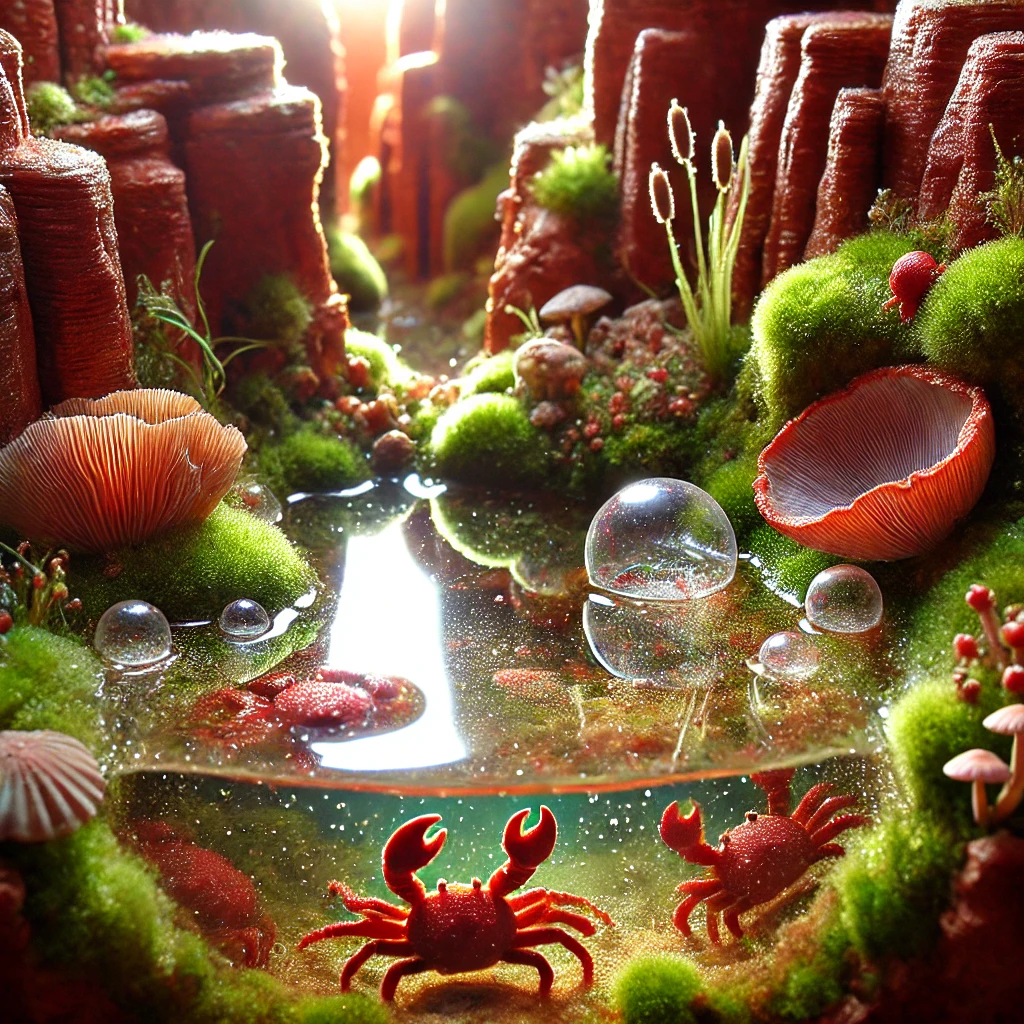
Bulbous stone spires rise like giant coral. Narrow ravines snake between, the rock adorned with moss and fungi found nowhere else in Harandaal.
Pools of glassy water shimmer on ledges, and if you look closely, you might spot a phoenix scuttler: a shy red crab, known to naturalists as Rubicampus harandaali.
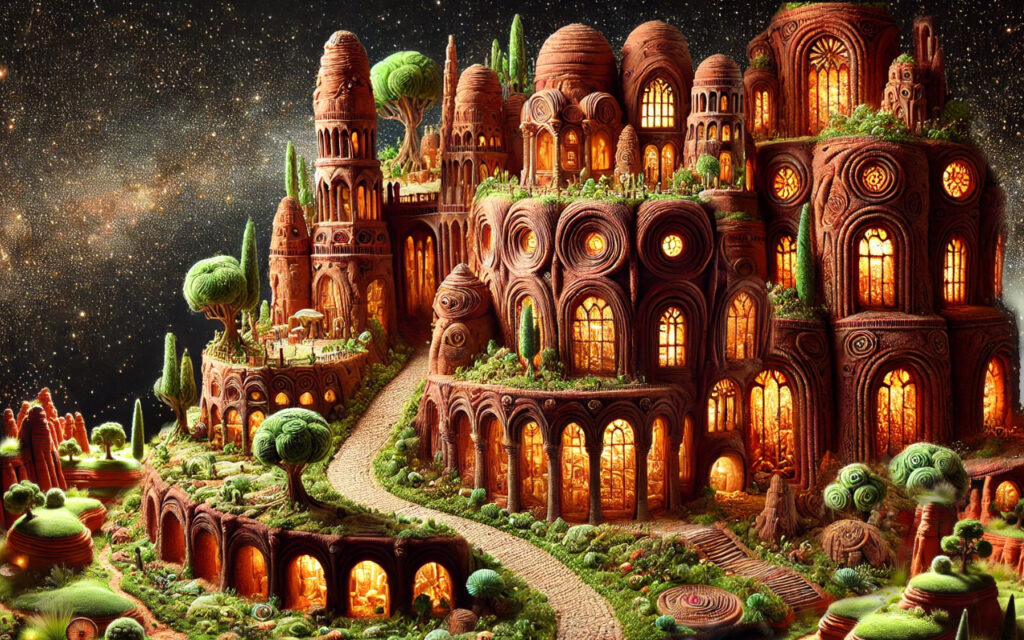
Why phoenix? Because the chrysling’s stone is no ordinary rock—it’s phoenix stone, the very same material from which the palace of the Bryndiel family was carved.
You wouldn’t guess it to look at them now, but once, both the palace and the chrysling were solid buttes. A massive one, in the palace’s case.
Ancient stonemasons hollowed that butte from within, carving every window and wall, every staircase and sconce, like a gemstone in reverse.
The chrysling, too, was sculpted—by wind and rain and the steady hand of time.
But speaking of time…
In the chrysling, it doesn’t always behave.
When Mathias takes Evelyn to the chrysling in The Fool & the Threads of Time(Book Zero), as she’s marveling over one of those crab-filled pools, she hears a voice. A whisper that sounds an awful lot like her name…
Bookmark that, dear reader. Evelyn has just experienced a time slip.
She won’t realize it until much later—say, in The Magician and the Labyrinth of Yesterdays (Book One, coming 2026)—but you’ll want to remember that moment.
Because where time slips, other things can slip through, too.
A little birdie tells me a companion short story will be arriving with Book One—one that takes full advantage of the chrysling’s more…intimate distortions of time.
Evelyn finds herself caught between two lifetimes—and between a present-day Matt and his princely past-life self. Both of whom are feeling more than a little possessive. 🌶️🌶️
Apparently, the hottest new trend in Harandaal isn’t multiple orgasms, it’s multiple lifetimes sex.
But you know what they say—what happens in the chrysling, stays in the chrysling. 😏
Get ready with Book Zero, The Fool & the Threads of Time.
You can feel it, can’t you—the cool mist in the air? We’re close.
The forest path narrows, the moss-covered ravine pressing in. One more turn up ahead…
There it is.
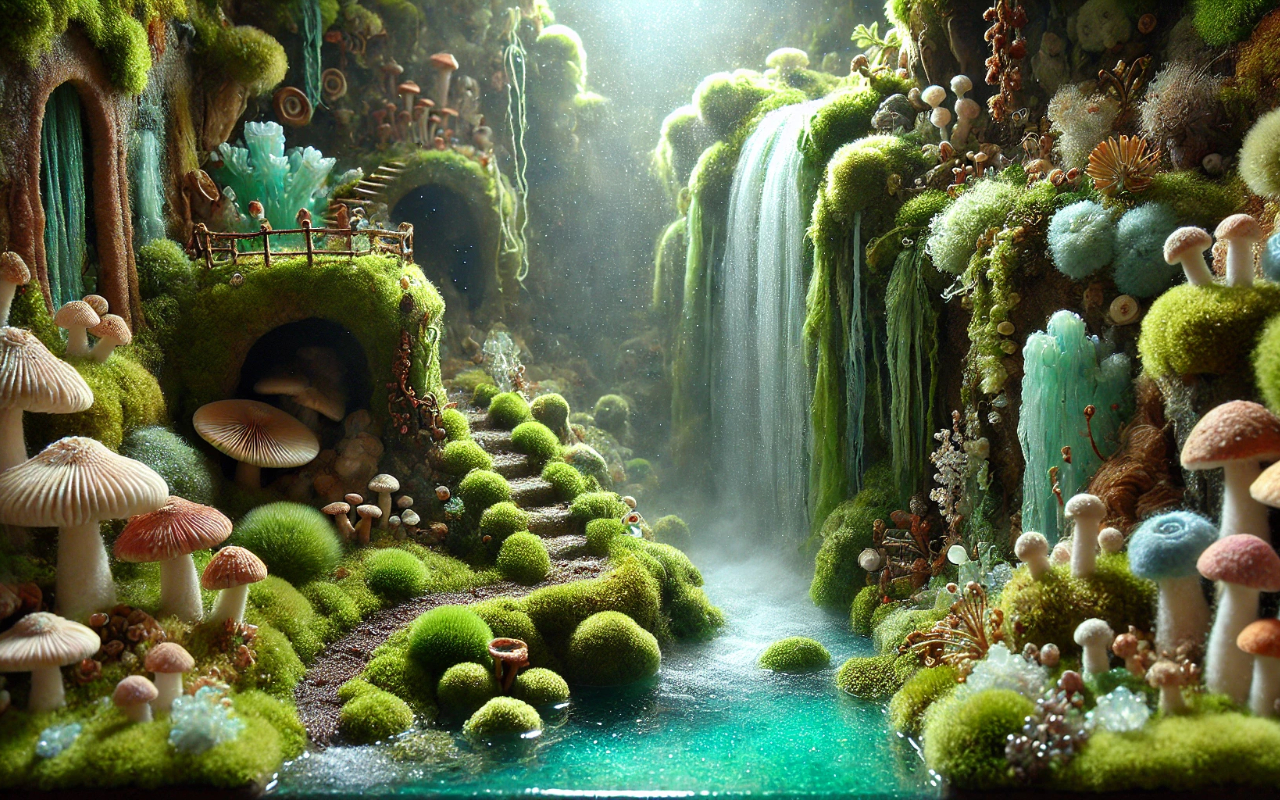
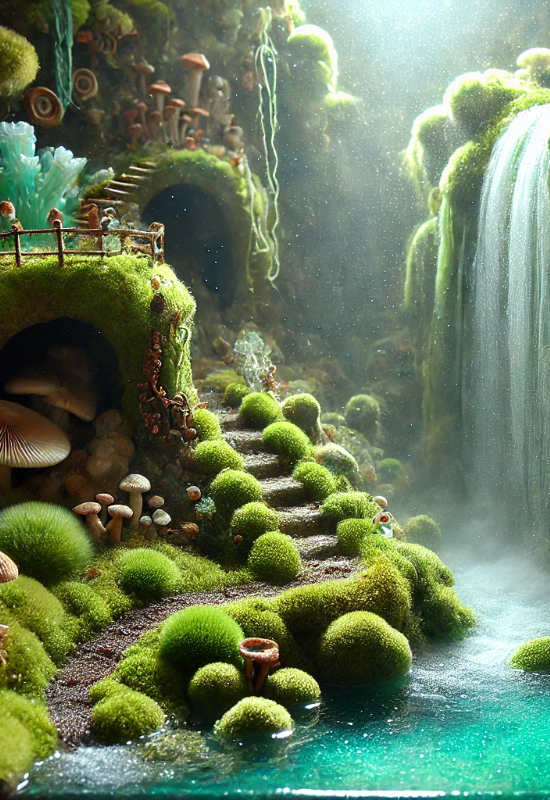
The Waterfall of Mesmer, like liquid diamond, cascading into a pool so vividly turquoise it could well be a painting. The water foams, eddying around moss-slick boulders before vanishing through a cleft in the cliffside, swallowed by the earth itself.
But we’re not stopping here.
See that trail, snaking up the cliffside? Careful now, it’s steep, and the mist makes everything a wee bit treacherous. But just a little higher, now, and I promise—it’s worth the wait.
The forest is swallowed by the roar of water as you slip behind the waterfall’s curtain. The air is damp, thick with the scent of wet stone and something stranger—floral, but sharp.
Lush vines curtain the cliff face, tiny, unfamiliar blossoms crowding every shadowy crevice. A pale purple moth flits from one to the next, a lime-green frog watching it with interest.
A whole world, hidden behind the waterfall.
“Hold this a moment, will you?”
You take the lantern as your guide retrieves thumb-sized fire sticks from their pack, the lamp flaring to life.
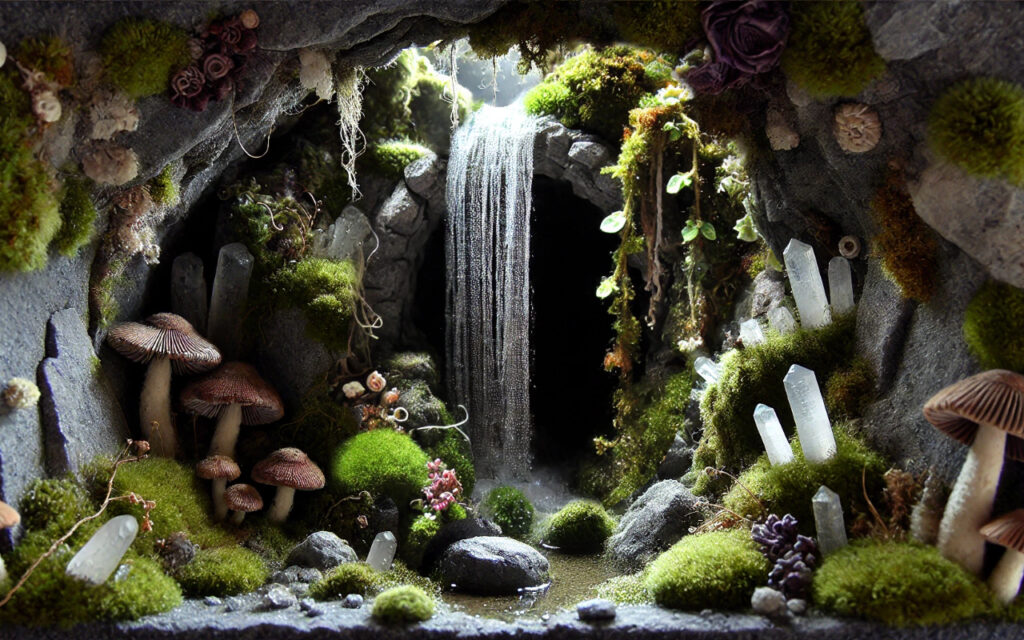
Parting the vines, and there it is: a dark mouth in the rock. The fabled Cave of Mesmer, all too real. But are all the tales true?
Only one way to find out…
The passage is narrow, uncomfortably so, the walls glittering with quartz, catching the lantern light like fireflies trapped in stone. Strange carvings spiral across the surfaces, their meanings lost to time.
But one thing is clear: you’re not the first to walk this path.
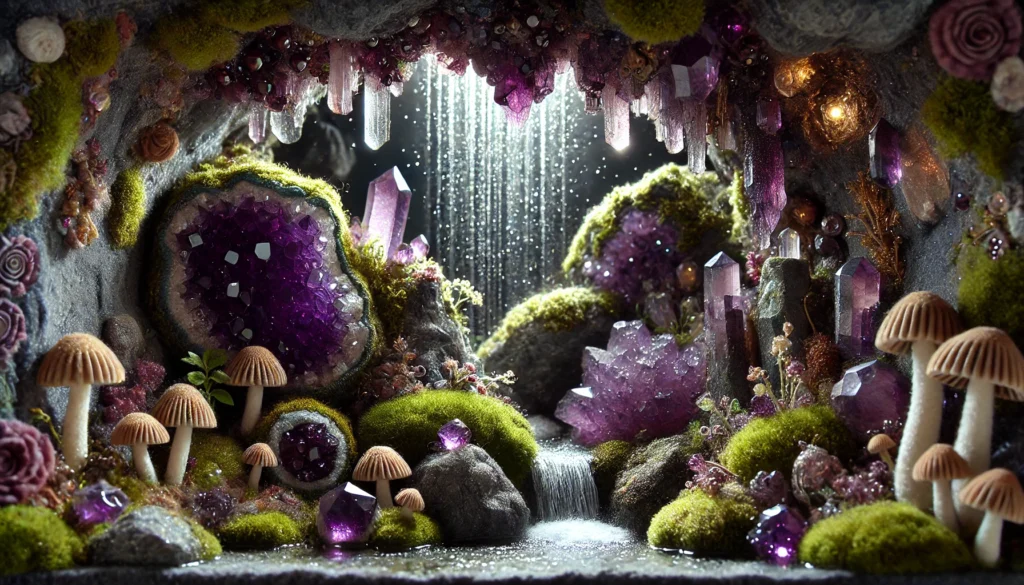
Deeper still and the ceiling arches, enough that you no longer have to stoop. Rolling your shoulders, you see that the ceiling is studded with amethyst. It’s cool and smooth, humming faintly beneath your fingertip.
And then the tunnel opens.
A chamber, roughly circular, its perimeter home to a melting forest of stalagmites. Other passageways branch off into darkness, goosebumps prickling your arms. Anything could be waiting back there.
But your guide is already beckoning you to a shallow cavity in the wall. Swinging the lamp to the opening, you spy a wooden box.
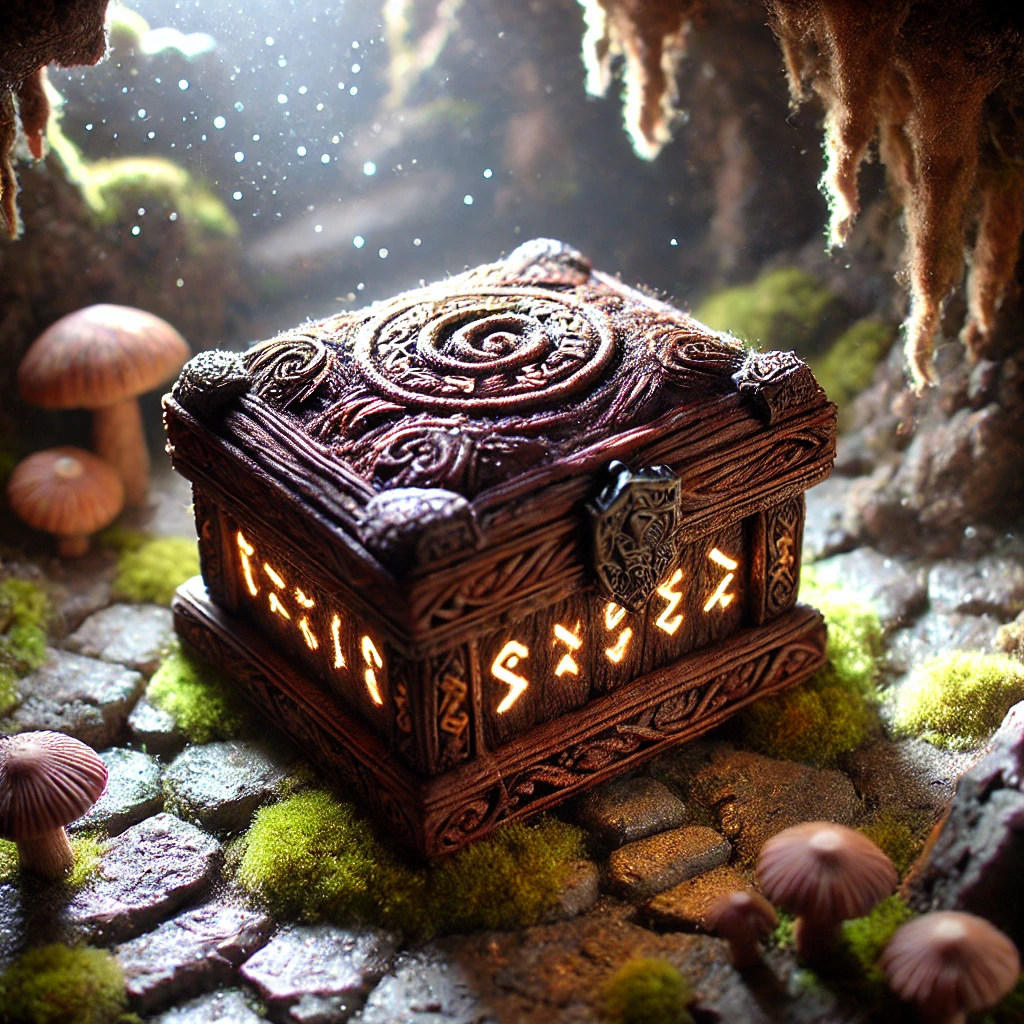
The lid is carved with symbols matching those on the passageway’s walls. You lift it with care, afraid the rusted hinges might snap clean off. Peering inside, the box is…empty?
No, not quite. In the corner, nestled on a scrap of cloth lies a small pendant. It looks handmade, a smooth riverstone wrapped in copper wire, green with age, strung on a braid of hemp.
“But…this is wrong. Shouldn’t there be a scroll?”
“Ah, right you are. This was left as a trade by the ones who came before us.”
“A trade? By who?” Had we truly come all this way for nothing?
“Eowyth and Mateu.” Your guide closes the box with a wink. “If you want to know what they found—well…you’ll have to ask them yourself.”
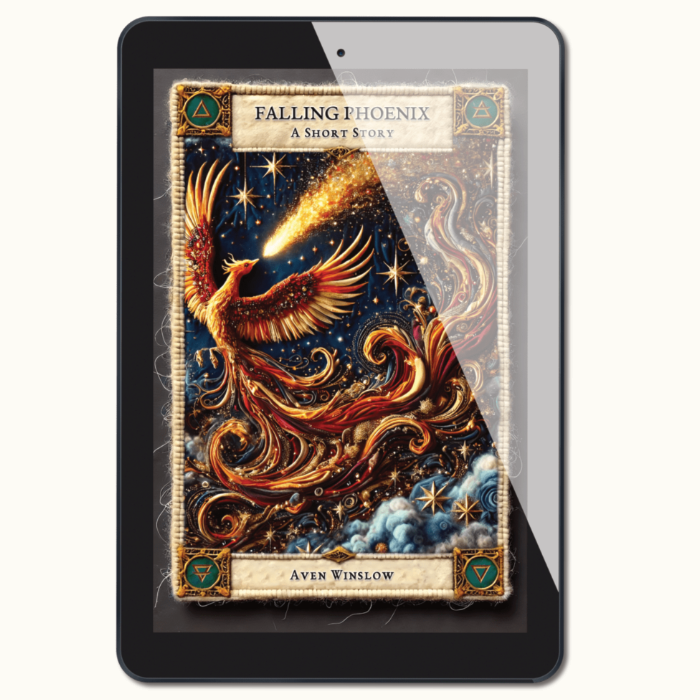
🔎 Read the short story, Falling Phoenix, to uncover your next clue.
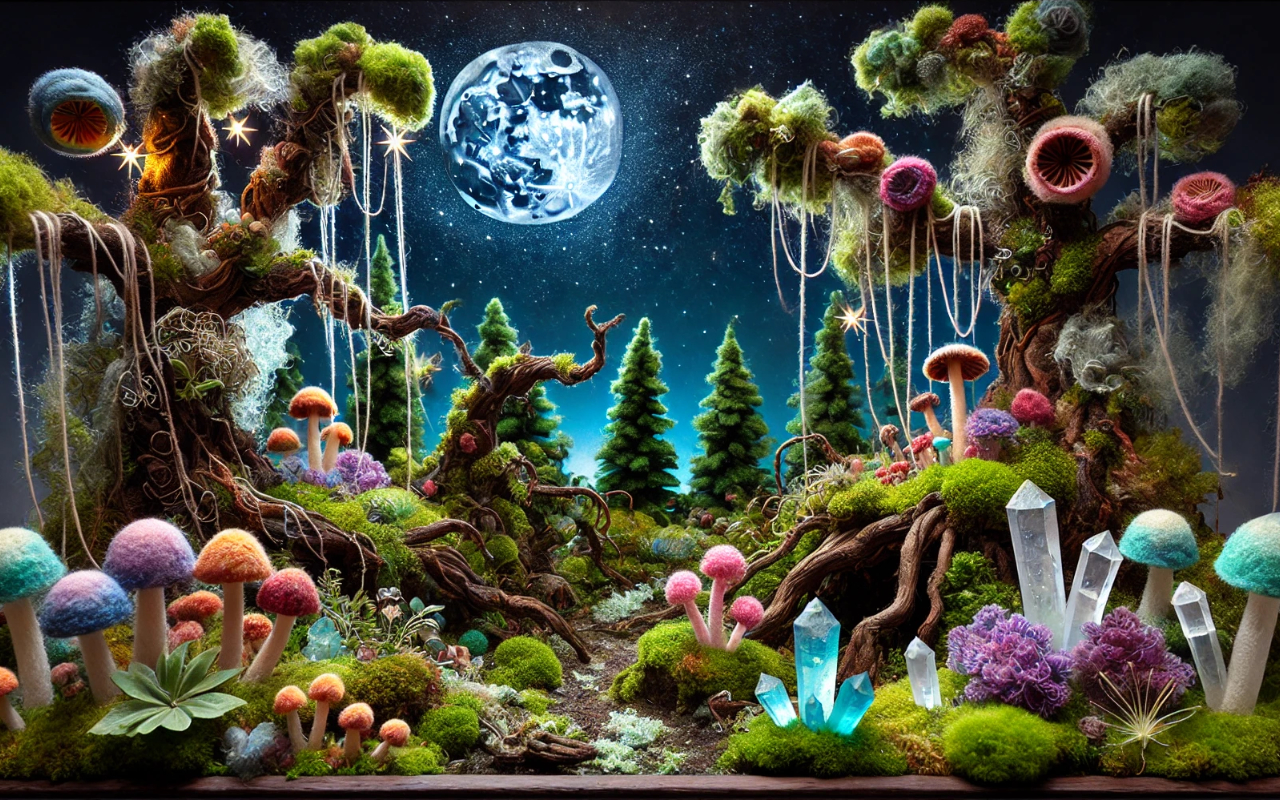
Wander deep enough into the meer, following deer paths and burbling streams, skirting around toadstool rings, and there you’ll find them.
Tumbled piles of buttons and coins, shiny trinkets and smooth river stones. The shrines still tended—but by whom? And why?
Then, of course, there’s the empty place setting at every Harandean dinner table—yet another offering whose origins have been lost.
But ask ten Harandeans who the Hidden Company were and you’ll get twelve different answers.
Some say they were ancestors, long-vanished kin with names now forgotten.
Others claim they were gods—or demi-gods, perhaps?—guardians of mountain and meadow, grotto and meer, who vanished when Harandaal fell.
Still others insist they were ghosts. Or still are.
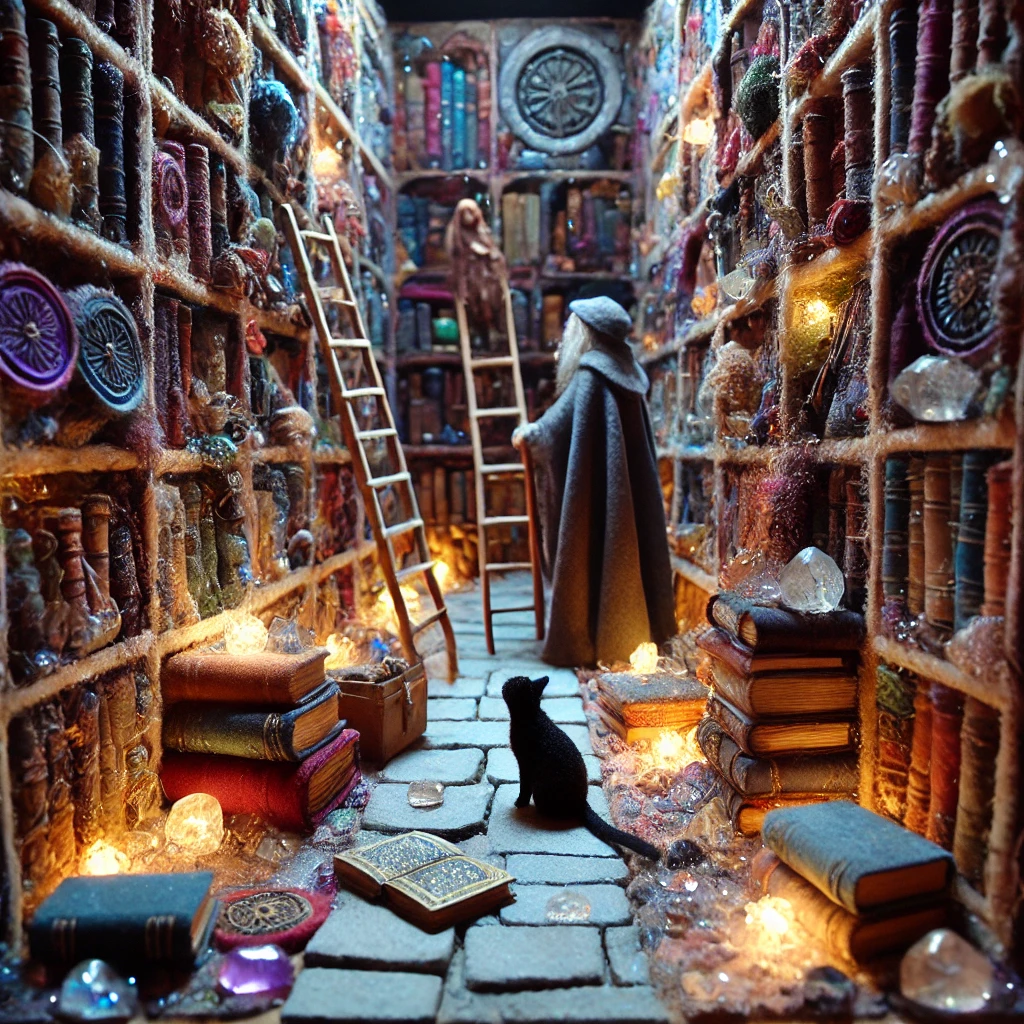
Arcanus, the librarian of Harandaal, has spent his life ferreting answers from dusty scrolls and cracked leather tomes. There isn’t much, but what he’s found leaves a tantalizing trail.
The first clue was found in a forgotten travel guide…
A guide misshelved under Agricultural Methods. It contained a sketch of mysterious runes, which the author claimed were the lost language of the Hidden Company.
Now, to anyone else, this might seem nothing more than a linguistic morsel—curious, perhaps, but easily forgotten.
But this faded sketch stopped Arcanus cold, for he knew what no other Harandean could.
These runes weren’t unknown.
They were the language of the Aeloihim. (How Arcanus knows this is a tale only he can tell.)
Startled though he was, Arcanus assumed the author was simply mistaken. A well-meaning scholar encounters an unknown language and ascribes it to an equally unknown people (if the Hidden Company were, in fact, people…).
But some years later, Arcanus stumbled upon another text.
This time, a brittle manuscript containing a map of something he wasn’t allowed to see. A map of the legendary Star Garden.
Though Arcanus had spent most of his life in the palace—directly beneath the Star Garden—he’d never once set foot in it.
He’d heard plenty of rumors, of course, each more outlandish than the last…
Bats, large as roosters, were said to drink from night-blooming flowers.
Flowers with petals that, when crushed, glowed like slow-dying stars.
Some claimed the flowers even spoke, in a voice old as time. The Spirit Song, they called it.
And to one who remembered this ancient tongue, the flowers would whisper where a great treasure lay buried.
Yes—each tale more outlandish than the last.
But the grand spiraling staircase to the Star Garden, which spanned the top of the massive red-rock butte from which the palace was carved, was barred to all but the Bryndiel royal family.
And yet, amidst the tall tales, one detail Arcanus knew to be true. At the heart of the Star Garden lay Harandaal’s most sacred site—the First Stone.
This is where the mystery deepens…
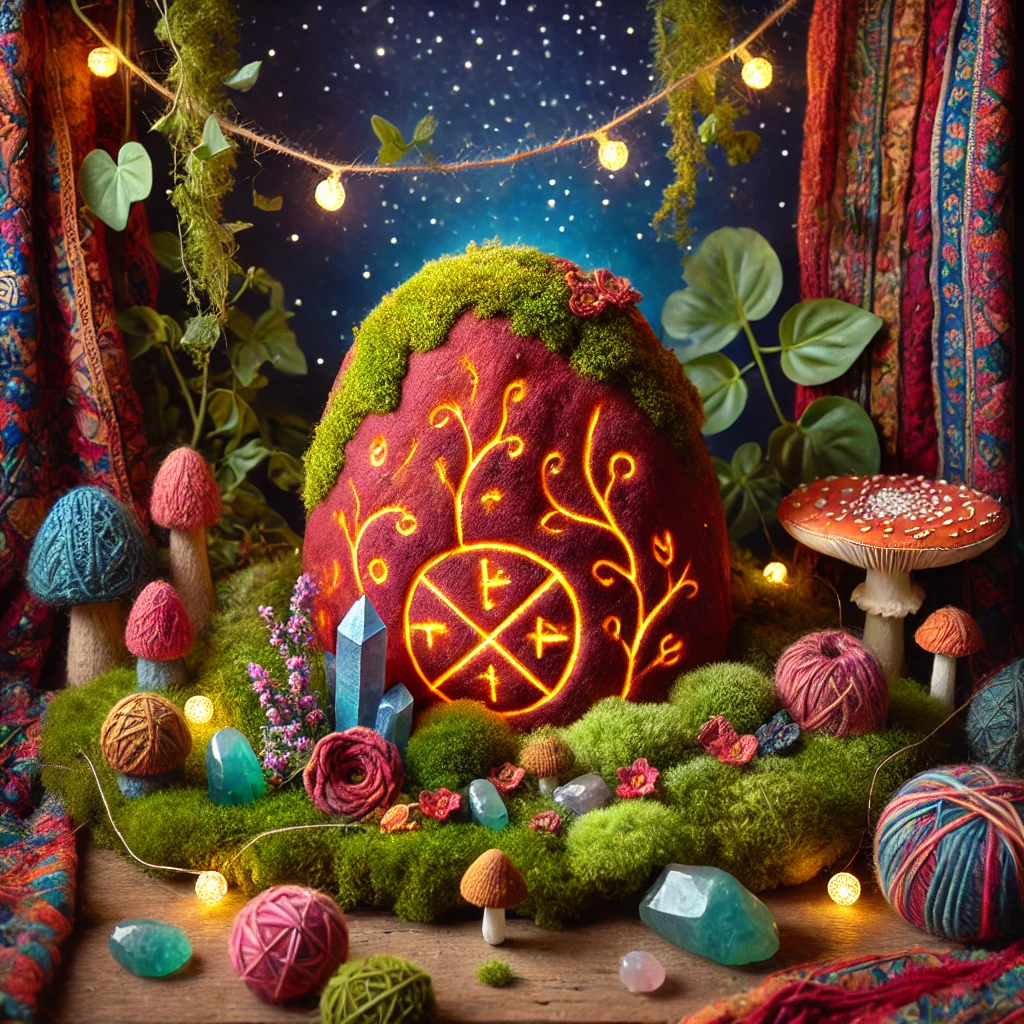
Inked in the margins of that forbidden map was a note, and if the anonymous scribbler was to be believed, the runes carved on the First Stone are the lost language of the Hidden Company.
Runes that Arcanus, having pored over the map for many hours, knows are absolutely, unmistakably, the language of the Aeloihim.
Two sources.
Both linking the Hidden Company to a language never known in Harandaal.
Either two authors are sorely mistaken…
Or Arcanus has discovered a link between the Aeloihim and the Hidden Ones that was never meant to be found.
The trail ends here…for now.
But in the meers of Harandaal, a stream runs cold and clear. Follow it far enough, and you’ll reach the Waterfall of Mesmer.
Some say there’s a cave hidden behind the water’s curtain.
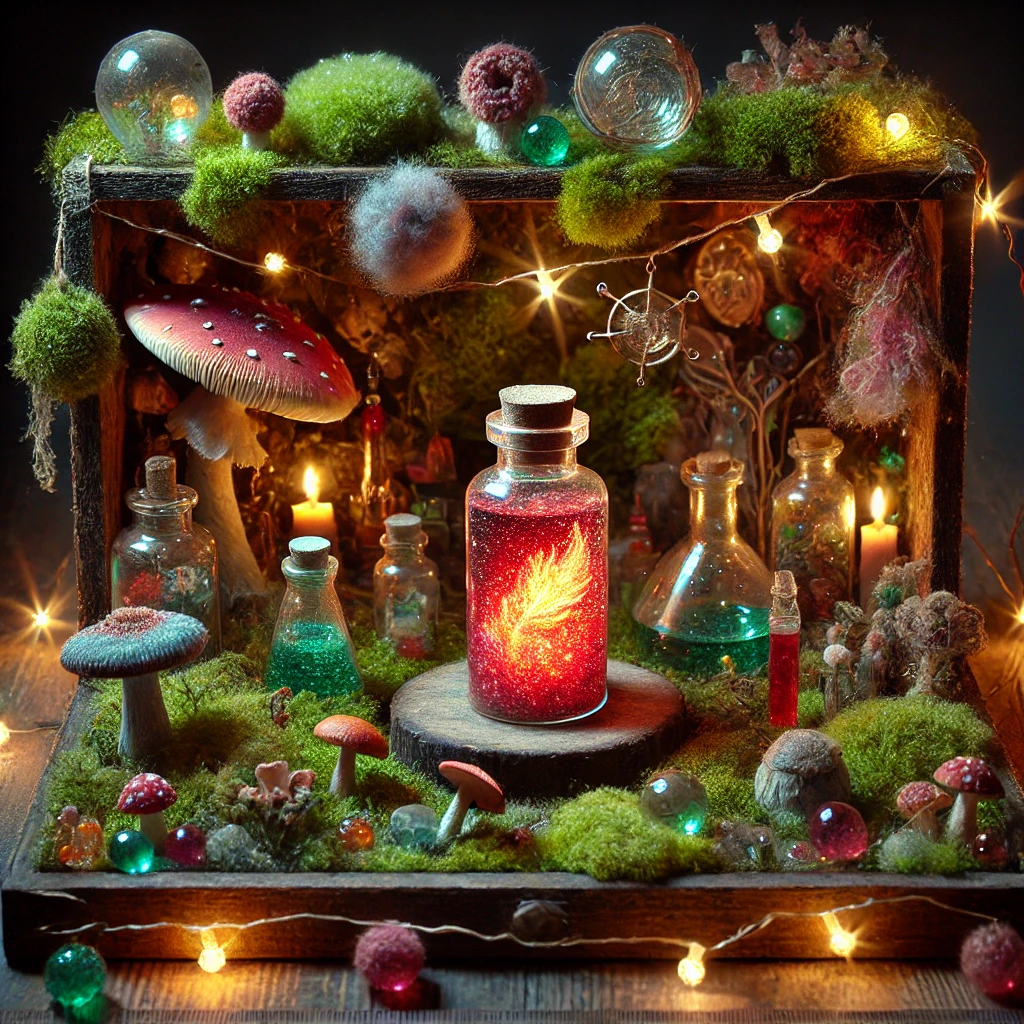
Today, I want to take you behind the curtain of something I call Creative Seasons—a way of structuring my writing life + business that just plain works for my brain. Maybe it’ll spark some ideas for your creative process, too!
If I had to sum up what I was doing before? Easy. “Absolutely was not working” and “sucking the joy out of life” pretty much covers it.
I’d found a way to get the actual book-writing done, which was no small feat.
But when it came to marketing those books? Let’s just say a great many tasks were perennially shuffled to next week’s to-do list. And then the next. And—well, you get it.
The Sneaky Power of Theme
Creative Seasons introduced two things I didn’t realize I was missing:
Setting aside time for deep work (to borrow Cal Newport’s term), and tapping into my obsession with creative remixing.
Trying to sprinkle marketing tasks throughout my week basically guaranteed they wouldn’t get done.
Either I was too tired after sculpting tiny food (my current day job) or drafting my next book, or I’d do the marketing first and then be too tired to do my day job—which wasn’t really an option, since, you know…bills.
Hence: another week, another list of untouched marketing tasks.
With Creative Seasons, I now set aside one full week to do nothing but marketing. Yes, I still fill tiny food orders in the morning, but knowing that the rest of the day is fully reserved for one thing, and one thing only, shifted my POV in ways I hadn’t expected.
For starters, it’s way easier for me to get into the zone.
And when I’m in the zone? Wowza. It’s like sprinkling fairy dust on my to-do list!
Instead of, “Ugh, I have to market my books,” it becomes, “Wait—I get to make cool books, and then I get to make more cool stuff to spread the word??!”
It’s amazing how dimming distractions can dial up the level of satisfaction I get from a task, even ones that, in the past, I considered to be majorly boooring.
There’s a Magical Reason, Too
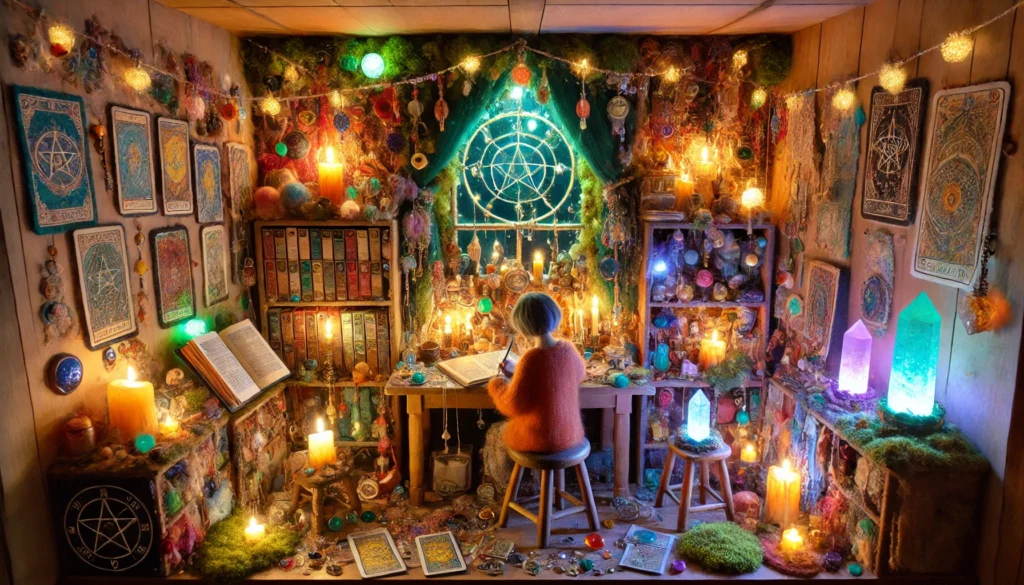
Do you remember when I compared my pen name to a magic circle—a space where “Author Me” can show up distinctly from “Personal Me”?
There’s something similar at play with these week-long marketing boot camps.
The week becomes a magic circle of its own. Within the circle, I focus on a very specific intention and let everything else fall away. And just like in ritual, that container allows energy to gather. It concentrates. And, like most magic…it surprises.
Not only am I finally doing my marketing (a small miracle), the simple act of focusing has sparked unexpected story breakthroughs.
For example, while creating this colorful grid of series clues, I hashed out an important subplot in The Magician & the Labyrinth of Yesterdays—a thread that will ripple forward into the yet-untitled book tied to the Wheel of Fortune card.
I can feel it as I work: Marinating in a focused mindset, even with something “dull” like marketing, weaves those creative threads together, and one leads to the next, leads to the next…
A Bored Witch Causes Trouble
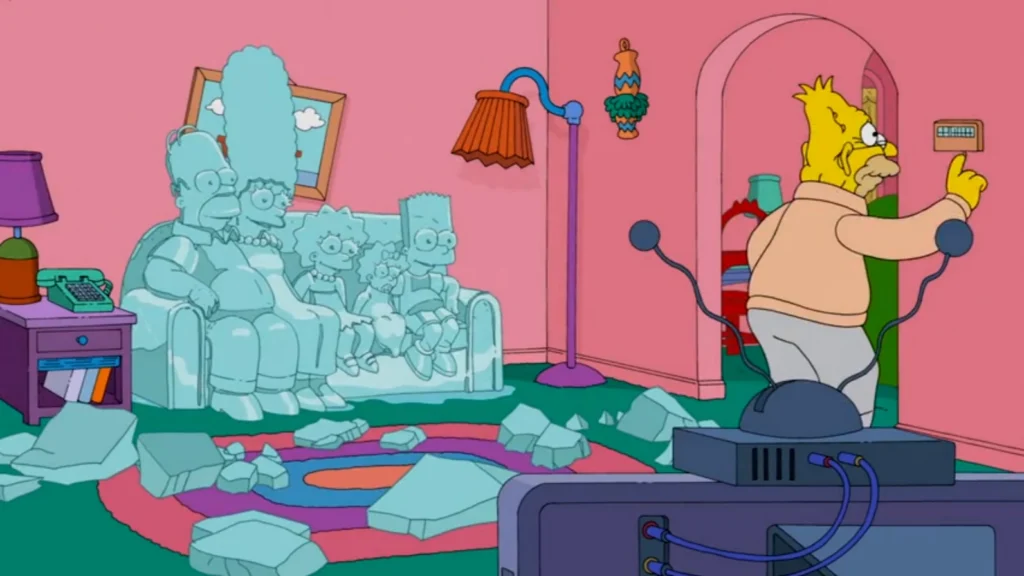
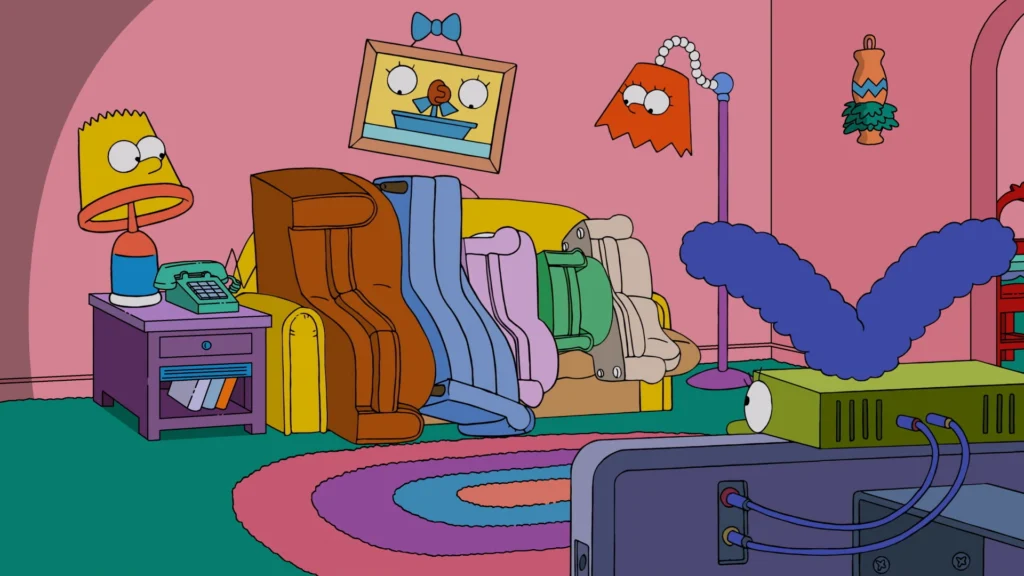
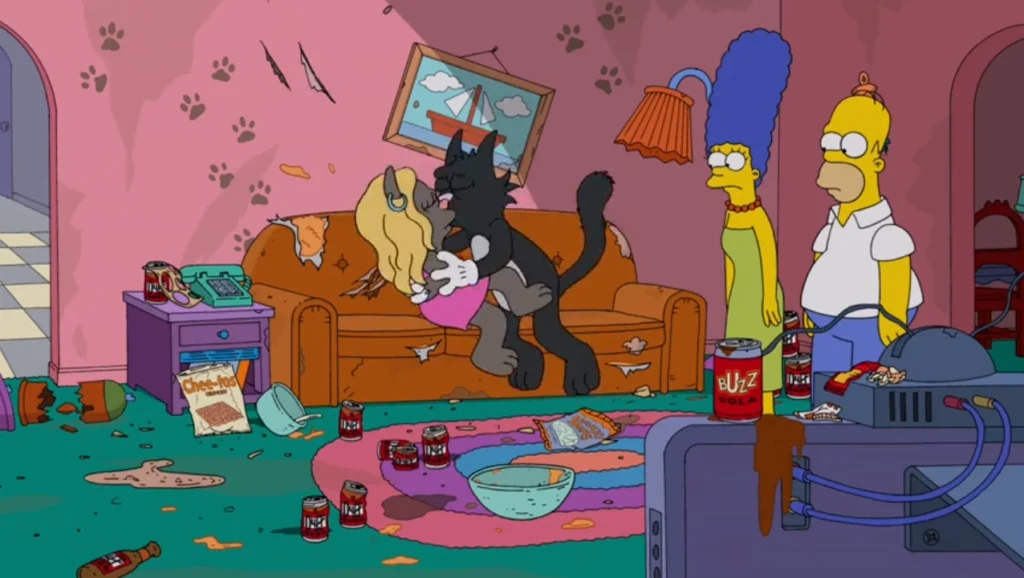
Which brings me to the second feature of Creative Seasons: Remixing familiar themes to create something fresh.(Remember my love of The Simpsons’ ever-changing couch gag? This is the witchy version.)
In a nutshell, I set aside one marketing week per quarter, and each quarter gets a yummy new theme for my brain to chew on.
My love of remixing used to cause problems in my businesses, because every so often I’d get the itch to revamp my branding. Again. And again. (And again.)
Not great if you’re wanting to build brand recognition. But without the refresh I’d start feeling antsy and bored.
Themed quarters to the rescue!!
Now, instead of tearing everything down and starting over, I get to channel that revamp energy into a rotating aesthetic—new imagery, colors, symbols, and seasonal moods.
Brain = happy. Business = (a little more) stable. Win-win.
This quarter’s theme?
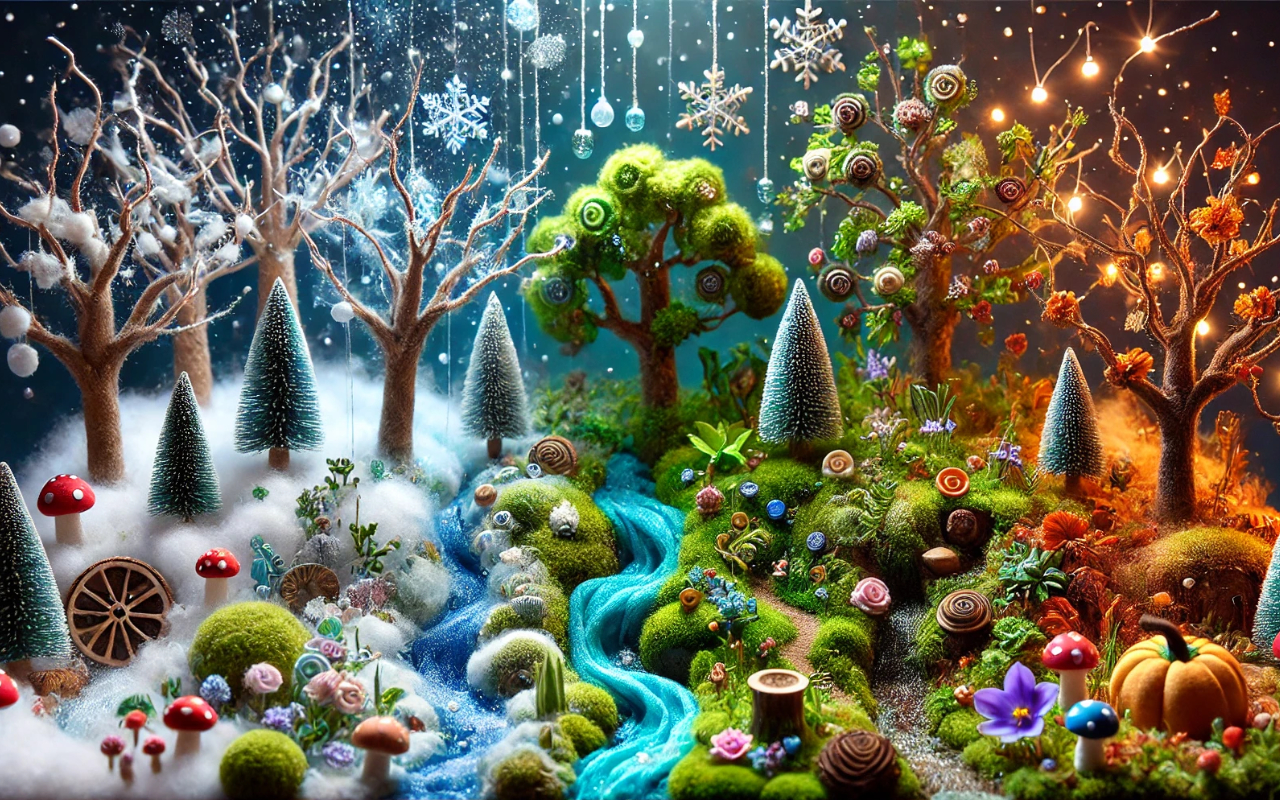
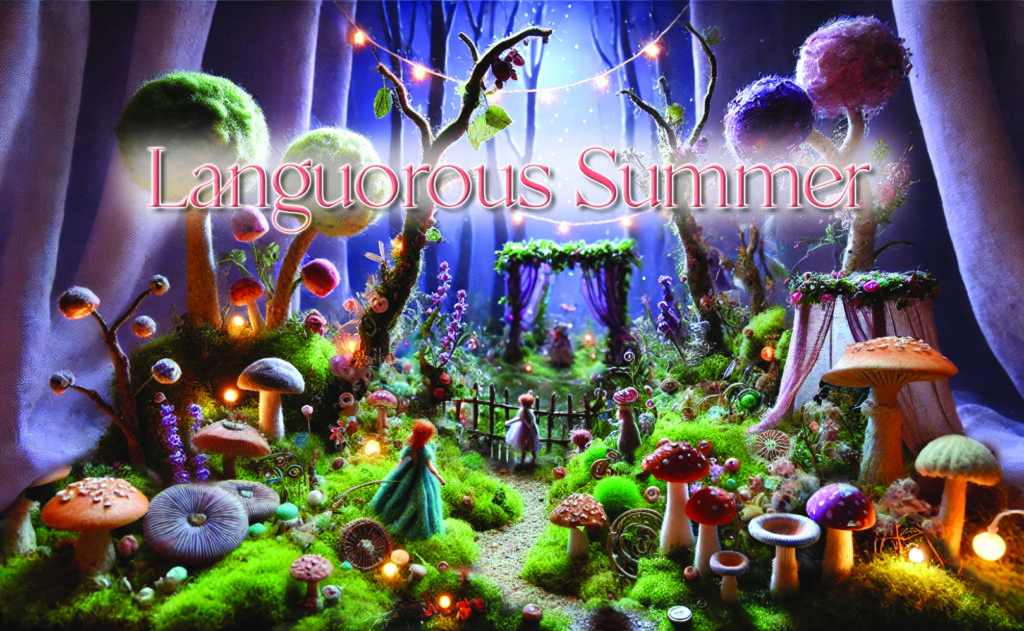
In the coming weeks, we’ll explore the world of Twin Flames through this dreamy, midsummer lens. Think golden-hour walks in the woods or curling up with a good book to the backdrop of a summer storm.
If you’ve read The Fool & the Threads of Time, you might remember those little shrines, deep in the meer—and those empty place settings left for the Hidden Company.
(And if not? No reading homework required to enjoy what’s to come.)
We’ll slip into the summer woods, looking for those shrines—looking for clues.
Who are the Hidden Company? And why do the Harandeans still leave offerings, even though most believe they’re nothing but children’s tales?
Oh, and that shimmering in the distance, just visible above the canopy? That’s the Waterfall of Mesmer. Some say its waters conceal caves, and if the legends are true, one of those caves houses a very peculiar guest…
We’ll explore all this and more in the weeks to come.
Growing up, my favorite part of The Simpsons was the intro. At that familiar theme song, I’d race into the living room, dying to know how they’d riff on the piling-on-the-couch gag this week.
That childhood fascination was a strong predictor of my grown-up creative work. The mash-up of the familiar + the unexpected turned out to be the catnip my brain craves.
I wasn’t conscious of this influence when, holed up in an Oklahoma City hotel room in 2022, I started writing what would become (after many, many iterations) The Fool & the Threads of Time.
But a book series about past lives is, at its core, a story of remixing. Same souls, different contexts.
It’s the romance-novel version of the couch gag.
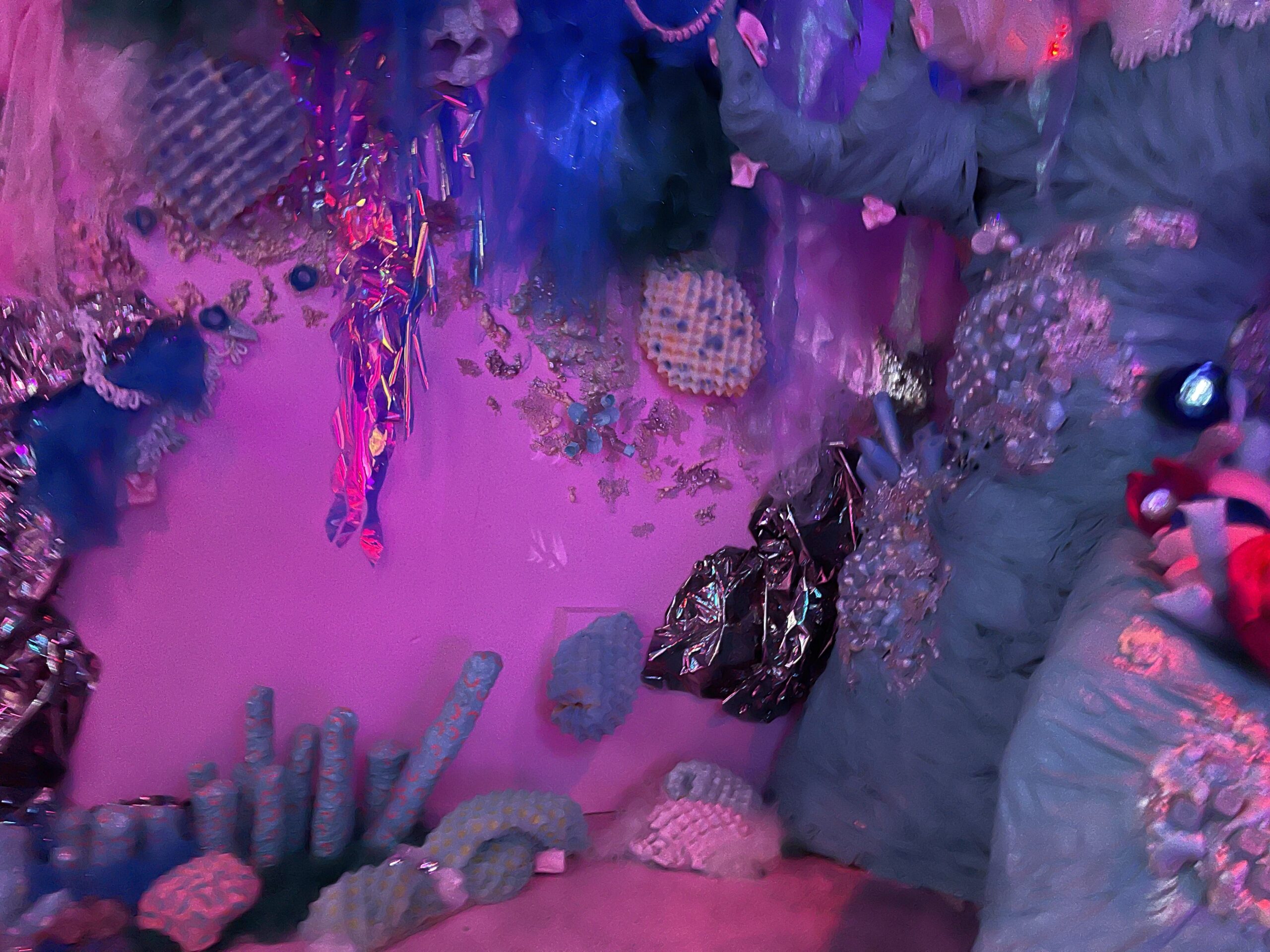
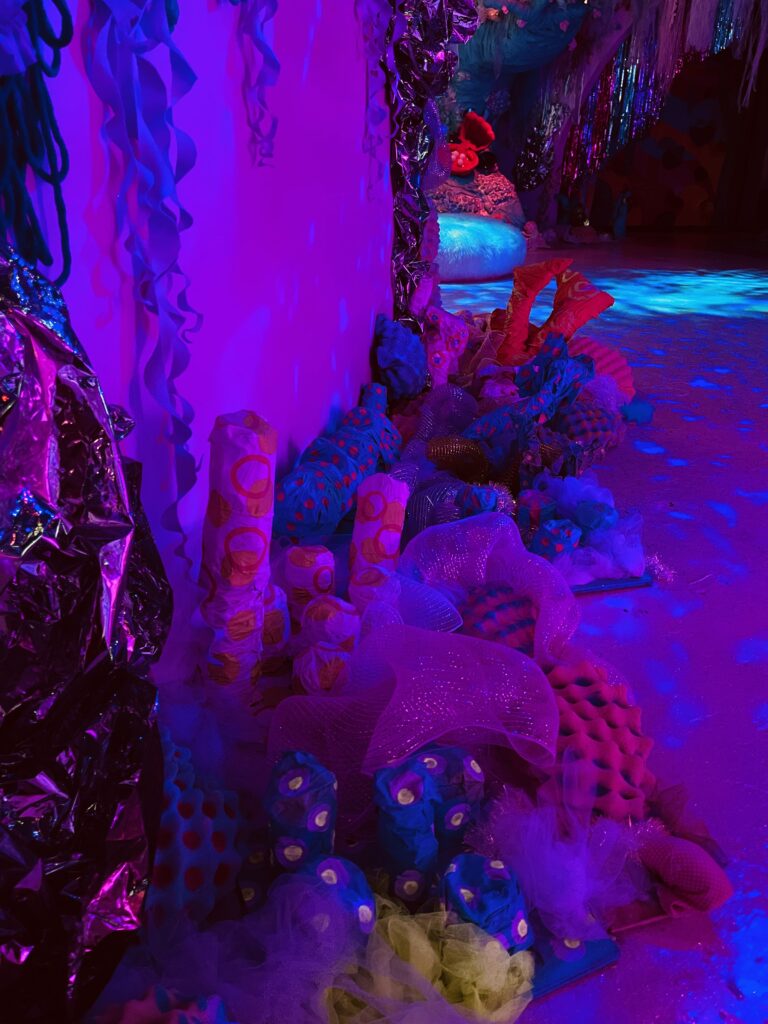
Speaking of remixing…it was only in writing this essay that I remembered my favorite part of that Oklahoma City trip—going to Factory Obscura: MixTape, an interactive art space that had me dreaming in yarn, glitter, and tulle for weeks.
I got to wander through a multi-room coral reef created entirely from textiles, an influence you’ll be able to spot in The Magician & the Labyrinth of Yesterdays (releasing in 2026).
The Fragmentary Land of Memory
Have you read Carmen Maria Machado’s memoir, In the Dream House?
It utterly blew me away—both for Machado’s gut-wrenching honesty in recounting her experience of domestic abuse, and for the brilliant way she used narrative structure to reflect the fragmentation of memory and trauma.
While the story was roughly chronological, each chapter was told through the lens of a different narrative trope—for instance, “Dream House as Lesbian Cult Classic” or “Dream House as Inciting Incident.”
That approach—using story structure to shape and reveal meaning—left a lasting impression on me. It illuminates a (sometimes uncomfortable) truth about the messiness of reality: There is no single way to understand a thing.
A Tale of Two Tarot Readings
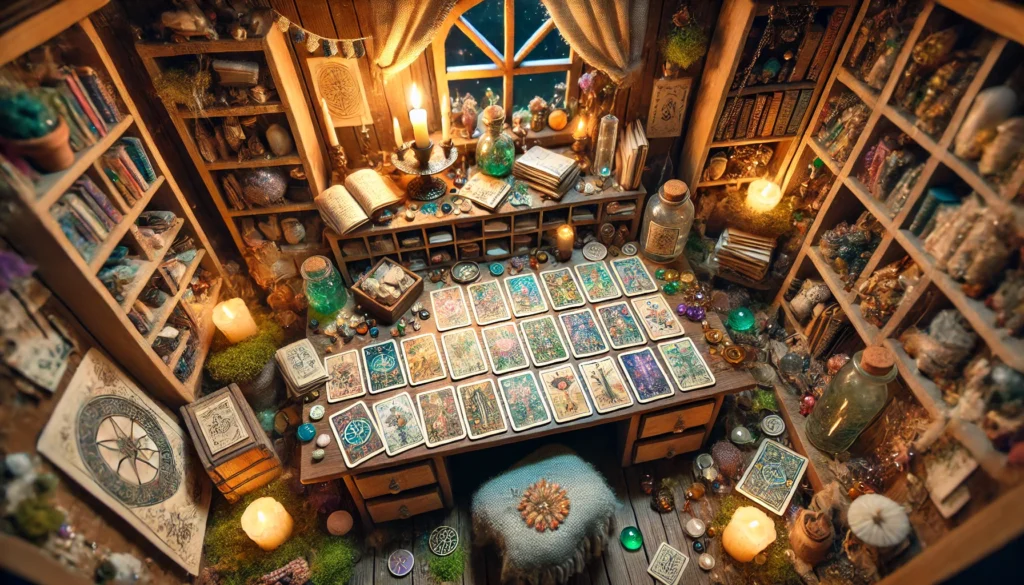
I used to be a professional tarot reader, and in the 1,000-plus readings I did over the years, I will never forget two readings in particular.
Two new clients, booking roughly a week apart. At the center of both spreads was the Hierophant, but given how many readings I did every week, I didn’t think much of it.
Until I neared the end of the second reading, that is.
Neither client had mentioned the other’s name, so I hadn’t known that they knew each other, that they were, in fact, getting readings on the very same situation.
The spread was a startlingly clear map of first-person POV.
There was the Hierophant at the center (the core theme), and a unique constellation of cards radiating outward. What one person saw as useful structure and clarity, the other experienced as dogma and control.
Each of them was carrying a story that felt irrefutably true, but those truths were shaped by where they were standing.
Next time, I’ll show you how this tarot-style framing shows up in my creative process—how changing the question, or the lens, can lead to dead ends…oropen the door to mysterious new worlds.